Product details
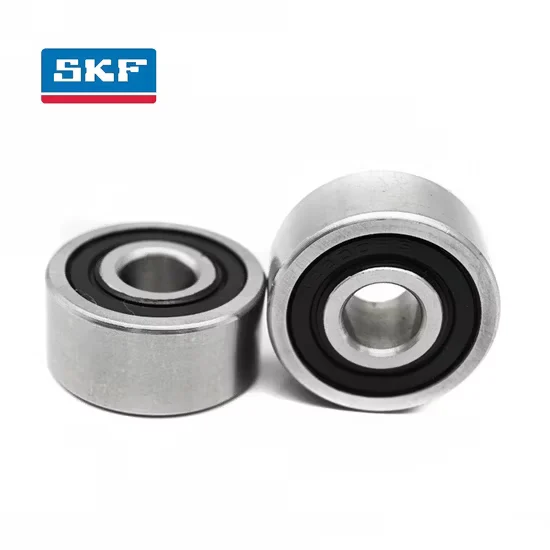
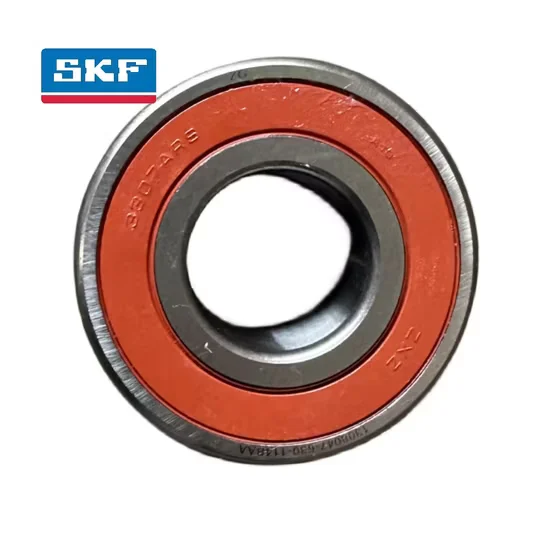
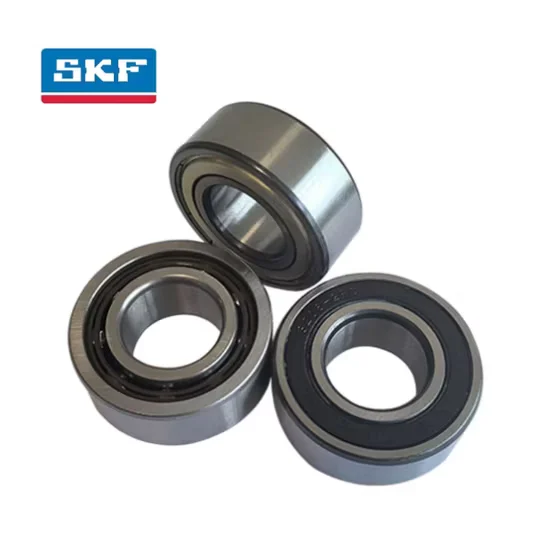
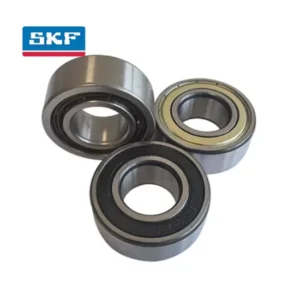
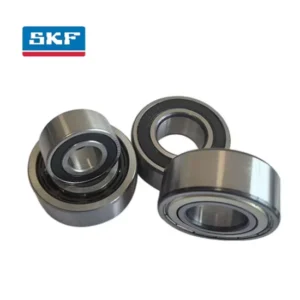
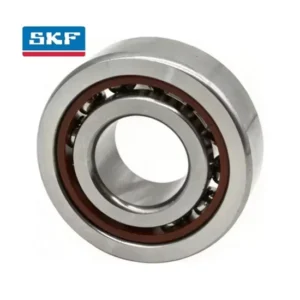
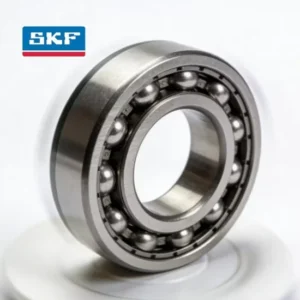
About Genuine SKF 3308 a-Nr Double Row Angular Contact Ball Bearing for Auto Machinery
Cross-reference alignment verified — Dimensional and load profiles cross-checked against FAG and NSK equivalents to ensure drop-in replacement compatibility.
Technical Specifications
| Parameter | Value |
|---|---|
| Designation | SKF 3308 a-Nr |
| Bearing Type | Double Row Angular Contact Ball Bearing |
| Contact Angle | 30° |
| Rows Number | Double |
| Cage Material | Steel Cage, Copper Cage, Nylon Cage |
| Precision Rating | P0, P2, P4, P5, P6 |
| Lubrication | Oil, Grease |
| Material | Bearing Steel |
| Origin | Jiangsu China |
The "a-Nr" suffix remains unverified and requires manufacturer catalog confirmation before finalizing snap ring groove specifications.
Application Suitability
| Industry | Typical Applications |
|---|---|
| Automotive Machinery | Transmission shafts and steering column supports |
| Industrial Manufacturing | Machine tool spindles and robotic arm joints |
| Fluid Handling | High-speed pump impeller shafts |
Why Ignoring Suffix Details Destroys the SKF 3308 a-Nr double row angular contact ball bearing Assembly
Missing a single snap ring groove specification turns a precision component into a liability.
Early in my procurement career, I sourced double row angular contact bearings for a European client, checking only the base 3308 designation while overlooking the suffix indicating a snap ring. The resulting axial positioning failure halted the entire production line. Now, after years handling industrial machinery selection at the Hanover Fair, I scrutinize every suffix detail to prevent such catastrophic assembly breakdowns.
Matching the SKF 3308 a-Nr double row angular contact ball bearing to Target Operating Conditions
When integrating the SKF 3308 a-Nr double row angular contact ball bearing into auto machinery, engineers must balance combined radial and axial loads. Our sourcing network provides complete traceability and cross-brand equivalent consultation, ensuring the selected component aligns perfectly with your specific operational demands without the premium direct-channel markup.
Navigating Load Reversals and Thermal Expansion in Auto Machinery
Automotive and precision equipment environments subject bearings to complex combined loads and frequent directional reversals. A 30° contact angle optimizes the capacity to handle these simultaneous radial and axial forces. At elevated operating temperatures, thermal expansion dictates the necessary internal clearance to prevent excessive preload. Proper lubrication selection, whether oil or grease, directly impacts the friction heat generated during high-speed rotation.
Decoding Cage Materials and Precision Tolerances
The internal architecture relies heavily on the chosen cage material, with steel, copper, and nylon options available to match specific speed and vibration profiles. Steel cages offer structural rigidity for heavy loads, while nylon variants reduce weight and operational noise in high-speed spindles. Precision ratings spanning P0 to P2 dictate the running accuracy, where tighter tolerances are mandatory for machine tool spindles to minimize runout. The non-aligning design demands rigid shaft and housing arrangements to maintain optimal contact angle geometry under load. Selecting the correct clearance class ensures the bearing accommodates assembly tolerances without binding. Furthermore, the 30° contact angle is specifically engineered to handle the complex combined radial and axial forces typical in automotive transmissions, ensuring stable load distribution across both rows of rolling elements.
The Hidden Financial Drain of Incorrect Bearing Selection
Specifying the wrong internal clearance or cage material inevitably leads to unplanned downtime and premature failure. According to the failure mode classification per ISO 15243, inadequate lubrication or improper mounting accounts for a significant share of early breakdowns. Catastrophic damage to adjacent shaft components often follows a seized bearing, multiplying repair costs. Furthermore, utilizing unverified components risks warranty voidance on the entire machinery assembly.
Securing Authentic Components Through Rigorous Verification
Sourcing genuine components requires more than just matching a base number; it demands strict verification of every suffix and tolerance class. We maintain massive spot inventory covering thousands of standard part numbers, allowing flexible MOQ from single-unit emergency spares to full container consolidation. Every shipment includes complete traceability documentation to verify authenticity. Our technical team provides cross-brand equivalent model consultation, ensuring you receive the exact specification needed for your auto machinery. Global shipping consolidation and long-term after-sales technical support guarantee that your maintenance requirements are met efficiently. Additionally, our competitive sourcing cost compared to direct official brand channels allows you to optimize your procurement budget without sacrificing the reliability required for heavy-equipment and MRO applications.
Documentation & Authenticity
- Certificate of Conformity verifying the exact P0 to P2 precision rating of the dispatched batch.
- Original batch traceability records linking the component directly to the manufacturer's production facilities.
- Official app QR code scanning support to validate the authenticity of the bearing before installation.
- Material inspection reports confirming the metallurgical composition of the bearing steel rings and rolling elements.
- Dimensional and running accuracy inspection reports validating the 30° contact angle and bore tolerances.
Storage, Handling & Mounting
- Keep the original packaging sealed until mounting to protect the precision-machined raceways from ambient humidity.
- Use clean, lint-free gloves when handling the bearing to prevent corrosive sweat from degrading the bearing steel surfaces.
- Apply induction heating for inner ring mounting to avoid mechanical damage to the cage and rolling elements.
- Verify the snap ring groove dimensions before assembly if the specific suffix configuration requires axial retention.
- Follow strict lubrication protocols, ensuring the selected oil or grease matches the high-speed pump or spindle requirements.
Engineering Review and Technical Validation
To ensure optimal performance, please share your specific operating parameters, including radial and axial loads, rotational speeds, and ambient temperatures. Providing the exact OEM equipment model number allows our engineering team to perform precise cross-reference verification and L10 life calculations. Detailed installation space constraints help us confirm the suitability of the non-aligning design for your rigid housing arrangement.
Frequently Asked Questions
Q: How can I verify the authenticity of the received components?
A: You can validate the components using the official manufacturer app QR code scanning feature upon delivery. We also provide complete batch traceability documentation and material inspection reports. This multi-layered verification ensures that the parts meet the required ISO-compliant quality assurance standards before they are installed in your critical auto machinery.
Q: What does the specific suffix indicate regarding installation requirements?
A: Suffix variations dictate critical housing and shaft preparation steps, particularly concerning snap ring grooves for axial retention. It is crucial to cross-reference the exact dimensional drawings to ensure the housing groove matches the outer ring profile. Ignoring such suffix details can lead to severe axial positioning failures and unplanned downtime during operation.
Q: How do I choose between steel, copper, and nylon cages?
A: The cage material selection depends on your specific operational speeds, temperatures, and vibration levels. Steel cages provide strong structural support for heavy combined loads, while nylon cages reduce friction and noise in high-speed applications like machine tool spindles. Copper cages offer excellent thermal conductivity for demanding automotive machinery environments.
Q: What cross-reference equivalents are available for this designation?
A: Our technical team provides comprehensive cross-brand equivalent model consultation, mapping this designation to comparable offerings from other premium global brands. This ensures you have flexible sourcing options without compromising the 30° contact angle or precision rating. We verify dimensional interchangeability to guarantee a direct drop-in replacement for your existing equipment.
Q: How do different precision ratings impact performance in auto machinery?
A: Precision ratings ranging from P0 to P2 dictate the running accuracy and dimensional tolerances of the bearing. Tighter tolerances like P4 or P2 are essential for machine tool spindles and robotics to minimize runout and vibration. Standard P0 ratings are typically sufficient for general automotive industrial machinery where extreme precision is not critical.