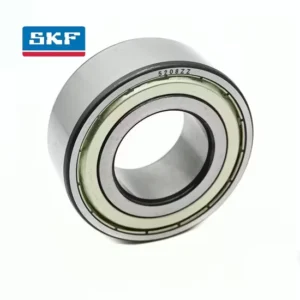


Product details
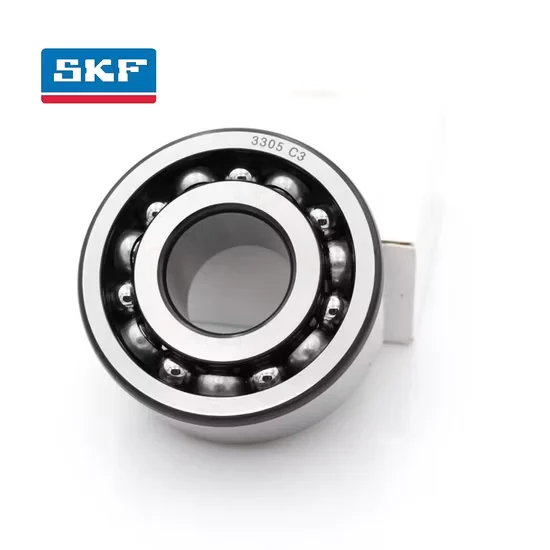
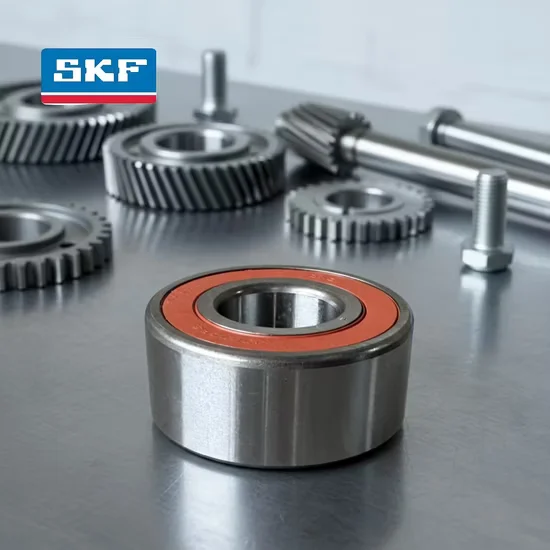
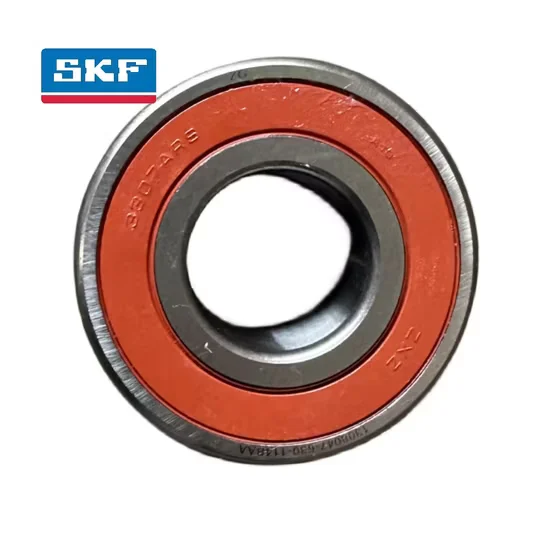
About SKF 3208 a Tn9/C3 Double Row Angular Contact Ball Bearing
Cross-Reference Alignment — We verify dimensional and load equivalence across three major catalogs before confirming any substitution for this specific double row configuration.
Technical Specifications
| Parameter | Value |
|---|---|
| Designation | SKF 3208 a Tn9/C3 |
| Bearing Type | Double Row Angular Contact Ball Bearing |
| Contact Angle | 30° |
| Cage Material | Glass fibre reinforced polyamide |
| Clearance Class | C3 |
| Number of Rows | Double |
| Load Direction | Radial |
| Separated | Separated |
| Aligning | Non-Aligning |
Note: The 'a' suffix in this specific identifier remains unverified against the current manufacturer catalog and requires direct technical confirmation prior to finalizing bulk orders.
Application Suitability
| Industry | Typical Applications |
|---|---|
| Machine Tools | Spindle support mechanisms requiring combined load capacity |
| Fluid Handling | High-speed pump impeller shafts |
| Automation | Robotic arm joint actuators |
| Precision Manufacturing | Optical inspection equipment rotary tables |
Why Cage Material Dictates Survival in High-Speed Spindles for the SKF 3208 a Tn9/C3 double row angular contact ball bearing
Polyamide cages prevent catastrophic locking under thermal expansion.
Early in my career on the grinding floor, I swapped a specified polyamide cage for a stamped steel alternative in a similar double row setup for an injection molding machine. The steel cage failed to handle high-speed thermal growth, leading to a snapped retainer and seized spindle. That failure mode is exactly why verifying the exact cage specification is non-negotiable when sourcing critical rotary components. Many procurement engineers focus solely on the basic dimensional code, overlooking how retainer mass dictates survival. When rolling elements accelerate, a heavier metallic cage generates excessive centrifugal force, rapidly degrading the lubricant. By strictly adhering to the specified polymer design, we eliminate the risk of catastrophic downtime caused by unauthorized material downgrades.
Matching the Retainer Design to Spindle Dynamics
When specifying a SKF 3208 a Tn9/C3 double row angular contact ball bearing for machine tool spindles, the glass fibre reinforced polyamide cage provides the necessary lightweight structure to minimize centrifugal forces. Our sourcing network ensures the exact polymer composition is maintained, preventing premature wear that plagues generic substitutes. The reduced mass of the polymer retainer allows rolling elements to maintain a stable hydrodynamic oil film at elevated speeds. This stability is crucial for maintaining strict geometric tolerances in precision machining, where microscopic vibrations compromise surface finish. We actively filter out suppliers who substitute engineered polymer components with cheaper metallic alternatives, ensuring your spindle maintains its designed dynamic response.
Navigating Thermal Growth and Combined Loading
Spindle applications generate significant heat, directly impacting internal clearance and lubrication film thickness. A standard clearance would quickly disappear under these thermal conditions, causing excessive preload. Selecting a C3 clearance class accommodates this thermal expansion, ensuring rolling elements maintain optimal contact angles without binding. Proper lubrication must also be matched to the operating temperature to prevent cage starvation. Furthermore, combined radial and axial loads typical in robotic joints require robust contact geometry to distribute stress evenly. If thermal growth is not compensated by the initial internal gap, axial load capacity drops dramatically, leading to localized stress concentrations. This interconnected relationship between heat, clearance, and load distribution demands rigorous validation before installation.
Decoding the Suffix Architecture
The 30° contact angle is engineered to handle simultaneous radial and axial loads, making it ideal for complex force vectors in pump shafts. The TN9 suffix confirms the use of a glass fibre reinforced polyamide cage, offering superior sliding properties compared to brass alternatives. Meanwhile, the C3 radial internal clearance provides the operational gap to compensate for heat generated during continuous rotation, preventing seizure under thermal stress. Understanding these designators is critical because a seemingly identical part number lacking the correct suffix will fail prematurely. The glass fibre reinforcement within the polymer matrix provides structural rigidity to withstand centrifugal forces, while the base material ensures compatibility with synthetic lubricants. This precise combination defines the operational envelope.
The Downtime Penalty of Incorrect Clearance Selection
Ignoring the C3 clearance requirement in high-temperature environments inevitably leads to unplanned downtime and catastrophic damage to the spindle housing. When the internal gap closes due to thermal expansion, the resulting friction generates more heat, creating a destructive feedback loop. According to failure analysis frameworks, a significant share of premature failures stems directly from ignoring thermal compensation parameters during procurement. The financial impact extends beyond the replacement part cost, encompassing lost production time and secondary damage to adjacent shaft components. Procurement teams prioritizing initial unit cost over strict adherence to the specified clearance class frequently encounter these hidden penalties, driving up the total cost of ownership.
Securing Authentic Polymer Cages Through Strict Verification
Sourcing genuine components requires more than matching the basic numeric code for the SKF 3208 a Tn9/C3 double row angular contact ball bearing. We specifically verify the TN9 cage material and C3 clearance on every shipment, ensuring you never receive a downgraded steel-cage variant that could fail at high speeds. Our traceability documentation confirms the exact manufacturing batch, while our technical team provides cross-brand equivalent model consultation if your OEM specifies alternative nomenclature for the same 30° contact angle geometry. By maintaining deep relationships with authorized channels, we secure genuine inventory that bypasses typical multi-week lead times. This approach guarantees the physical attributes perfectly align with your engineering requirements, eliminating the guesswork inherent in unverified supply chains.
Documentation & Authenticity
- Certificate of Conformity verifying the specific TN9 polyamide cage material batch.
- Original manufacturer batch traceability documents linked to the C3 clearance production run.
- Dimensional inspection reports confirming the 30° contact angle geometry before dispatch.
- Official authentication QR codes for verifying the genuine origin of the double row assembly.
Storage, Handling & Mounting
- Store the polyamide-caged assembly in its original moisture-barrier packaging to prevent polymer degradation before installation.
- Avoid exposing the glass fibre reinforced cage to ultraviolet light or extreme ambient temperatures during warehouse storage.
- Use clean, lint-free gloves when handling the open bearing to prevent particulate contamination of the 30° contact angle raceways.
- Apply the specified high-speed spindle oil immediately after mounting to protect the C3 clearance gaps from initial startup friction.
Engineering Data Required for Technical Validation
To ensure this specific configuration meets your operational demands, please provide the exact radial and axial load profiles along with the maximum continuous RPM. Sharing the spindle housing material and operating temperature range allows our engineering team to validate the C3 clearance suitability and confirm the L10 life calculation. We also require details regarding the lubrication method to ensure the selected component integrates flawlessly with your maintenance protocols. Supplying the original equipment manufacturer part numbers enables a comprehensive cross-reference check, identifying subtle geometric variations that could impact the final assembly. This collaborative review ensures the proposed solution addresses the root cause of your maintenance challenges.
Frequently Asked Questions
Q: How do I verify the authenticity of the polyamide cage upon delivery?
A: You can scan the official QR code on the packaging using the manufacturer's authentication app to confirm the batch details. Additionally, we provide a Certificate of Conformity that explicitly lists the TN9 cage material and C3 clearance, ensuring the physical components match the original factory specifications without any unauthorized substitutions.
Q: What does the C3 clearance mean for my high-speed pump application?
A: The C3 designation indicates a radial internal clearance greater than standard, which is critical for applications experiencing significant thermal growth. As the pump shaft heats up during operation, this extra gap prevents the bearing from binding, ensuring the 30° contact angle maintains proper load distribution and prevents premature failure due to excessive internal preload.
Q: How should I interpret cross-reference models for this specific geometry?
A: When evaluating alternatives, you must ensure the substitute matches the 30° contact angle, the glass fibre reinforced polyamide cage, and the C3 clearance. Our technical team can cross-reference equivalent models from other premium global brands, verifying that the dimensional boundaries and dynamic load capacities align perfectly with your existing housing and shaft tolerances.
Q: What are the recommended lubrication practices for this double row configuration?
A: For high-speed spindles utilizing this polyamide cage, a high-quality synthetic spindle oil or specialized grease is typically required. The lubrication interval and volume must be carefully calculated based on your operating RPM to prevent churning losses, which can generate excess heat and compromise the thermal compensation provided by the C3 internal clearance.