

Product details
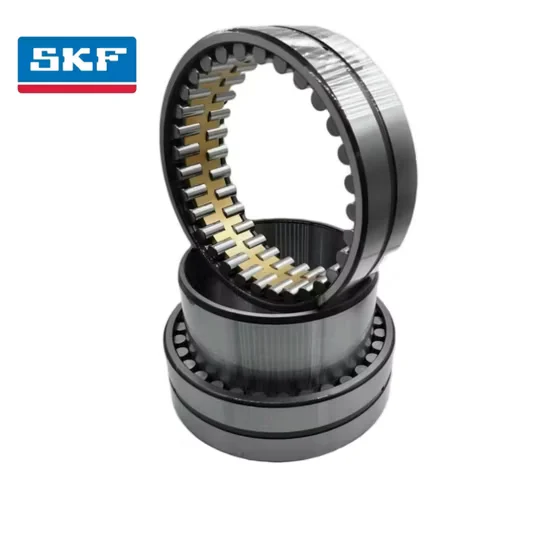
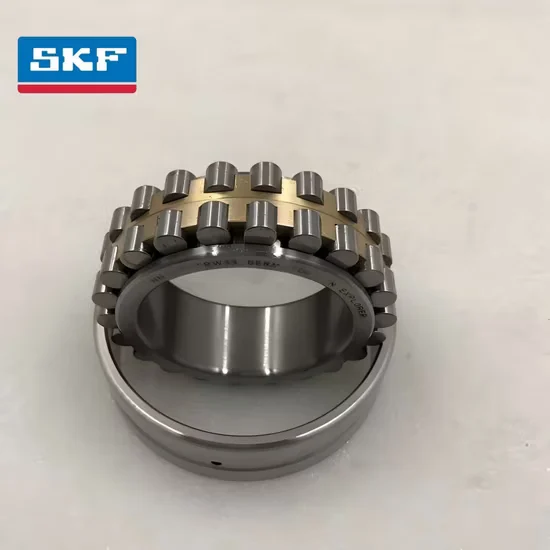
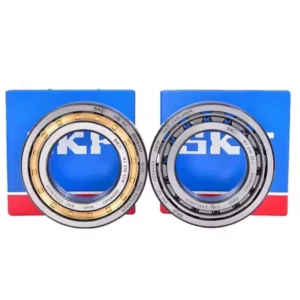
About SKF N219-Ec P Cylindrical Roller Bearing Genuine Supply
Traceable via official app — Every SKF N219-Ec P cylindrical roller bearing we dispatch includes a scannable QR code linking directly to the manufacturer's authentication database.
Technical Specifications
| Parameter | Value |
|---|---|
| Designation | SKF N219-Ec P |
| Bearing Type | Cylindrical Roller Bearing |
| Number of Rows | Single |
| Material | Bearing Steel |
| Separated | Separated |
| Clearance Class | C0, C2, C3, C4, C5 |
| Cage Material | Brass, Steel |
| Vibration | Z1V1, Z2V2, Z3V3 |
| Hardness | 60-64 HRC |
| Origin | Jiangsu China |
The 'c' suffix in the designation remains unverified and requires manufacturer catalog confirmation prior to final application approval.
Application Suitability
| Industry | Typical Applications |
|---|---|
| Heavy Machinery | Rolling mill work roll and backup roll necks |
| Power Transmission | Heavy-duty gearbox high-speed shafts |
| Railway & Transit | Traction motor drive assemblies |
Why Cage Suffix Details Dictate Rolling Mill Survival
A mismatched polyamide cage in high-vibration environments leads to rapid structural fatigue and catastrophic line stoppages.
When sourcing replacement parts for continuous casting lines or heavy rolling mills, overlooking the specific cage material designation can trigger devastating operational failures. I once witnessed a severe mill downtime event caused by installing a standard stamped steel cage instead of the specified reinforced design, resulting in intense vibration and eventual cage fracture under heavy radial loads. Selecting the correct SKF N219-Ec P cylindrical roller bearing ensures the internal components withstand the immense mechanical shocks typical in metallurgical applications. The difference between a standard and an optimized internal geometry is not merely theoretical; it directly dictates whether the assembly survives the first month of continuous operation or fails prematurely. Maintenance teams often assume that basic dimensional equivalence is sufficient, but ignoring the suffix architecture invites accelerated wear and unpredictable breakdowns.
Matching the Design to Extreme Metallurgical Loads
Heavy-duty gearboxes and traction motors demand components that handle immense radial forces without compromising rotational stability or generating excessive heat. The SKF N219-Ec P cylindrical roller bearing accommodates these extreme loads through its optimized internal geometry and reinforced roller set, distributing stress evenly across the contact surfaces. Our sourcing network ensures that the exact suffix configuration reaches your facility, eliminating the guesswork often associated with industrial MRO procurement. When dealing with heavy machinery, the margin for error is virtually non-existent, and relying on generic substitutes often results in accelerated fatigue. By strictly adhering to the manufacturer's enhanced capacity design, we protect your critical drive systems from the cascading failures that typically follow a compromised bearing installation.
Managing Thermal Expansion and Lubrication Starvation
In rolling mill environments, ambient heat and friction elevate operating temperatures significantly, demanding careful clearance class selection to prevent internal binding and subsequent seizure. Adequate lubrication flow is equally critical; a blocked grease path or degraded oil film will rapidly compromise the polyamide cage material, leading to structural collapse. Furthermore, separating the inner and outer rings simplifies the mounting process, allowing maintenance crews to achieve precise interference fits without damaging the rolling elements during assembly. The interaction between thermal expansion and internal clearance must be calculated precisely, as an overly tight fit at elevated temperatures will destroy the component within hours. Proper alignment and consistent relubrication intervals are non-negotiable requirements for maintaining the structural integrity of the assembly under continuous heavy loads.
Decoding the Suffix Architecture for Reliable Operation
The 'E' suffix indicates an optimized internal design with a reinforced roller set, maximizing the radial load-carrying capacity essential for heavy machinery and high-stress drive systems. The 'P' designation specifies a polyamide cage, which offers quieter operation and reduced weight compared to machined brass alternatives, though it requires strict temperature monitoring to prevent material degradation. Selecting the appropriate clearance class—from C0 to C5—compensates for the thermal expansion generated during continuous high-speed operation, ensuring the rolling elements maintain optimal contact stress. The separable architecture allows the inner ring to be mounted independently, facilitating precise shaft fits while the outer ring and roller assembly slide smoothly into the housing. Understanding these specific designations prevents the costly mistake of installing a standard capacity unit in an application that strictly demands enhanced load capabilities.
The Hidden Financial Drain of Incorrect Suffix Selection
Specifying a standard cage instead of the required reinforced variant often results in premature fatigue, unpredictable vibrations, and extensive unplanned downtime. According to ISO 281 frameworks, ignoring the specific load and speed parameters during the selection process drastically reduces the calculated service life and compromises the entire drive train. A catastrophic cage failure not only destroys the component itself but can also severely score the shaft and housing, leading to extensive secondary machining costs and prolonged production halts. The financial impact extends far beyond the replacement part, encompassing lost production hours, emergency freight charges, and the labor required to dismantle and rebuild the affected machinery. Validating the exact suffix configuration before procurement is the most effective strategy to mitigate these hidden operational risks.
Securing Authentic Components Through Verified Channels
Procuring genuine components requires more than just matching the basic alphanumeric code; the exact suffix configuration must be rigorously validated against the original equipment specifications. We cross-reference every order to ensure the polyamide cage and enhanced capacity design match your specific mill or gearbox requirements, preventing the installation of under-specified alternatives. Our supply chain provides full batch traceability, protecting your operation from the severe risks associated with counterfeit or mislabeled industrial parts that frequently infiltrate the global market. By maintaining direct access to authorized distribution networks, we guarantee that the metallurgical properties and dimensional tolerances meet the strict standards required for heavy-duty applications. This rigorous verification process ensures that your maintenance team receives exactly what the engineering documentation demands.
Documentation & Authenticity Verification
- Certificate of Conformity confirming the exact SKF N219-Ec P cylindrical roller bearing designation.
- Original factory batch traceability records linking the physical unit to its production run.
- Official app QR code authentication for immediate on-site verification upon delivery.
- Material inspection reports validating the 60-64 HRC hardness of the bearing steel components.
- Dimensional and running accuracy inspection reports ensuring compliance with specified tolerances.
Storage, Handling & Mounting Protocols
- Store the separated inner and outer rings in original packaging to prevent moisture ingress and corrosion.
- Maintain consistent warehouse temperatures to avoid condensation on the bearing steel surfaces.
- Use clean, lint-free gloves when handling the polyamide cage to prevent surface contamination.
- Apply induction heating for the inner ring mounting to achieve the required interference fit safely.
- Ensure proper alignment during assembly to prevent edge loading on the reinforced roller set.
Engineering Support for Precision Selection
To guarantee optimal performance, please provide the specific radial and axial load profiles, operating speeds, and thermal conditions of your application. Sharing the original equipment manufacturer part numbers allows our engineering team to perform a comprehensive cross-reference and verify the exact suffix requirements. This technical review ensures the selected configuration aligns perfectly with your maintenance intervals and operational demands.
Frequently Asked Questions
Q: What do the 'E' and 'P' suffixes indicate for this specific model?
A: The 'E' suffix denotes an enhanced internal design featuring a reinforced roller set engineered for significantly higher radial load capacity. The 'P' suffix specifies a polyamide cage, which effectively reduces overall weight and operational noise while requiring careful temperature management to prevent material degradation during continuous use.
Q: How can I verify the authenticity of the delivered components?
A: Every dispatched unit features a scannable QR code fully compatible with the manufacturer's official authentication application. Scanning this code provides immediate access to the original production batch data, confirming the exact specifications, manufacturing origin, and material certifications of the component before installation begins.
Q: Which clearance class is appropriate for high-temperature gearbox applications?
A: For heavy-duty environments characterized by significant thermal gradients, a C3 or C4 clearance class is typically recommended by engineering teams. This extra internal space effectively compensates for thermal expansion, preventing the severe internal binding and subsequent seizure that frequently occur when standard C0 clearance components overheat during continuous operation.
Q: What information is needed to cross-reference this model for an existing setup?
A: Please provide the exact OEM equipment number, current radial and axial operating loads, and precise rotational speeds. This operational data allows our technical team to thoroughly validate the suffix configuration, ensuring the replacement component perfectly matches the original design parameters and prevents premature failure in your specific application.