Standard industrial bearings fail in brewery environments not because of load, but because of invisible humidity migration.
Selecting genuine, high-humidity resistant bearings for brewery bottling lines is the only reliable method to prevent premature seal failure, lubricant emulsification, and catastrophic production downtime. The core requirement is not just a bearing, but a sealed unit with food-grade compatibility and corrosion-resistant materials that can withstand continuous washdown cycles without degrading.
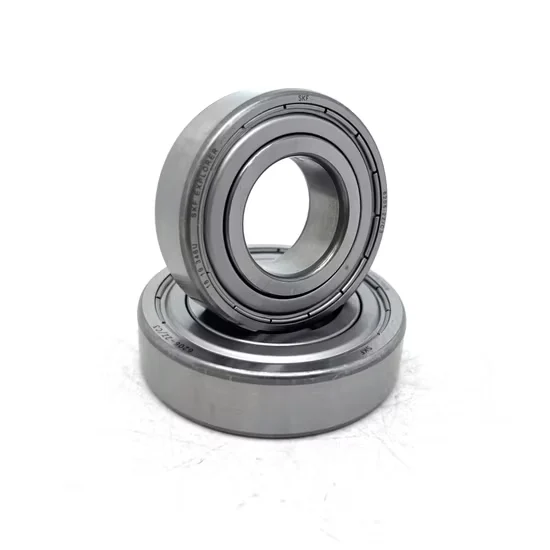
I still remember the smell of stale beer mixing with hot metal during a rush repair in a Southeast Asian brewery. The local manager had swapped out the original equipment manufacturer’s deep groove ball bearings with a cheaper, non-genuine alternative to cut procurement costs. On paper, the specifications matched. In reality, the ambient humidity in that region, combined with daily high-pressure washdowns, attacked the inferior seal material within weeks. The lubricant inside turned into a milky emulsion, losing its viscosity and protective film. The result was not just a seized bearing, but a halted capping station that left tens of tons of product stranded on the line. That incident reinforced a hard truth: in wet processing environments, the bearing is the weak link if it is not genuinely engineered for the task.
The difference between a functional line and a costly shutdown often comes down to the authenticity and specification of these small but critical components. Understanding why standard options fail and how to source the right Bearings in Brewery Bottling Lines is essential for any operation aiming for reliability.
Why Do Standard Bearings Fail in Brewery Bottling Lines?
High humidity and frequent chemical washdowns rapidly degrade inferior seals and emulsify lubricants in standard bearings.
Most maintenance teams assume that if a bearing is shielded from direct water spray, it is safe. This is a dangerous misconception. Ambient humidity in brewing facilities is consistently high, and this moisture migrates through microscopic gaps in standard rubber seals. Once inside, it mixes with the grease, causing emulsification. The lubricant loses its ability to separate moving parts, leading to metal-on-metal contact, heat generation, and eventual seizure.
Furthermore, brewery hygiene protocols require aggressive cleaning agents. Standard seal materials may swell, crack, or harden when exposed to these chemicals, breaking the barrier that keeps contaminants out and lubricant in. A genuine premium bearing uses specialized seal compounds designed to resist both thermal cycling and chemical exposure, maintaining elasticity and sealing force over time.
| Failure Mode | Standard Bearing Performance | Premium Sealed Bearing Performance |
|---|---|---|
| Seal Material Reaction | Swells or cracks under chemical exposure | Resistant to common washdown agents |
| Lubricant Stability | Emulsifies quickly in high humidity | Retains viscosity and separation properties |
| Corrosion Resistance | Surface rust on outer rings | Enhanced corrosion-resistant coatings |
| Service Life in Wet Zones | Short, unpredictable | Extended, predictable maintenance intervals |
The cost of ignoring these factors is not just the price of a new bearing. It is the lost production, the wasted product, and the emergency labor required to fix a problem that should have been prevented at the sourcing stage. When evaluating Bearings in Brewery Bottling Lines, the focus must shift from initial purchase price to total operational resilience.
How to Select the Right Bearings for Capping and Filling Stations?
Prioritize genuine premium brands with advanced sealing technologies and corrosion-resistant materials for high-contact zones.
Capping and filling stations operate under continuous motion and frequent stop-start cycles. These areas are also the most exposed to water and cleaning fluids. Selecting the right bearing requires looking beyond basic load ratings. You need to verify the seal type, the lubricant fill, and the material grade of the steel.
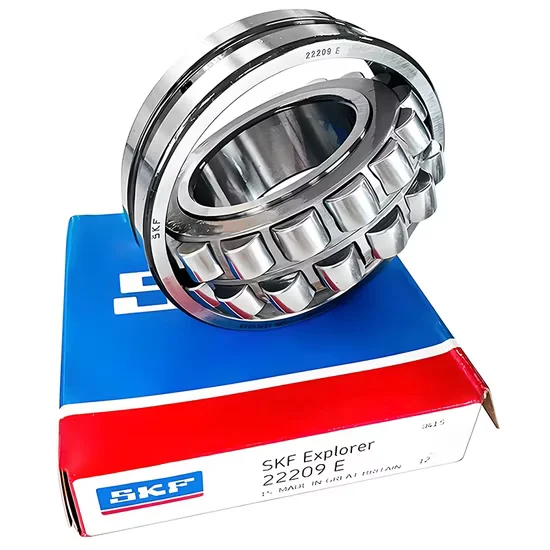
Genuine bearings from established manufacturers like SKF, FAG, or NSK offer specific variants designed for harsh environments. These units often feature double seals or even triple-lip designs that create multiple barriers against ingress. The lubricant used is typically a food-grade synthetic grease that does not break down easily in the presence of moisture or mild acids.
When sourcing, ensure that the part numbers correspond to these enhanced specifications. A standard open bearing might be cheaper, but it will require constant relubrication and monitoring, which is impractical in a sealed bottling environment. Instead, opt for pre-lubricated, sealed-for-life units that reduce maintenance touchpoints. This approach minimizes the risk of human error during greasing, such as over-greasing, which can generate heat and damage seals.
For MRO managers, the key is consistency. Mixing brands or using unverified equivalents can lead to dimensional mismatches or performance gaps. Stick to proven global brands that provide full traceability. This ensures that every bearing installed meets the same rigorous quality controls, reducing variability in line performance. When you choose Bearings in Brewery Bottling Lines, you are choosing the stability of your entire packaging process.
What is the True Cost of Using Non-Genuine Bearings?
Minor procurement savings lead to massive financial losses from product spoilage and extended line downtime.
It is tempting to choose a lower-cost alternative when budgets are tight. However, the economics of brewery operations make this a false economy. A single hour of unplanned downtime on a high-speed bottling line can result in the loss of thousands of bottles. If the line stops during a batch changeover or mid-production, the product already in the system may become unsalable due to temperature changes or contamination risks.
Consider the case of a retrofit project where a facility upgraded its capping machines with genuine, premium-sealed bearings. Before the upgrade, maintenance teams were replacing bearings every few months due to seal failure. After the switch, the maintenance interval extended significantly, allowing for planned servicing rather than emergency repairs. The reduction in spare part consumption and labor hours alone justified the higher initial investment.
Non-genuine bearings often lack the precise metallurgy and heat treatment of authentic products. This leads to earlier fatigue spalling and noise generation, which can affect the precision of filling volumes. Inconsistent fills mean product give-away or under-filling, both of which carry regulatory and financial penalties. The true cost is not just the bearing itself, but the ripple effect on product quality and brand reputation.
By investing in genuine components, you protect your revenue stream. The reliability of Bearings in Brewery Bottling Lines directly correlates with the consistency of your output. Skimping on these components is a gamble with odds stacked heavily against the producer.
How to Optimize Bearing Sourcing for Brewery MRO?
Partner with global suppliers for genuine, mixed-brand consolidation to ensure traceability and fast emergency replacement.
Maintaining a diverse fleet of machinery means dealing with multiple bearing brands and sizes. Managing inventory for each can be cumbersome and expensive. A more efficient approach is to work with a supplier who can consolidate orders across major brands like SKF, FAG, NSK, NTN, and TIMKEN. This allows you to maintain a leaner inventory while ensuring access to the exact genuine part needed for urgent repairs.
Traceability is non-negotiable. Counterfeit bearings are a significant risk in the global market. A reputable supplier provides documentation that verifies the origin of each item, ensuring it comes from the manufacturer’s authorized channels. This protects your equipment from substandard materials that may look identical but fail under stress.
Flexibility in order quantities is also crucial for MRO. Sometimes you need a single unit for an emergency breakdown; other times, you are stocking up for a annual overhaul. A partner who can accommodate both small spot buys and larger consolidated shipments helps balance cash flow and readiness. They can also offer technical support to help identify equivalent models if a specific part is discontinued, ensuring your line keeps running without lengthy redesigns.
Sourcing Bearings in Brewery Bottling Lines through a specialized global provider simplifies the supply chain. It reduces the administrative burden of managing multiple vendors and ensures that every component meeting your machine is genuine, traceable, and ready to perform. This strategic approach turns bearing procurement from a reactive cost center into a proactive reliability asset.
Conclusion
Reliability in brewery bottling starts with the integrity of every rotating component.
Choosing genuine, high-humidity resistant bearings prevents the hidden costs of seal failure and lubricant breakdown. By prioritizing traceability and partnering with suppliers who offer consolidated, authentic solutions, you secure the continuity of your production line. The right Bearings in Brewery Bottling Lines are not just parts; they are the foundation of operational efficiency.
What to state on your inquiry
A complete inquiry keeps the full model suffix and the specified execution, so the quote matches your parts list.
- Full SKF designationCopy every model suffix exactly as specified.
- Specified executionName any insulated, hybrid ceramic or clearance requirement.
- Motor and bearing positionGive the motor model and the position of each bearing.
- Quantity and deliveryList quantities, destination country, postcode and required date.