Mixing bearing brands in one container does not save money if customs seizes the cargo.
Sourcing genuine Bearings in Elevator Machines requires balancing technical selection with strict customs compliance and traceability for mixed-brand consolidation. The core challenge is not just finding the right load capacity, but ensuring that every SKF, FAG, or NSK unit in a mixed pallet has verifiable origin documents that align perfectly with the packing list to avoid clearance delays.
I still remember the silence on the phone line from Chicago. It was not the usual static of a bad connection, but the heavy, expensive silence of a construction site waiting for elevator traction machines that were stuck at the port. I had tried to be clever. To meet a tight deadline and optimize shipping costs, I consolidated a container of elevator main machine bearings. I mixed high-precision spherical roller bearings for the traction sheaves with standard deep groove ball bearings for the guide systems. On paper, it looked efficient. In reality, the customs broker flagged the shipment because the traceability certificates for the German-made units did not match the batch numbers on the commercial invoice for the Japanese-made ones. The result was a two-week detention, penalty fees, and a client who lost trust faster than the elevator could have risen. That experience reshaped how I approach every inquiry for Bearings in Elevator Machines today. It is not about the lowest price per unit; it is about the integrity of the documentation chain.
This guide breaks down the technical and logistical realities of sourcing these critical components. We will look at why specific bearing types matter for traction loads, how to verify authenticity without visiting the factory, and the exact steps to prevent customs bottlenecks when consolidating multiple brands.
What Are the Key Bearing Types in Elevator Machines?
Not all bearings can handle the dynamic shock loads of an elevator start-stop cycle.
Elevator traction machines operate under unique stress conditions. They face high radial loads from the weight of the car and counterweight, combined with axial loads during acceleration and deceleration. The primary workhorses in these applications are spherical roller bearings and deep groove ball bearings, each serving distinct roles within the assembly.
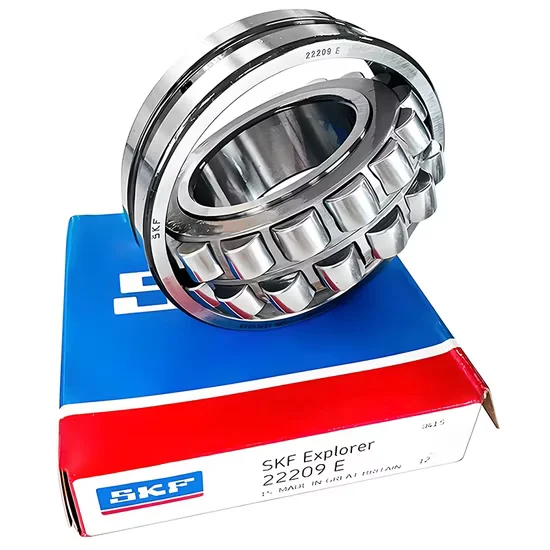
Spherical roller bearings are typically used in the main traction sheave assembly. Their self-aligning capability compensates for minor misalignments in the shaft housing, which is common in large industrial installations. They offer high load-carrying capacity and can tolerate significant operational vibrations. In contrast, deep groove ball bearings are often found in the motor end and guide systems. They provide low friction and high-speed capability, essential for the smooth operation of the drive motor. Selecting the wrong type, such as using a standard ball bearing where a spherical roller is required, leads to premature fatigue and noise issues that compromise passenger comfort and safety.
| Bearing Type | Primary Application in Elevator | Load Capacity | Misalignment Tolerance | Noise Level |
|---|---|---|---|---|
| Spherical Roller | Traction Sheave Main Support | High | High | Moderate |
| Deep Groove Ball | Motor End / Guide System | Medium | Low | Low |
| Cylindrical Roller | High-Speed Gearbox Input | High | None | Low |
| Angular Contact | Thrust Load Management | Medium-High | None | Low |
When evaluating suppliers for Bearings in Elevator Machines, ask for the specific application data sheet. A reputable supplier will not just send a catalog; they will confirm if the proposed bearing matches the dynamic load rating required by the elevator manufacturer’s specifications.
How to Select the Right Bearings for Elevator Traction Machines?
High load capacity is useless if the bearing generates excessive vibration at low speeds.
Selection goes beyond basic dimensions. Elevator machines often operate at variable speeds, starting from zero and ramping up. This creates a boundary lubrication condition where the oil film is thin, increasing the risk of surface distress. Therefore, the internal clearance and cage material become critical selection criteria.
For traction machines, C3 or C4 internal clearance is often preferred to accommodate thermal expansion during continuous operation. The cage material also matters. Polyamide cages are lighter and reduce friction, which is beneficial for energy-efficient drives, while steel cages offer higher robustness for heavy-duty freight elevators. Noise and vibration levels must adhere to strict standards, as any irregularity is transmitted directly to the elevator cabin.
A common mistake is assuming that a bearing with a higher static load rating is always better. In reality, overly stiff bearings can cause housing deformation. The key is matching the bearing’s stiffness to the housing design. When sourcing Bearings in Elevator Machines, request vibration test reports. These reports should show values well below the thresholds defined in industry standards for quiet operation.
Consider the case of a mid-rise residential project in Southeast Asia. The initial specification called for standard industrial bearings. However, residents complained of a humming noise during night-time operation. The issue was traced to bearings with inadequate precision grades for the low-speed, high-torque application. Switching to P6 precision class bearings with optimized internal geometry resolved the noise issue without changing the load capacity. This highlights that technical selection for Bearings in Elevator Machines must prioritize operational smoothness alongside durability.
Why Is Traceability Crucial for Elevator Bearing Sourcing?
A missing certificate of origin is a liability, not just a paperwork error.
In the elevator industry, safety is paramount. If a bearing fails, the consequences can be catastrophic. Therefore, building owners and maintenance companies require full traceability. This means being able to trace every bearing back to the specific production batch at the manufacturer’s facility. Without this, you cannot verify if the bearing was stored correctly, if it is genuine, or if it belongs to a recalled batch.
Counterfeit bearings are a significant risk in the global market. They may look identical to genuine products but use inferior steel and poor heat treatment. These fakes fail prematurely, leading to unplanned downtime and potential safety hazards. For MRO operators, using non-traceable bearings voids warranty claims and insurance coverage.
When purchasing Bearings in Elevator Machines, insist on seeing the original mill certificate or the authorized distributor’s certificate of conformity. This document should include the bearing part number, batch number, manufacturing date, and the name of the producing plant. Cross-check these details with the markings on the bearing itself. Any discrepancy is a red flag.
I once audited a stocklot in a regional warehouse. The boxes looked authentic, but the batch numbers on the certificates did not match the laser etching on the bearings. Upon investigation, we found that the seller had mixed old stock with new arrivals without updating the documentation. For an elevator OEM, this level of inconsistency is unacceptable. It introduces quality variance across batches, making it impossible to predict service life. Reliable sourcing of Bearings in Elevator Machines demands a supply chain where every unit is accounted for from the factory floor to the installation site.
How to Avoid Customs Delays When Consolidating Mixed Brands?
Customs officers do not care about your logistics efficiency; they care about document consistency.
Consolidating different brands like SKF, FAG, and NSK in one shipment is cost-effective, but it is a administrative minefield. Each brand has its own packaging, labeling style, and documentation format. If the packing list simply says "Bearings," customs will likely inspect the cargo physically. If they find multiple brands, they will expect separate invoices or clear breakdowns for each.
The most common cause of delay is a mismatch between the physical goods and the declared value or origin. For example, if a container holds German and Japanese bearings, the certificate of origin must clearly distinguish which items are from which country. Mixing them under a single generic description leads to queries, inspections, and demurrage charges.
To mitigate this, structure your documentation by brand and origin. Create a detailed packing list that groups items by manufacturer. Attach the corresponding traceability documents for each group. Do not combine different brands into a single line item unless they share the exact same country of origin and Harmonized System code, and even then, clarity is safer.
A US buyer once faced a three-week delay because their consolidated shipment of Bearings in Elevator Machines lacked separate country-of-origin declarations for the European and Asian components. The customs broker had to manually sort through hundreds of boxes to verify the origins. By pre-verifying the customs logic and ensuring complete traceability documentation for each brand before shipment, you eliminate these risks. This approach transforms a potential logistical nightmare into a smooth clearance process.
Conclusion
Traceability is the true currency of reliable bearing sourcing.
Sourcing Bearings in Elevator Machines is not just a procurement task; it is a risk management exercise. Technical selection ensures performance, but rigorous documentation ensures compliance and safety. By prioritizing verified origin documents and structured customs paperwork, you protect your projects from costly delays and liabilities. Always choose partners who understand that in the elevator industry, reliability is measured in decades, not just dollars.
What to state on your inquiry
A complete inquiry keeps the full model suffix and the specified execution, so the quote matches your parts list.
- Full SKF designationCopy every model suffix exactly as specified.
- Specified executionName any insulated, hybrid ceramic or clearance requirement.
- Motor and bearing positionGive the motor model and the position of each bearing.
- Quantity and deliveryList quantities, destination country, postcode and required date.