Standard clearance is not universal for high-altitude environments.
Successful hydropower operations in Austria require precise bearing clearance adaptation for extreme environments and strict verification of genuine traceability documents to avoid catastrophic turbine failures. MRO operators and OEMs must prioritize internal clearance adjustments for low-temperature thermal contraction and cross-check mill test certificates against physical markings to ensure component authenticity.
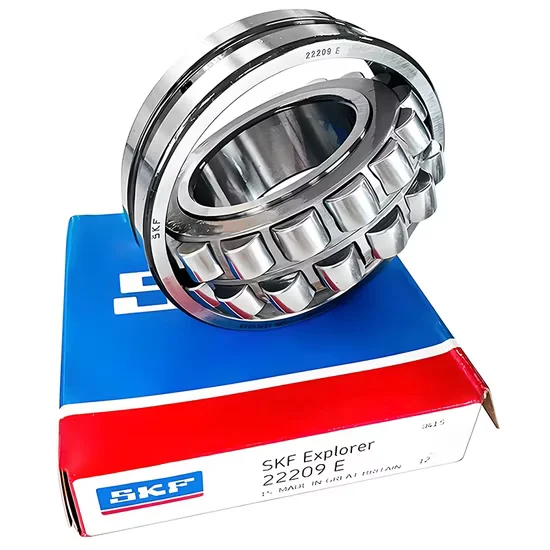
The cold air at high altitudes does more than just chill the skin; it shrinks steel. I learned this the hard way during a turbine assembly project in the Austrian Alps. We had sourced what appeared to be standard SKF spherical roller bearings, complete with paperwork that looked perfect at a glance. The team proceeded with the usual installation protocols, assuming the C3 clearance would suffice. It did not. As the temperature dropped during the night shift, the inner rings contracted differently than the shafts, leading to excessive preload. The bearings seized before the turbine even reached full speed. That failure was not due to poor manufacturing but to a mismatch between standard specifications and specific environmental conditions. It highlighted a critical gap in how many procurement teams approach Bearings in Hydropower Plants Austria. The assumption that off-the-shelf components fit all industrial contexts is a dangerous oversimplification.
Why Do Standard Bearings Fail in Austrian Hydropower?
Thermal contraction at high altitudes creates hidden interference fits.
Most engineers assume that standard internal clearance categories are sufficient for general heavy machinery. However, hydropower plants in mountainous regions operate under unique thermodynamic stresses. The ambient temperature can fluctuate significantly, and the cooling effect of water flow combined with high-altitude air density changes the thermal behavior of large-diameter bearings.
When a bearing operates in a cold environment, the steel contracts. If the initial internal clearance is not adjusted to account for this contraction, the operating clearance can drop to zero or become negative. This leads to increased friction, heat generation, and eventual catastrophic failure. In the Austrian context, where plants often sit at considerable elevations, this risk is amplified. The standard C3 clearance, which works well in temperate lowland factories, may prove inadequate here.
I recall inspecting a failed unit from a mid-sized plant in Tyrol. The outer ring showed signs of smearing, a classic indicator of insufficient lubrication film thickness caused by excessive preload. The maintenance log showed no errors in lubrication schedules. The root cause was purely mechanical: the bearing had been selected based on room-temperature specifications without accounting for the operational thermal state. This is a common oversight when sourcing Bearings in Hydropower Plants Austria without specialized technical consultation.
To prevent this, one must calculate the effective operating clearance. This involves considering the temperature difference between the inner and outer rings, as well as the fit tolerances. For large spherical roller bearings used in turbine main shafts, a higher initial clearance class, such as C4, might be necessary to ensure that the operating clearance remains within the optimal range during cold starts. Ignoring this parameter turns a premium component into a liability.
How to Select the Right Clearance for Low-Temperature Turbines?
Precise technical selection prevents assembly interference and early fatigue.
Selecting the correct clearance is not a guessing game. It requires a systematic approach that integrates environmental data with mechanical specifications. The goal is to maintain a positive operating clearance under all load and temperature conditions.
The process begins with defining the operational temperature range. In Austrian hydropower plants, this includes the minimum ambient air temperature and the temperature of the cooling water. Next, one must estimate the temperature gradient between the inner and outer rings during operation. The inner ring, being mounted on the rotating shaft, often runs hotter than the outer ring housed in the stationary pedestal. This differential causes the inner ring to expand relative to the outer ring, reducing internal clearance.
| Factor | Standard Condition | High-Altitude Low-Temp Condition |
|---|---|---|
| Ambient Temperature | Moderate | Low / Fluctuating |
| Thermal Contraction | Minimal | Significant |
| Required Initial Clearance | C3 | C3 or C4 (Verified) |
| Risk of Preload | Low | High |
| Verification Method | Standard Check | Detailed Thermal Calculation |
This table highlights the shift in requirements. While C3 is a common default, the "High-Altitude Low-Temp" column demands scrutiny. In some cases, C4 is required. However, moving to C4 without verification can lead to excessive vibration if the operating temperature is higher than expected. Therefore, the selection must be validated through calculation.
A European wind farm operator once faced similar issues with gearbox bearings. They switched to C4 clearance across the board, only to find increased noise levels during warmer months. The solution was not a blanket change but a site-specific analysis. For hydropower, where water temperature is relatively stable but air temperature varies, the calculation must account for both scenarios. When evaluating Bearings in Hydropower Plants Austria, suppliers must provide the technical capability to support these calculations, not just ship boxes.
The key is to avoid both extremes: too little clearance causes overheating, while too much causes instability. The sweet spot is determined by precise engineering data, not catalog defaults. This level of detail separates a simple distributor from a technical partner.
How to Verify Genuine Bearings and Avoid Fake COCs?
Cross-checking mill test certificates ensures traceability and authenticity.
The market is flooded with counterfeit bearings that look identical to genuine products. The packaging, the logo, and even the Certificate of Conformity (COC) can be forged. Relying solely on the COC provided by the seller is a significant risk.
During a procurement audit for a major overhaul, I encountered a batch of FAG bearings with COCs that appeared authentic. The fonts matched, the logos were crisp, and the document numbers followed the expected format. However, a closer look at the mill test certificate revealed inconsistencies. The heat number on the certificate did not match the batch code stamped on the bearing rings. Furthermore, the chemical composition listed in the test report deviated slightly from the standard specification for that specific grade of steel.
This discrepancy is a red flag. Genuine manufacturers maintain strict traceability. Each bearing can be traced back to the specific batch of steel used, the production line, and the quality control checks performed. Fake documents often reuse templates, leading to mismatched data points. To verify authenticity, one must cross-check the physical markings on the bearing with the documentation.
| Verification Step | Genuine Product | Counterfeit Product |
|---|---|---|
| Packaging Quality | High, consistent printing | Variable, often blurry |
| Logo Engraving | Precise, deep, clean | Shallow, uneven, or etched |
| COC Consistency | Matches physical batch codes | Generic, mismatched data |
| Mill Test Certificate | Specific heat numbers, verifiable | Template-based, generic data |
| Traceability | Full chain from steel to finish | Broken or missing links |
This comparison illustrates the differences. The "Counterfeit Product" column shows typical weaknesses. Note that some high-quality fakes may pass visual inspection, making document verification critical. The mill test certificate is the gold standard because it contains specific metallurgical data that is difficult to forge accurately for every single batch.
When sourcing Bearings in Hydropower Plants Austria, buyers must demand this level of transparency. A reputable supplier will not hesitate to provide original mill test certificates and will assist in verifying the data. They understand that in critical applications like hydropower, there is no room for error. The cost of a fake bearing is not just the price of the component but the potential downtime and damage to the turbine.
Verification is not just about avoiding fakes; it is about ensuring performance. Genuine bearings from brands like SKF and FAG are manufactured to tight tolerances that counterfeiters cannot replicate. Using verified genuine parts ensures that the technical calculations for clearance and load capacity are valid.
What Are the Best Sourcing Strategies for Hydropower MRO?
Mixed-brand consolidation and technical support minimize downtime.
Maintenance, Repair, and Operations (MRO) in hydropower plants require a agile supply chain. Downtime is expensive, and waiting for a single brand component can delay entire projects. A strategic approach involves consolidating orders across multiple trusted brands and leveraging technical support for equivalent selections.
In an emergency overhaul scenario, a plant might need a specific spherical roller bearing that is out of stock from the primary OEM. Instead of waiting weeks for a new production run, a flexible supplier can offer a genuine equivalent from another premium brand, such as switching from an SKF model to a comparable FAG or NSK unit, provided the technical specifications match. This requires deep knowledge of cross-brand equivalents and the ability to verify that the alternative meets the same load and clearance requirements.
I assisted a client who faced a critical shutdown due to a failed thrust bearing. The original specified brand had a long lead time. By analyzing the dimensional and load parameters, we identified a genuine alternative from a different premium manufacturer that was available in stock. The technical team verified the clearance and material specs, ensuring it met the operational needs. The plant was back online in days rather than weeks, saving significant revenue.
This strategy relies on having access to a broad inventory of genuine products. A supplier who stocks only one brand limits the options for urgent MRO needs. By offering a full spectrum of brands, including SKF, FAG, INA, NSK, and others, a supplier can provide solutions that keep the plant running. This is particularly valuable for Bearings in Hydropower Plants Austria, where remote locations can complicate logistics.
Furthermore, technical support is crucial. Suppliers should not just sell boxes; they should offer guidance on selection, installation, and failure analysis. This holistic approach ensures that the bearings perform as intended and that the plant operates efficiently. The ability to consolidate mixed-brand orders also simplifies procurement, reducing administrative overhead and shipping costs.
Conclusion
Precision and verification are non-negotiable in hydropower.
Sourcing Bearings in Hydropower Plants Austria demands more than just finding the lowest price. It requires a deep understanding of environmental impacts on bearing performance, rigorous verification of documentation to ensure authenticity, and a flexible sourcing strategy to minimize downtime. By focusing on precise clearance selection for low-temperature environments and insisting on traceable, genuine components, operators can protect their assets and ensure reliable power generation. The cost of negligence is far higher than the investment in proper technical selection and verification.
What to state on your inquiry
A complete inquiry keeps the full model suffix and the specified execution, so the quote matches your parts list.
- Full SKF designationCopy every model suffix exactly as specified.
- Specified executionName any insulated, hybrid ceramic or clearance requirement.
- Motor and bearing positionGive the motor model and the position of each bearing.
- Quantity and deliveryList quantities, destination country, postcode and required date.