
Product details
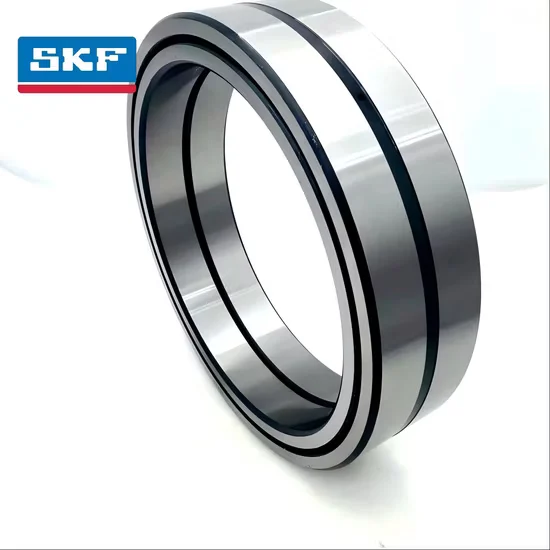
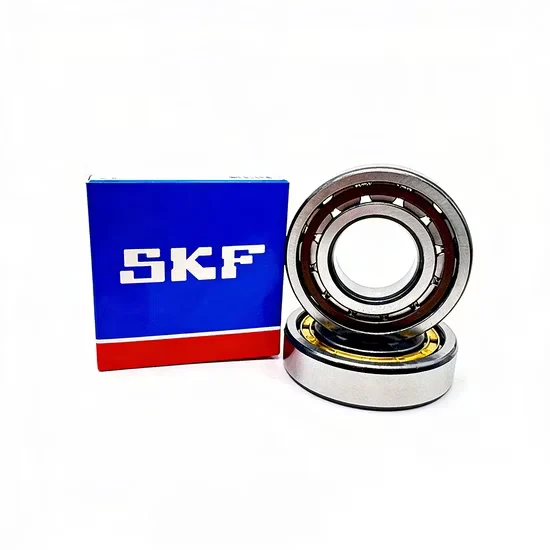
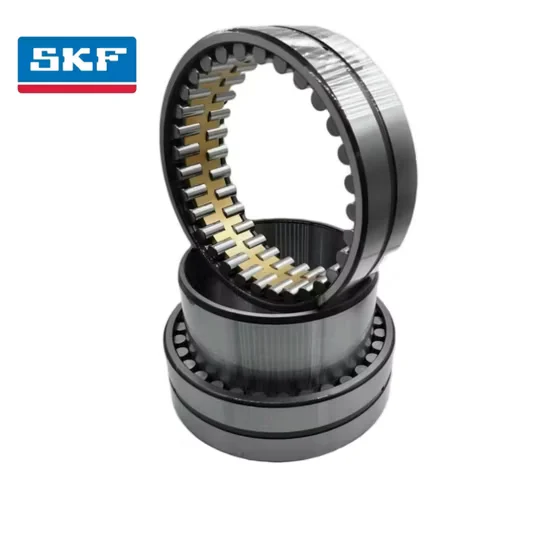
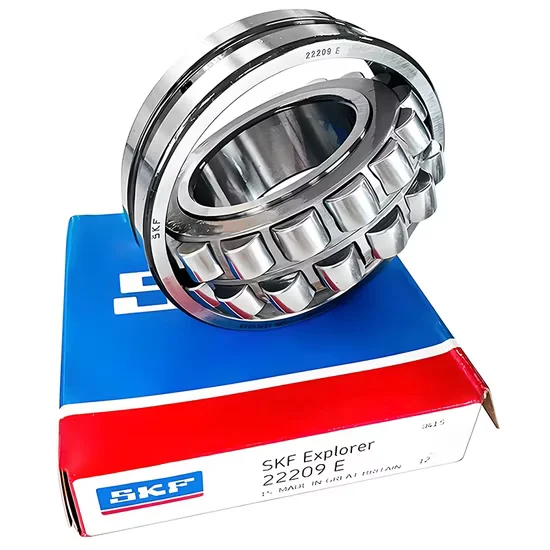
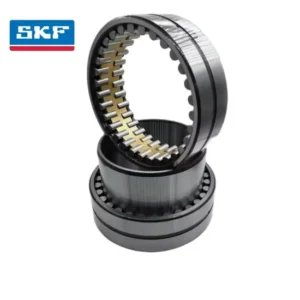
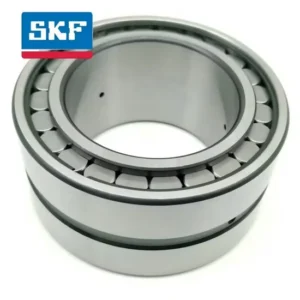
About NU320 EC J/C3 Double Row Cylindrical Roller Bearing for Main Shaft Spindle Matching
Original Batch Traceability — Every Nu320 Ec J/C3 shipment includes mill certificates linking the exact heat number to the rolling elements.
Technical Specifications
| Parameter | Value |
|---|---|
| Designation | Nu320 Ec J/C3 |
| Product Type | Cylindrical Roller Bearing |
| Number of Rows | Double |
| Material | Bearing Steel |
| Separable Design | Separated |
| Clearance Options | C0, C2, C3, C4, C5 |
| Cage Options | Brass, Pressed Steel |
| Vibration Grades | Z1V1, Z2V2, Z3V3 |
| Hardness | 60-64 HRC |
| Origin | Jiangsu China |
Note: The lowercase 'c' in the designation remains an unverified suffix requiring manufacturer catalog confirmation.
Application Suitability
| Industry | Typical Applications |
|---|---|
| Machine Tool Manufacturing | Main shaft spindle matching for high-speed machining centers |
| Heavy Machinery | Heavy-duty gearboxes requiring high radial rigidity |
| Metallurgical Equipment | Rolling mills subjected to continuous high-load operations |
Why Ignoring Suffix Details Destroys Spindle Accuracy with the zhaoyun Nu320 Ec J/C3 cylindrical roller bearing
Thermal expansion mismatches from incorrect clearance selection cause catastrophic spindle seizures at high RPMs.
When I was procuring bearings for machine tool factories in Qingdao, I focused solely on the basic model number and completely overlooked the internal design and clearance suffixes. Consequently, when the equipment ran at high speeds, the temperature rise directly caused the spindle to lock up. Now, working with main shaft matching for double-row cylindrical roller bearings, I know that missing a single suffix detail can force the entire machine tool to shut down. These hard-learned lessons highlight why precise parameter alignment is non-negotiable for heavy-duty transmissions.
Matching Spindle Dynamics with Precision Component Selection
When integrating the zhaoyun Nu320 Ec J/C3 cylindrical roller bearing into a machine tool spindle, the separable design significantly simplifies the assembly process while maintaining strict dimensional tolerances across the housing and shaft. Our engineering team provides comprehensive cross-brand equivalent model consultation to ensure this specific configuration aligns perfectly with your existing geometries, eliminating the need for costly machining modifications. This targeted technical selection support prevents unexpected retrofitting during critical maintenance windows. Furthermore, we analyze the specific load profiles of your application to recommend the optimal cage and clearance combination, ensuring the bearing operates within its designed kinematic boundaries.
Managing High-Speed Thermal and Load Challenges in Machining Centers
Spindle applications demand exceptional radial rigidity to handle heavy cutting forces without introducing microscopic deflections that ruin surface finishes. As rotational speeds increase, internal friction generates significant heat, making the initial internal clearance absolutely critical to prevent dangerous preload loss. Proper lubrication intervals must be strictly established to manage thermal gradients across the inner and outer rings, preventing localized hot spots. Furthermore, the mounting process requires precise induction heating techniques to avoid altering the carefully engineered metallurgical structure of the bearing steel. Ignoring these thermal and load dynamics inevitably compromises the overall machining precision.
Decoding the Internal Geometry and Cage Configurations for Heavy Loads
The 'E' suffix indicates an enhanced internal design, optimizing the roller profile and flange contacts to maximize the dynamic load rating under continuous radial stress. For the cage configuration, the 'J' pressed steel cage offers excellent performance in standard oil-lubricated spindle environments, while brass alternatives are readily available for applications demanding higher vibration resistance and structural damping. The 'C3' clearance provides the necessary thermal expansion allowance, ensuring the bearing does not bind or seize when the spindle reaches its peak operating temperature. Additionally, the 60-64 HRC hardness of the bearing steel guarantees exceptional wear resistance under continuous high-load cycling. Selecting the correct vibration grade, such as Z3V3, further minimizes resonance in precision machining operations, protecting both the tool and the workpiece.
The Cascading Financial Impact of Misconfigured Spindle Bearings
Selecting a standard clearance instead of C3 for high-speed spindles inevitably leads to premature failure through excessive friction and rapid heat generation. This unplanned downtime halts the entire production line, resulting in severe financial penalties, missed delivery deadlines, and damaged client relationships. According to failure mode classifications outlined in ISO 15243, smearing, thermal discoloration, and cage fractures are direct consequences of such critical clearance mismatches. Ultimately, replacing a damaged main shaft assembly and recalibrating the machine tool far exceeds the initial cost of specifying the correct bearing parameters from the start.
Securing Authentic Spindle Components Through Verified Global Channels
Sourcing genuine components with complete traceability documentation eliminates the severe risk of counterfeit parts entering critical spindle assemblies. We maintain massive spot inventory covering thousands of standard and special part numbers, ensuring rapid fulfillment for urgent maintenance requirements without waiting for long production cycles. Our flexible minimum order quantity accommodates everything from single-unit emergency spare-part orders to full container consolidation shipments for large-scale projects. We provide highly competitive sourcing costs compared to direct official brand channels without ever compromising on ISO-compliant quality assurance. Furthermore, our long-term after-sales technical support includes detailed failure analysis to guide future application improvements and prevent recurring issues.
Documentation & Authenticity
- Certificate of Conformity verifying the 60-64 HRC hardness and material spectrometry for the bearing steel.
- Original factory batch traceability documents linking the specific heat number to the rolling elements.
- Dimensional and running accuracy inspection reports confirming the precise C3 internal clearance before dispatch.
- Vibration grade test certificates validating the Z3V3 performance limits for high-speed spindle applications.
Storage, Handling & Mounting
- Store the separable inner and outer rings in original packaging to prevent moisture ingress and corrosion.
- Use induction heating with strict temperature control when mounting the inner ring to preserve the C3 clearance.
- Keep the pressed steel cage components clean and avoid dropping to prevent deformation of the cage pockets.
- Verify the physical product, drawing, and packing list for three-way alignment of the J and C3 suffixes before assembly.
Preparing Your Technical Parameters for Spindle Integration
To ensure optimal spindle matching, please share your specific radial and axial loads, operating speeds, and thermal conditions for a comprehensive L10 life calculation. Providing the original equipment manufacturer part numbers allows our engineering team to perform accurate cross-reference confirmations across multiple international brands. This technical verification guarantees the selected configuration perfectly aligns with your machinery's exact operational demands, preventing costly installation errors.
Frequently Asked Questions
Q: How does the E suffix affect the load capacity of this cylindrical roller bearing?
A: The E suffix denotes an enhanced internal design that optimizes the roller profile and flange contact areas. This geometric refinement significantly increases the dynamic load rating compared to standard designs, allowing the bearing to withstand heavier radial forces in demanding spindle applications without accelerating fatigue.
Q: Why is C3 clearance preferred over standard clearance for high-speed machine tool spindles?
A: High rotational speeds generate substantial friction heat, causing the inner ring to expand more than the outer ring. The C3 clearance provides the necessary initial gap to accommodate this thermal expansion. Without it, the bearing would lose its internal clearance, leading to excessive preload, overheating, and eventual seizure.
Q: What are the speed and lubrication boundaries when choosing between J and M cages?
A: The J pressed steel cage is lightweight and performs exceptionally well in standard oil-lubricated environments at high speeds. Conversely, a machined brass cage offers superior vibration damping and structural strength, making it preferable for applications with heavy shock loads or where grease lubrication is the primary method.
Q: How do NU and NN configurations differ in spindle applications?
A: While the NU design typically handles heavy radial loads and allows for axial displacement, the NN double-row configuration provides exceptionally high radial rigidity, which is critical for maintaining machining precision. Selecting between them depends on whether the spindle requires strict radial stiffness or needs to accommodate thermal shaft expansion.
Q: What specific checks should be performed during the assembly of the matched spindle set?
A: Before mounting, verify the three-way alignment of the suffixes across the physical product, technical drawing, and packing list. During assembly, strictly control the induction heating temperature to prevent altering the bearing steel's hardness. Finally, measure the residual clearance after mounting to ensure the C3 gap remains within the specified tolerance.