Visual spalling is not always fatigue failure.
Identifying the exact failure mode using ISO 15243 bearing damage classification prevents misdiagnosis, shifting the focus from superficial visual guessing to rigorous root-cause analysis. This standard provides a systematic framework to distinguish between wear, fatigue, corrosion, electrical erosion, plastic deformation, and fracture, ensuring that replacement strategies address the true underlying cause rather than just the symptom.
I still remember the humid air inside a cement plant in Southeast Asia. A conveyor system had failed repeatedly, and the maintenance team was convinced they were dealing with poor quality spherical roller bearings. They pointed to the flaking metal on the raceways as proof of premature fatigue. When I arrived with a toolkit and a magnifying glass, the story changed. The damage pattern did not match classic subsurface fatigue initiation. Instead, I found localized discoloration on the inner ring and fine, abrasive scratches across the rolling elements. The workers had been installing bearings by heating them with an open flame, causing local annealing that softened the steel. Combined with a missing seal that allowed cement dust ingress, the result was catastrophic abrasive wear masquerading as fatigue. Without the ISO 15243 bearing damage classification guidelines, we would have simply swapped brands and repeated the same error.
Understanding these distinctions is critical for MRO managers and distributors who need to resolve claims and prevent recurring downtime. Let us break down how to apply this standard effectively in the field.
Why Visual Inspection Fails in Failure Analysis?
Surface anomalies often mislead investigators without metallurgical context.
A common pitfall in field failure analysis is assuming that any surface damage indicates a material defect or manufacturing error. However, the operating environment and installation practices leave distinct signatures that require more than a casual glance.
In the cement plant case, the "spalling" looked like fatigue to the untrained eye. Fatigue typically starts below the surface and propagates outward, creating distinct craters. In contrast, the damage I observed was superficial and accompanied by heat tinting. This is a classic example of how improper installation can mimic other failure modes. If you only look at the final state of the bearing, you miss the sequence of events.
Another frequent misinterpretation involves dust ingress. Operators often wipe away surface dirt and assume the bearing is clean. However, fine particulate matter acts as an abrasive agent. Once embedded in the lubricant or soft metal surfaces, it triggers three-body abrasive wear. This process destroys raceways rapidly but can be mistaken for poor lubrication if the dust source is not identified. Using ISO 15243 bearing damage classification helps categorize this as wear rather than fatigue, directing attention to sealing solutions rather than bearing material upgrades.
The key takeaway is that visual inspection is merely the first step. It must be followed by an understanding of the mechanisms that create specific damage patterns. Without this knowledge, corrective actions are often guesses that fail to address the root cause.
What Are the 6 Main Damage Categories in ISO 15243?
Systematic breakdown of damage types enables precise diagnosis.
The international standard categorizes bearing damage into six primary groups. Each group has sub-categories that help pinpoint the specific mechanism. Familiarity with these categories is essential for anyone involved in procurement or maintenance.
- Wear: This includes abrasive wear from contaminants, adhesive wear from insufficient lubrication, and fretting corrosion. The cement plant example fell squarely into abrasive wear due to seal failure.
- Fatigue: Subsurface-initiated fatigue is the expected end-of-life failure mode. It occurs after a calculated number of stress cycles. Premature fatigue usually points to overload or misalignment.
- Corrosion: This can be moisture-induced rust or chemical attack. It often appears as reddish-brown deposits or etching on the rolling surfaces.
- Electrical Erosion: Also known as fluting, this occurs when current passes through the bearing, causing melting and re-solidification of the metal. It is common in electric motors with inadequate grounding.
- Plastic Deformation: This includes brinelling from shock loads and false brinelling from vibration during standby. A mining crusher operator once reported overheating rollers; investigation revealed improper clearance adjustment leading to thermal expansion and subsequent deformation.
- Fracture and Cracking: These are often caused by excessive press-fitting forces or impact loads during handling.
When sourcing replacements, knowing the category helps in selecting the right product. For instance, if electrical erosion is the issue, switching to a higher grade of steel will not help. Instead, insulated bearings or shaft grounding brushes are required. As a global supplier, we often see customers requesting premium brands for applications where the fundamental issue is installation or environmental protection. Applying ISO 15243 bearing damage classification clarifies whether a different bearing type or a different maintenance procedure is needed.
Each category requires a different preventive strategy. Misclassifying electrical erosion as fatigue leads to wasted budget on heavier-duty bearings that will fail in the same way.
How to Conduct a Step-by-Step Root Cause Analysis?
A structured approach moves from observation to evidence.
To accurately apply ISO 15243 bearing damage classification, follow a disciplined process. This method ensures that no critical evidence is overlooked.
- Visual Check: Document the condition of the bearing before cleaning. Note the location of damage relative to the load zone. Take high-resolution photos. Look for color changes indicating heat.
- Measurement: Check dimensional stability. Measure internal clearance and compare it to original specifications. Excessive clearance can indicate wear or plastic deformation.
- Microscopic Analysis: Use a borescope or microscope to examine the surface texture. Fatigue cracks have a different morphology than grinding cracks or stress corrosion cracks.
- Lubricant Analysis: If possible, analyze the remaining grease or oil. Contaminants like water, metal particles, or dust provide clues about the environment.
- Operational Review: Interview operators. Ask about recent changes in load, speed, or temperature. In the gearbox application case, false brinelling was traced to vibration during transport without rotation, a detail only revealed through operational questioning.
This step-by-step method transforms subjective opinions into objective findings. It allows technical teams to build a compelling case for warranty claims or process improvements. For distributors, providing this level of analytical support adds significant value beyond simple product supply.
By following these steps, you ensure that the classification is accurate and the subsequent recommendations are effective.
How to Prevent Recurring Failures on Site?
Match installation tools and sealing to specific damage modes.
Prevention is always more cost-effective than replacement. Once the damage mode is identified via ISO 15243 bearing damage classification, implement targeted preventive measures.
If the issue is abrasive wear, improve sealing. Consider labyrinth seals or magnetic seals for harsh environments like mining or cement production. Ensure that housing fits are correct to prevent fretting.
For fatigue issues, review load calculations and alignment. Misalignment is a silent killer of bearings. Use laser alignment tools during installation. If the bearing is overloaded, consider a bearing with a higher dynamic load rating or a larger size.
In cases of electrical erosion, install shaft grounding rings or use insulated bearings. Verify that motor drives are properly filtered to reduce high-frequency currents.
For plastic deformation caused by improper installation, invest in proper heating equipment. Induction heaters provide uniform heating without the risk of local annealing associated with open flames. Ensure that pressing tools distribute force evenly to avoid brinelling.
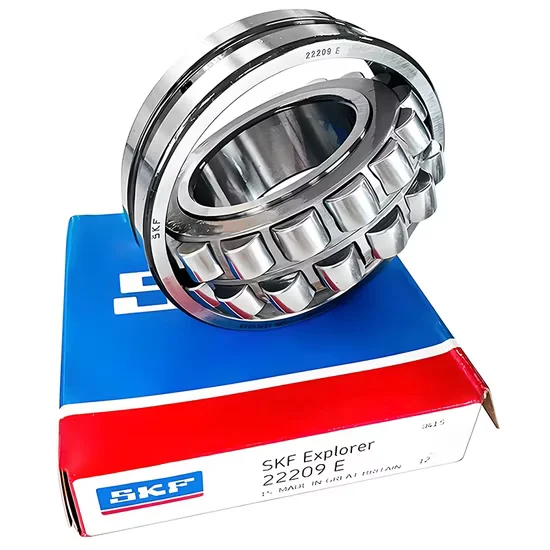
Our role as a supplier extends to providing technical guidance on these preventive measures. We stock genuine products from major brands like SKF, FAG, NSK, and TIMKEN, along with reliable domestic lines. Having access to a wide range of options allows us to recommend the most suitable solution for each specific failure mode. Whether it is a specialized sealed spherical roller bearing for a dusty environment or a precision angular contact bearing for a high-speed spindle, having the right part available quickly minimizes downtime.
Preventing recurrence requires a holistic approach that combines the right product with the right practice.
Conclusion
Accurate classification drives effective prevention.
Using ISO 15243 bearing damage classification transforms failure analysis from a guessing game into a scientific process. By distinguishing between wear, fatigue, and other damage modes, maintenance teams can implement precise corrective actions. This reduces unplanned downtime and extends equipment life. For distributors and end-users, mastering this standard is a key competency in managing industrial assets efficiently.
What to state on your inquiry
A complete inquiry keeps the full model suffix and the specified execution, so the quote matches your parts list.
- Full SKF designationCopy every model suffix exactly as specified.
- Specified executionName any insulated, hybrid ceramic or clearance requirement.
- Motor and bearing positionGive the motor model and the position of each bearing.
- Quantity and deliveryList quantities, destination country, postcode and required date.