Product details
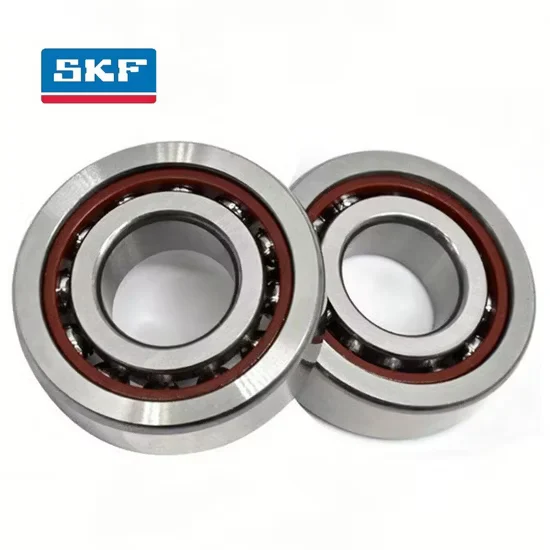
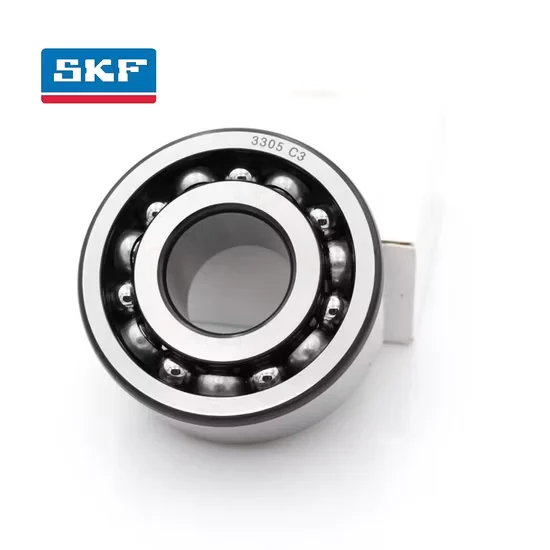
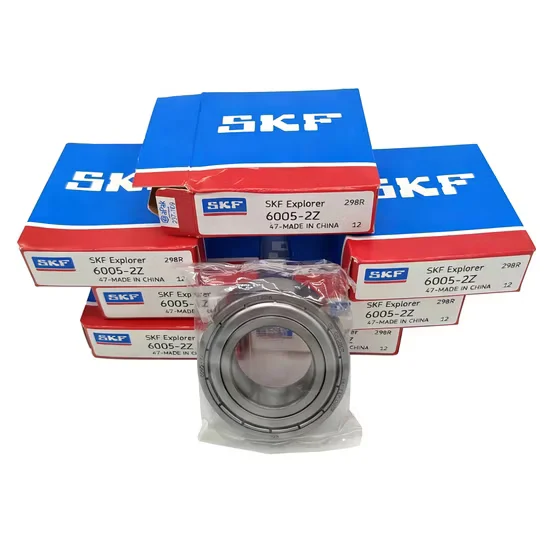
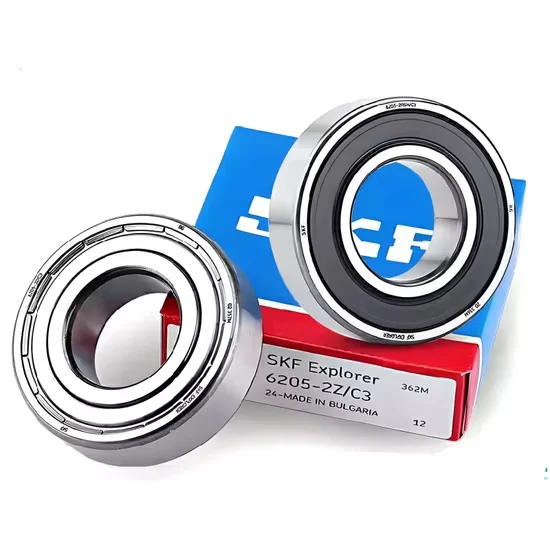
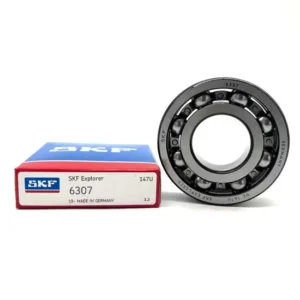
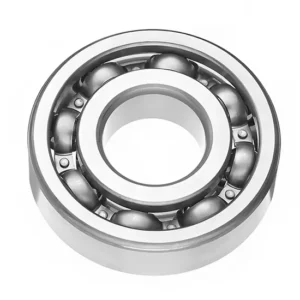
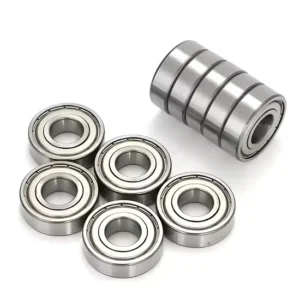
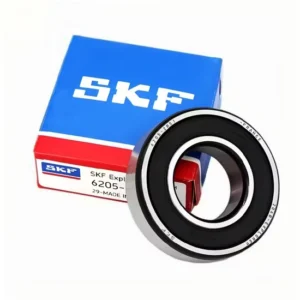
About SKF 6010-2RS1 Deep Groove Ball Bearing Genuine Auto Bearing
Official App Verification — Scan the QR code on the packaging using the manufacturer's mobile app to instantly confirm authenticity and batch traceability.
Technical Specifications
| Parameter | Value |
|---|---|
| Designation | SKF 6010-2RS1 |
| Bearing Type | Deep Groove Ball Bearing |
| Bore Diameter (d) | 50 mm |
| Outside Diameter (D) | 80 mm |
| Width (B) | 16 mm |
| Seal or Shield Type | 2RS1 double-side contact seal |
| Precision Class | P0 to P2 options |
| Lubrication | Grease or Oil |
| Vibration | Z1V1 to Z3V3 |
| Number of Rows | Single |
| Load Direction | Radial |
| Material | Bearing Steel |
| Contact Angle | 0° |
| Origin | Sweden |
Application Suitability
| Industry | Typical Applications |
|---|---|
| Automotive | Alternator pulleys and transmission shafts |
| Industrial Machinery | Electric motor rotors and pump drive shafts |
| Material Handling | Conveyor belt idler rolls and gearbox input shafts |
Why Dust Ingress Destroys the SKF 6010-2RS1 deep groove ball bearing Before Fatigue Sets In
Seal friction generates heat, but microscopic abrasive particles cause catastrophic raceway scoring.
Based on my field experience in West African aftermarket operations, I watched perfectly good bearings seize prematurely because standard steel shields could not stop fine silica dust. When procurement teams prioritize low initial cost over proper seal selection, the resulting unplanned downtime far outweighs the savings. The abrasive particles mix with the internal grease, forming a grinding paste that rapidly destroys the raceway finish. This specific SKF 6010-2RS1 deep groove ball bearing mitigates this exact failure mode through its physical contact seal design, ensuring the lubricant remains clean even in highly contaminated environments.
Matching Radial Load Demands in Automotive and Pump Drives
This SKF 6010-2RS1 deep groove ball bearing handles pure radial loads efficiently while the double-side contact seals retain factory grease. Our sourcing network ensures you receive genuine units with complete traceability, eliminating the risk of counterfeit parts disrupting your assembly line or MRO schedules. In automotive alternators and industrial pump drives, the radial forces remain relatively constant, but the operating environment often introduces moisture and particulate matter. The deep groove geometry provides excellent load distribution across the rolling elements, preventing localized stress concentrations that could lead to spalling. By securing authentic components, maintenance teams avoid the hidden costs associated with premature replacements and secondary shaft damage.
Navigating Contamination and Thermal Expansion in Enclosed Housings
In gearboxes and electric motors, internal temperatures rise steadily, demanding lubricants that resist thinning while seals prevent external moisture ingress. The contact seal design introduces slight friction, which is acceptable at moderate speeds but requires careful monitoring in high-RPM applications. Proper installation avoids seal lip damage, ensuring the internal grease remains uncontaminated throughout the service life. When operating in enclosed housings, heat dissipation becomes a critical factor, as the rubber seal material has specific thermal boundaries. If the ambient temperature consistently exceeds these limits, the seal lips may harden and lose their flexibility, allowing contaminants to bypass the barrier. Understanding these thermal dynamics helps engineers design adequate cooling paths or select alternative high-temperature seal materials for extreme applications.
Decoding the 2RS1 Seal and Precision Tolerances
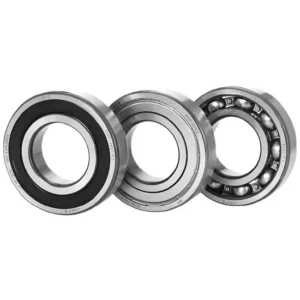
The 2RS1 suffix indicates a double-side contact seal made of oil-resistant synthetic rubber, providing superior protection against dust and moisture compared to non-contact steel shields. While the standard precision class suits general automotive components, higher precision options minimize vibration in sensitive electric motor applications. The single-row, non-aligning design requires precise shaft and housing tolerances to prevent edge loading on the raceways. Deep groove geometry allows it to accommodate minor axial loads in addition to its primary radial capacity. The internal clearance is carefully calibrated during manufacturing to compensate for the slight interference caused by the rubber seal lips. This ensures smooth rotation without excessive preload, which could otherwise generate unwanted friction heat and accelerate grease degradation. Selecting the correct precision grade directly influences the acoustic performance and operational lifespan of the entire drivetrain.
The Financial Impact of Premature Seal Failure
Selecting an open or shielded variant for a dusty environment leads to rapid abrasive wear, resulting in catastrophic damage to the rolling elements and raceways. This triggers unplanned downtime and secondary damage to adjacent shaft components. Following proper selection guidelines prevents warranty voidance and extends the operational interval significantly. When a bearing seizes unexpectedly, the resulting torque spike can twist drive shafts or strip gear teeth, multiplying the repair costs exponentially. Maintenance crews must then dismantle entire assemblies to replace not just the failed unit, but also the collateral damage caused by the initial seizure. Investing in the correct sealed configuration from the outset acts as an insurance policy against these compounding mechanical failures and production losses.
Securing Authentic Components for Critical MRO Replacements
We maintain massive spot inventory covering thousands of standard part numbers, ensuring rapid dispatch for urgent maintenance requirements. Our technical team provides cross-brand equivalent model consultation, helping you verify if this specific sealed variant matches your exact housing constraints. Every shipment includes complete traceability documentation, protecting your supply chain from the severe risks associated with counterfeit automotive bearings. We offer flexible consolidation shipping, combining mixed-brand orders into single containers to optimize your freight costs. Furthermore, our quality assurance protocols involve rigorous visual and dimensional checks before dispatch, ensuring the rubber seals show no signs of dry rot or physical deformation. This meticulous approach guarantees that the units arriving at your facility are ready for immediate installation without requiring additional incoming inspections.
Documentation & Authenticity
- Certificate of Conformity validating the Swedish origin and manufacturing batch.
- Official mobile app QR code verification confirming genuine 2RS1 seal specifications.
- Dimensional inspection report verifying 50 mm bore and 80 mm outer diameter tolerances.
- Material test certificate confirming high-carbon bearing steel composition.
- Original batch traceability documents linking the physical unit to the factory production run.
Storage, Handling & Mounting
- Keep the 2RS1 sealed units in original packaging until mounting to prevent rubber lip degradation from UV exposure.
- Use clean gloves during handling to avoid transferring corrosive sweat onto the 80 mm outer ring surface.
- Employ induction heating for the 50 mm bore installation to prevent damage to the double-side contact seals.
- Do not wash or relubricate the bearing, as the factory-filled grease is optimized for the sealed internal volume.
- Store in a climate-controlled environment to prevent condensation from compromising the rubber seal adhesion on the 16 mm width.
Technical Data Required for Application Verification
To ensure this specific sealed configuration meets your operational demands, please share your radial load calculations, operating speeds, and ambient temperature profiles. Providing the original equipment manufacturer part numbers allows our engineering team to perform accurate cross-reference checks. Detailing the environmental exposure levels helps us confirm whether the standard rubber seal material is sufficient for your specific contamination risks. If your application involves significant axial thrust or combined loading, our specialists can evaluate whether this deep groove variant is adequate or if an angular contact alternative is required. Supplying comprehensive operational parameters enables us to calculate the theoretical L10 life and recommend optimal maintenance intervals tailored to your specific machinery usage patterns.
Frequently Asked Questions
Q: How to verify the authenticity of the received units?
A: Scan the QR code printed on the packaging using the official manufacturer mobile application. This instantly validates the batch number and confirms the genuine 2RS1 seal specifications. We also provide complete traceability documentation, including original batch certificates, to ensure full supply chain transparency and protect your operations from counterfeit risks.
Q: What is the functional difference between 2RS1 contact seals and 2Z steel shields?
A: The 2RS1 designation features synthetic rubber seals that physically contact the inner ring, offering superior protection against fine dust and moisture ingress. In contrast, 2Z steel shields maintain a small clearance, reducing friction but allowing microscopic contaminants to enter. Based on field experience, contact seals are essential for dusty environments to prevent premature raceway scoring and seizure.
Q: How to select the appropriate precision and vibration class?
A: Standard precision and vibration classes are sufficient for general automotive components and basic conveyors. However, electric motors and high-speed gearboxes require tighter tolerances and lower vibration grades to minimize noise and prevent resonance. Share your specific RPM and load data with our technical team to determine the exact class needed for your application.
Q: What are the recommended lubrication intervals for this sealed configuration?
A: The 2RS1 sealed design is lubricated for life with high-quality factory grease and cannot be relubricated in the field. Attempting to force additional grease through the contact seals will rupture the rubber lips and introduce contaminants. Therefore, maintenance strategies should focus on monitoring operating temperatures and replacing the entire unit once the calculated service life is reached.
Q: How to cross-reference this model with equivalent variants?
A: While this specific unit features a 50 mm bore and 80 mm outer diameter, equivalent models from other premium brands may use different suffix conventions for seals and clearances. Our engineering team can cross-reference your existing part numbers to ensure dimensional and functional compatibility, verifying that the alternative provides the same contamination protection and load capacity.