Product details
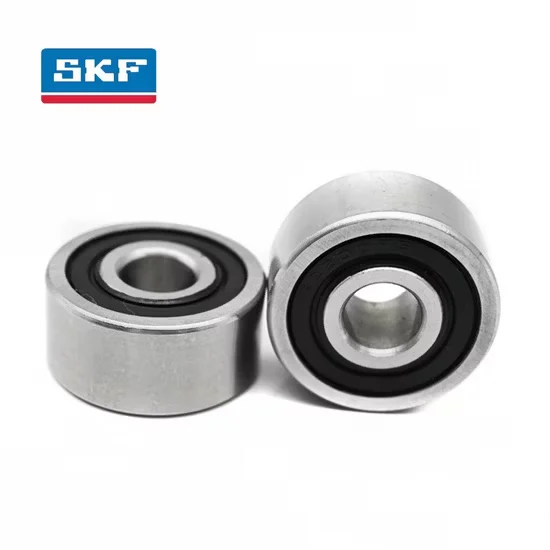
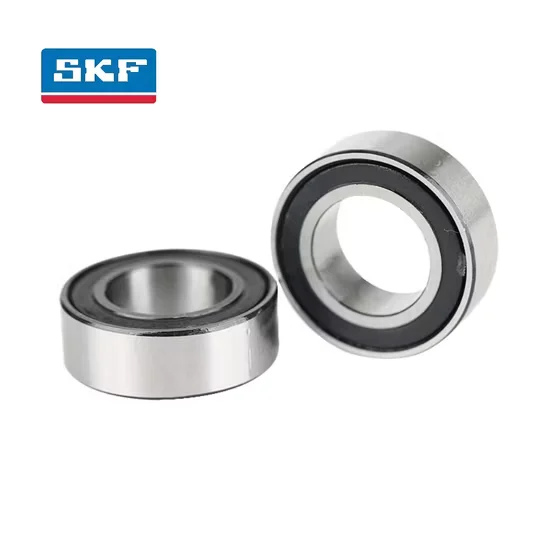
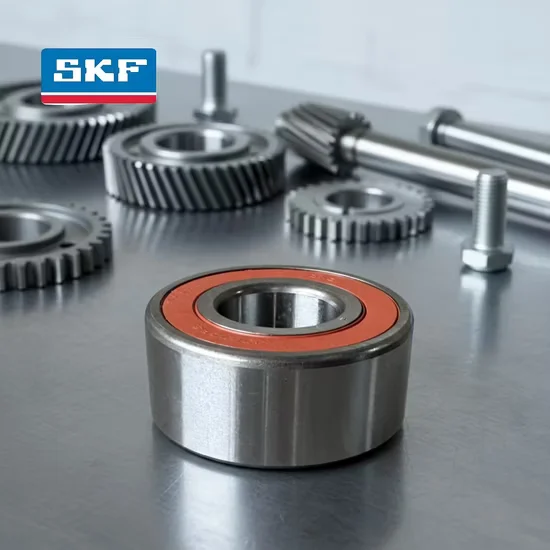
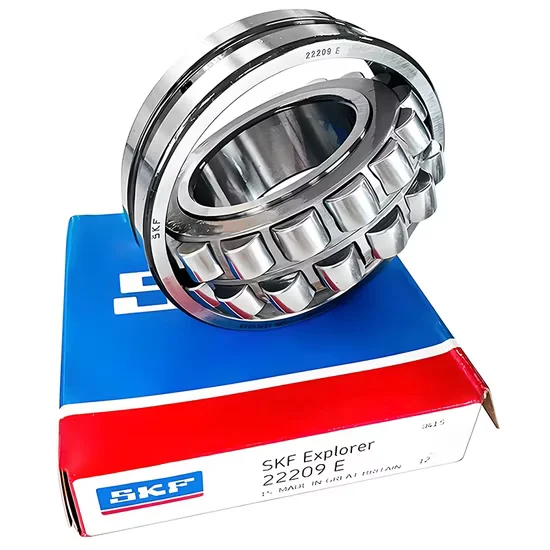
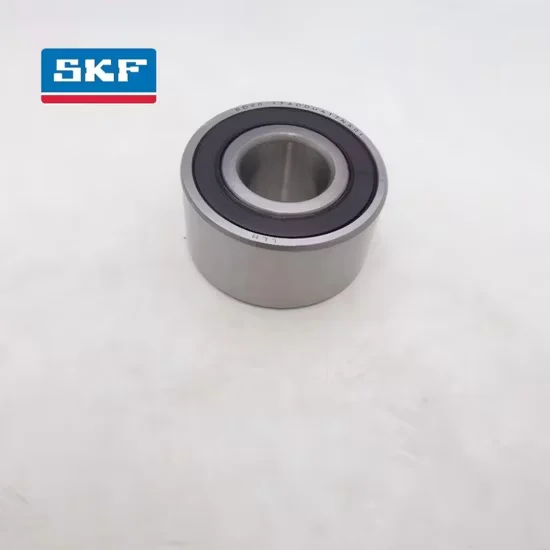
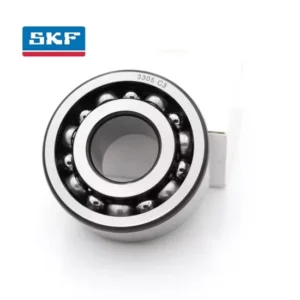
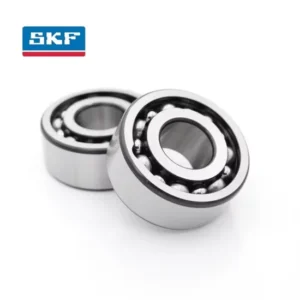
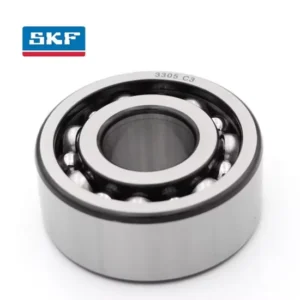
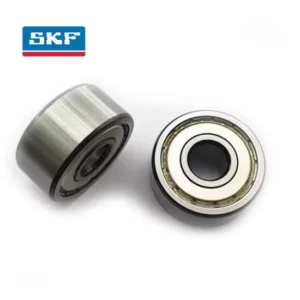
About SKF 3310 a-Nr Double Row Angular Contact Ball Bearing with Snap Ring
Authenticity via QR scan — Every SKF 3310 a-Nr double row angular contact ball bearing we dispatch includes a scannable QR code linking directly to the manufacturer's verification database.
Technical Specifications
| Parameter | Value |
|---|---|
| Designation | 3310 a-Nr |
| Bearing Type | Double Row Angular Contact Ball Bearing |
| Bore Diameter (d) | 50 mm |
| Outside Diameter (D) | 110 mm |
| Width (B) | 44.4 mm |
| Contact Angle | 30° |
| Rows Number | Double |
| Aligning | Non-Aligning |
| Cage Material | Steel / Copper / Nylon (Options) |
| Precision Class | P0 / P2 / P4 / P5 / P6 (Options) |
| Lubrication | Oil / Grease |
| Material | Bearing Steel |
Note: Suffixes 'a' and 'Nr' are marked as unverified in the initial draft; please confirm exact snap ring and contact angle designations with the official catalog before finalizing the order.
Application Suitability
| Industry | Typical Applications |
|---|---|
| Automotive | Gearbox shaft support and transmission housings |
| Industrial Manufacturing | Heavy-duty pump impeller positioning |
| Machine Tools | Spindle orientation and feed mechanism guidance |
Why Transmission Housings Reject Standard Snap Ring Bearings
Axial positioning fails when the snap ring groove tolerances do not match the housing shoulder.
Procurement engineers frequently face unplanned line stoppages because outer ring axial positioning fails under load. In my early days sourcing for a manufacturing plant, I specified a double row angular contact bearing for a gearbox but overlooked the critical suffix differences. That single oversight caused the outer ring to shift, forcing a complete line teardown and rework. Transitioning to the supply side, I now obsess over suffix variations and cross-reference alignment to ensure every configuration is exact. Ignoring these subtle design features inevitably leads to catastrophic housing damage.
Matching the 30° Contact Angle to Combined Loads
The SKF 3310 a-Nr double row angular contact ball bearing handles combined radial and axial loads effectively due to its 30° contact angle. Our engineering team provides cross-brand equivalent model consultation to ensure this specific contact angle matches your transmission housing's load vectors. Selecting the correct angle prevents premature raceway spalling under fluctuating torque conditions, maintaining rigid shaft support across the entire operational envelope.
Operational Challenges in Gearbox Environments
Gearbox environments subject bearings to reversing axial thrust, high-speed thermal expansion, and severe particulate contamination. Selecting between oil and grease lubrication depends heavily on the housing's cooling capacity and the effectiveness of external sealing mechanisms. Inadequate lubrication at elevated temperatures degrades the cage material, leading to catastrophic failure and secondary damage to the gears. Proper internal clearance must accommodate thermal growth without losing the necessary preload, while non-contact seals might be required to minimize friction heat in high-RPM scenarios.
Decoding Cage Materials and Precision Tolerances
Cage selection dictates the operational speed and vibration limits of the assembly. Steel cages offer high strength for heavy loads, while nylon cages reduce friction and noise at higher rotational speeds. Copper cages provide superior thermal conductivity and durability under severe vibration. Precision classes ranging from P0 to P2 determine the running accuracy; higher precision minimizes shaft runout in machine tool spindles. The non-aligning design demands strict housing bore tolerances to prevent edge loading on the rollers. Furthermore, selecting the correct radial internal clearance is vital to compensate for interference fits and thermal gradients during continuous operation.
The Hidden Costs of Incorrect Suffix Selection
Overlooking specific suffix variations leads to unplanned downtime and catastrophic damage to adjacent transmission components. When the snap ring seating fails to secure the outer ring, the entire shaft assembly loses axial registration. This misalignment accelerates wear, generates excessive heat, and voids equipment warranties. Adhering to ISO 15243 failure mode classifications helps identify these installation and selection errors early, while ISO 281 standards guide the dynamic load rating adjustments needed for realistic life expectancy calculations.
Securing Traceable Sourcing for Critical Drivetrains
Sourcing genuine components requires more than just matching the basic model number. We provide complete traceability documentation and original batch records for every shipment, ensuring the metallurgy meets exact specifications. Our massive spot inventory covers thousands of standard part numbers, allowing flexible MOQs from single-unit emergency spares to full container consolidations. We perform rigorous cross-reference alignment checks to verify that the snap ring dimensions and precision classes match your OEM requirements perfectly, eliminating the risk of receiving incompatible substitutes from unauthorized channels.
Documentation & Authenticity
- Certificate of Conformity verifying the 30° contact angle and bearing steel metallurgy.
- Original batch records providing full traceability for the specific production run.
- Official app QR code scanning to confirm the authenticity of the snap ring design.
- Dimensional inspection reports confirming housing shoulder and snap ring groove tolerances.
Storage, Handling & Mounting
- Keep the non-aligning bearing in its original packaging to prevent moisture ingress before pressing into the transmission housing.
- Use induction heating for the inner ring to avoid damaging the 30° contact angle raceways during mounting.
- Ensure the snap ring is fully seated in the housing groove to maintain precise axial positioning.
- Apply clean gloves when handling the steel or copper cage variants to prevent sweat-induced corrosion on the bearing steel.
Engineering Review and Selection Support
Share your radial and axial load profiles for the SKF 3310 a-Nr double row angular contact ball bearing so our team can verify the L10 life calculation. Providing the OEM equipment number allows us to perform a precise cross-reference check against the original specification. This technical review ensures the selected precision class and cage material align perfectly with your application demands.
Frequently Asked Questions
Q: How can I verify the authenticity of this specific bearing model?
A: You can verify authenticity by scanning the QR code on the packaging using the manufacturer's official mobile application. This digital check confirms the production batch, origin, and specific suffix details, ensuring you receive genuine components with full traceability for your critical transmission systems.
Q: What cross-reference rules apply when replacing this double row angular contact ball bearing?
A: When cross-referencing, you must align the basic dimensions, the 30° contact angle, and the specific snap ring groove specifications. Substituting a standard model without the snap ring feature will compromise axial positioning in the housing, leading to premature failure and misalignment in the gearbox assembly.
Q: How do I select the appropriate cage material for high-speed applications?
A: For high-speed transmission applications, nylon cages are often preferred due to their lower friction and reduced operating temperatures. However, if the environment involves high vibration or elevated temperatures beyond the polymer's thermal limit, a machined copper or pressed steel cage provides the necessary structural integrity and durability.
Q: What lubrication strategy is recommended for this non-aligning bearing design?
A: The choice between oil and grease depends on the housing's cooling capacity and operating speed. Oil lubrication is typically recommended for high-speed gearboxes to dissipate heat effectively, while grease is suitable for sealed or moderately paced applications where maintenance intervals need to be extended without complex circulation systems.