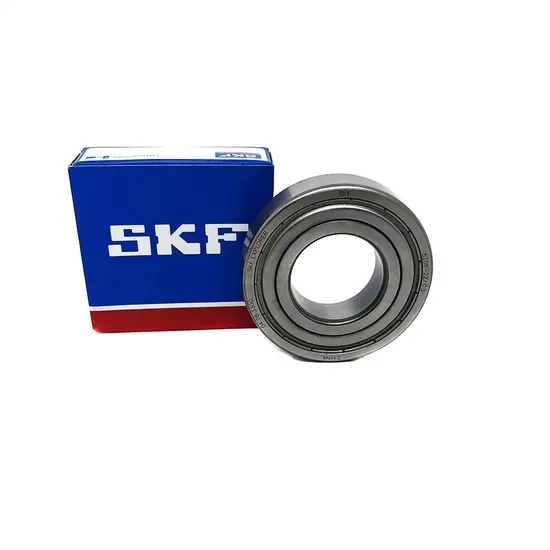
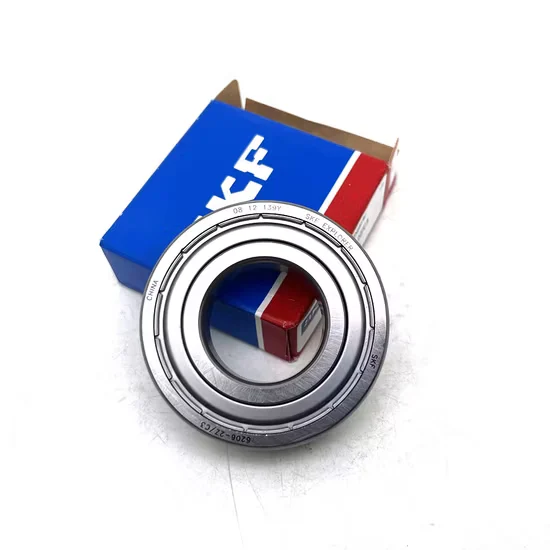
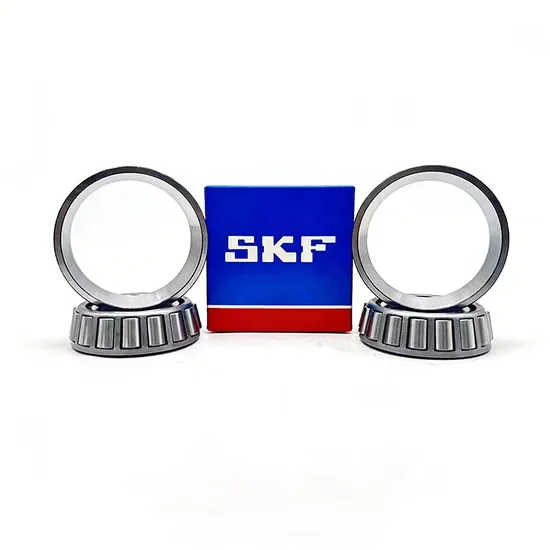
Standard grade bearings are not enough for high-speed sorting lines.
For German intralogistics integrators, selecting genuine SKF Bearings for Intralogistics Integrators in Germany requires matching specific low-noise tolerance classes and verifying full traceability documentation to prevent costly line downtime. The critical factor is not just load capacity, but the precise alignment of internal clearance and noise class with high-speed operational demands.
I still remember the humid air in a warehouse project near Jakarta. A major European integrator had commissioned a new automated sorting facility. To meet the tight deadline, we sourced what appeared to be standard deep groove ball bearings from a reputable stockist. On paper, they met the basic dimensional requirements. However, once the system ramped up to full speed, the noise levels spiked beyond acceptable limits. The vibration triggered safety sensors, causing a complete line stoppage. The cost was not just in the replaced parts, but in the days of rework and the reputational damage. That incident shifted my entire approach. Now, when dealing with high-precision applications, I look beyond the part number. I scrutinize the tolerance class and the origin of the documentation. This experience underscores why verifying authenticity and precise model matching is non-negotiable for any serious operation.
The transition from manual handling to automated intralogistics has raised the bar for component reliability. It is no longer sufficient to assume that a bearing labeled as "industrial grade" will perform adequately in a 24/7 sorting environment. The stakes are higher, and the margin for error is virtually zero.
Why Standard SKF Bearings Fail in Intralogistics?
High-speed sorting demands strict noise and vibration tolerances, not just basic load capacity.
Many procurement managers operate under the assumption that standard industrial bearings are suitable for all conveyor and sorting applications. This is a dangerous misconception. Intralogistics systems, particularly those involving high-speed sorting and automated guided vehicles, operate under dynamic conditions that differ significantly from static or slow-moving heavy machinery. The primary failure mode in these environments is often not fatigue due to load, but premature wear caused by vibration and heat generation from improper internal clearance.
Standard bearings are designed for general-purpose applications where noise and extreme precision are secondary to cost and availability. In contrast, intralogistics systems require bearings that can maintain stability at high rotational speeds while minimizing acoustic emissions. When a standard bearing is used in a high-speed sorter, the internal clearance may be too loose or too tight for the operating temperature and speed. This mismatch leads to increased friction, which generates heat. The heat expands the bearing components, further altering the clearance and creating a vicious cycle of degradation.
Consider the case of a distribution center in Southeast Asia. The facility installed a new high-throughput sorting line. The initial specification called for standard deep groove ball bearings. Within weeks, the noise levels in the sorting area became unbearable for workers, and the precision of the sorting mechanism began to drift. Investigation revealed that the bearings were operating outside their optimal noise class. The solution was not to replace them with more expensive brands, but to switch to a specific precision grade with controlled noise limits. This change eliminated the vibration issues and restored the system’s accuracy.
The key takeaway is that the operational environment dictates the bearing specification. For intralogistics, this means prioritizing low-noise and high-speed capabilities over generic load ratings. Ignoring this distinction leads to frequent maintenance interventions and unexpected downtime, which far outweighs the initial savings from using standard components.
How to Match SKF Tolerances for Sorting Lines?
Use a matrix comparing standard versus precision grades to match specific intralogistics operating conditions.
Selecting the right bearing involves more than just picking the correct size. It requires a detailed understanding of tolerance classes and internal clearance. For SKF Bearings for Intralogistics Integrators in Germany, this means navigating the differences between ISO tolerance classes such as P0 (Normal), P6, and P5, as well as internal clearance groups like C3 and C4.
A common mistake is assuming that a higher precision class is always better. While P5 or P6 bearings offer tighter dimensional tolerances, they may not be necessary for all parts of an intralogistics system. However, for high-speed sorting rollers and drive units, the reduced runout associated with higher precision classes is critical for maintaining smooth operation. Similarly, internal clearance must be matched to the operating temperature and speed. A C3 clearance might be suitable for moderate speeds, but high-speed applications often require C4 to accommodate thermal expansion without inducing excessive preload.
| Application Area | Recommended Tolerance Class | Internal Clearance | Noise Class Requirement |
|---|---|---|---|
| Standard Conveyors | P0 (Normal) | C3 | Standard |
| High-Speed Sorters | P6 | C3/C4 | Low Noise (Z1/Z2) |
| Precision Drive Units | P5 | C4 | Extra Low Noise |
| Heavy Load Lifts | P0 | C3/C4 | Standard |
This table provides a general guideline, but each application must be evaluated based on its specific operational parameters. For instance, a sorting line operating in a cold storage facility will have different thermal expansion characteristics than one in a ambient warehouse. This affects the choice of internal clearance.
I recall working with a client who insisted on using P0 bearings for their high-speed sortation system to save costs. The result was consistent mis-sorting due to slight radial runout in the rollers. Switching to P6 tolerance bearings resolved the issue immediately. The marginal increase in component cost was negligible compared to the value of accurate sorting and reduced waste.
The goal is to achieve a balance between performance and cost. Over-specifying can lead to unnecessary expense, while under-specifying risks system failure. By using a structured approach to tolerance selection, integrators can ensure optimal performance for each segment of their intralogistics system.
How to Verify Genuine SKF Bearings & Traceability?
Step-by-step document checks are essential to ensure German customs and quality compliance.
In the global bearing market, counterfeit products are a persistent risk. For German integrators, the consequences of installing counterfeit bearings can be severe, including liability issues and failure to meet regulatory standards. Therefore, verifying the authenticity of SKF Bearings for Intralogistics Integrators in Germany is a critical step in the procurement process.
Authenticity verification goes beyond checking the packaging. It requires a thorough review of the traceability documentation. Genuine SKF bearings come with certificates of conformity that detail the batch number, manufacturing date, and specific technical parameters. These documents must be cross-referenced with the physical markings on the bearing itself. Any discrepancy, no matter how minor, should be treated as a red flag.
- Check the Packaging: Look for high-quality printing, correct logos, and security features such as holograms or QR codes.
- Inspect the Bearing: Examine the surface finish, marking clarity, and overall build quality. Counterfeit bearings often have rough finishes or poorly stamped markings.
- Verify Documentation: Request the certificate of conformity and traceability documents. Ensure that the batch numbers on the documents match those on the bearing and packaging.
- Cross-Reference with Supplier: Confirm the supplier’s authorization status with the manufacturer. Authorized distributors have direct access to verification tools and support.
A recent case involved a shipment of bearings destined for a facility in Europe. The customs authorities flagged the shipment due to incomplete documentation. By providing the full traceability chain, from the manufacturing plant to the final export certificate, we were able to clear the goods without delay. This highlights the importance of having robust documentation processes in place.
Traceability is not just about avoiding counterfeits; it is also about quality assurance. In the event of a failure, having complete documentation allows for a thorough root cause analysis. This can help identify whether the issue was due to a manufacturing defect, improper installation, or operational overload. For integrators, this level of transparency is invaluable for maintaining client trust and ensuring long-term system reliability.
What Are the Risks of Inaccurate Model Substitution?
Analyzing the hidden costs of wrong clearance or noise class selections reveals significant financial risks.
The temptation to substitute a specified bearing with a seemingly equivalent model is strong, especially when facing supply chain disruptions. However, in intralogistics, even minor deviations in specification can lead to major operational failures. The risks associated with inaccurate model substitution extend far beyond the cost of the bearing itself.
When a bearing with the wrong internal clearance is installed, it can lead to premature failure. If the clearance is too tight, the bearing will overheat and seize. If it is too loose, it will vibrate excessively, causing damage to the housing and surrounding components. Similarly, substituting a standard noise class bearing for a low-noise requirement can result in acoustic pollution and worker discomfort, potentially leading to regulatory violations.
The hidden costs of these failures include:
- Downtime: Stopping a sorting line for bearing replacement can halt entire operations, leading to missed deadlines and penalties.
- Rework: Replacing failed bearings often requires disassembling complex machinery, which is labor-intensive and time-consuming.
- Reputation Damage: Frequent breakdowns erode client confidence and can jeopardize future contracts.
- Compensation Claims: In some cases, integrators may be liable for damages caused by system failures, leading to significant financial losses.
I have seen instances where a small saving on bearing costs resulted in a mid-six-figure loss due to line stoppage and rework. The initial savings were negligible compared to the total cost of ownership. This underscores the importance of sticking to the specified models and avoiding unauthorized substitutions.
For integrators, the best strategy is to work with suppliers who can provide exact matches and technical support. This ensures that every component meets the required specifications, minimizing the risk of failure and maximizing system uptime. In the context of sourcing SKF Bearings for Intralogistics Integrators in Germany, this means partnering with providers who understand the nuances of precision engineering and can deliver verified, high-quality products.
Conclusion
Precision and traceability are the foundations of reliable intralogistics systems.
Selecting the right bearings for automated sorting lines requires a deep understanding of tolerance classes, internal clearance, and noise limits. By prioritizing these factors and verifying the authenticity of every component, integrators can avoid costly downtime and ensure long-term operational efficiency. The true cost of a bearing is not just its purchase price, but its contribution to the overall reliability and performance of the system.
What to state on your inquiry
A complete inquiry keeps the full model suffix and the specified execution, so the quote matches your parts list.
- Full SKF designationCopy every model suffix exactly as specified.
- Specified executionName any insulated, hybrid ceramic or clearance requirement.
- Motor and bearing positionGive the motor model and the position of each bearing.
- Quantity and deliveryList quantities, destination country, postcode and required date.