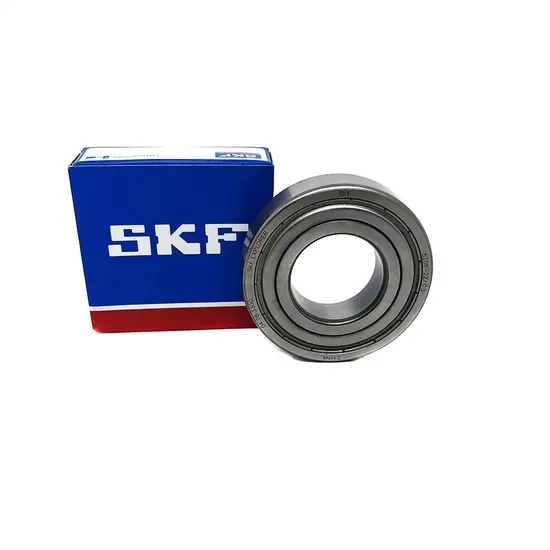
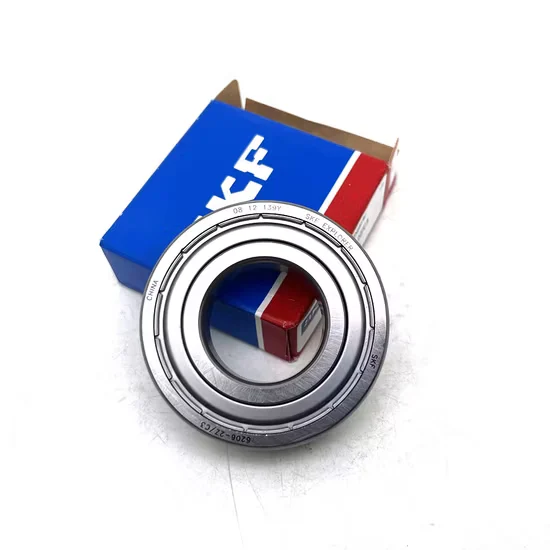
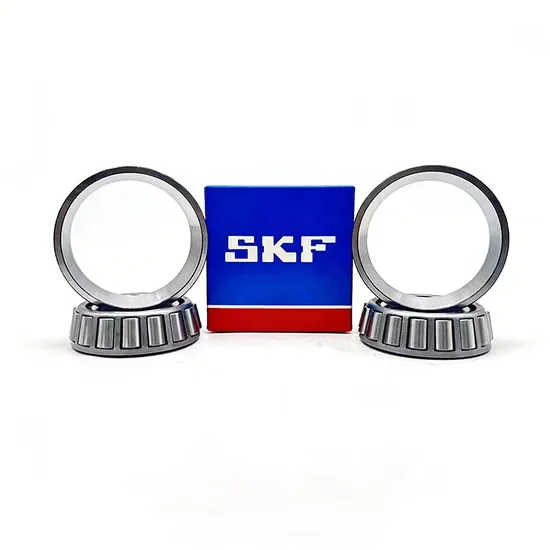
Standard industrial bearings are not food-safe.
Selecting genuine SKF bearings for breweries in Germany requires strict adherence to food-grade sealing materials and specialized high-temperature lubrication specifications to prevent microbial contamination and unplanned production downtime. The core differentiator is not the bearing steel itself, but the compatibility of the seal elastomers with cleaning agents and the thermal stability of the grease during Clean-in-Place (CIP) cycles.
My early days in quality control taught me that specifications on paper often diverge from operational reality. I once supplied what I believed were standard SKF units for a beverage filling line in Saudi Arabia, sourced from German equipment imports. I matched the part numbers precisely but overlooked the specific food-grade seal requirements detailed in the original OEM drawings. The result was micro-leakage of standard grease into the product zone. The entire pipeline had to be shut down for extensive cleaning and sterilization. The cost of emergency air-freight replacements and lost production time far exceeded any initial savings on the components. This incident reshaped my approach to sourcing SKF bearings for breweries in Germany, forcing me to prioritize traceability and chemical compatibility over simple dimensional matching.
What are the critical SKF bearing specs for German breweries?
Food-grade seals and high-temperature lubricants are mandatory, not optional.
German brewery equipment operates under rigorous hygiene standards, primarily aligned with EHEDG (European Hygienic Engineering and Design Group) guidelines. Standard industrial bearings use lithium-based greases and nitrile rubber seals that degrade when exposed to caustic cleaning agents and high-temperature steam. For SKF bearings for breweries in Germany, the critical specifications revolve around two main areas: seal material composition and lubricant dropping points.
The seal must resist swelling or cracking when in contact with acidic or alkaline cleaners commonly used in CIP processes. Fluoroelastomer (FKM) or perfluoroelastomer (FFKM) seals are typically required for these harsh environments. Furthermore, the lubricant must have a high dropping point to withstand the heat generated during pasteurization and cleaning cycles without melting and migrating into the product stream.
| Specification Factor | Standard Industrial Bearing | Food-Grade Brewery Bearing |
|---|---|---|
| Seal Material | Nitrile Rubber (NBR) | Fluoroelastomer (FKM) / PTFE |
| Lubricant Type | Lithium Complex Grease | NSF H1 Registered Synthetic Grease |
| Chemical Resistance | Low against caustics | High against acids and alkalis |
| Traceability | Batch Number Only | Full Material Certification |
| Contamination Risk | High in wet environments | Minimized via sealed design |
A European brewery operator once reported frequent failures in their bottling section. Upon inspection, we found that the standard grease had emulsified with water ingress during washing cycles, leading to rapid corrosion. Switching to units with enhanced sealing and NSF H1 registered grease resolved the issue. When sourcing SKF bearings for breweries in Germany, verifying these specific material certifications is essential to avoid similar operational disruptions.
How to verify genuine SKF food-safe bearings?
Demand full traceability documents and batch-specific lubricant certificates.
Counterfeit bearings often mimic the external appearance of genuine products but fail in critical internal specifications. For food processing applications, the risk is not just mechanical failure but chemical contamination. Verifying the authenticity of SKF bearings for breweries in Germany involves more than checking the packaging. It requires a thorough review of the documentation chain.
Genuine suppliers provide complete traceability, linking each bearing to its manufacturing batch and material certificates. This includes proof of the seal material composition and the specific grade of lubricant used. Without this documentation, there is no guarantee that the bearing meets the stringent hygiene standards required by German regulatory bodies.
I recall a case where a distributor offered significantly lower prices for what they claimed were food-grade bearings. However, they could not provide the NSF certification for the lubricant. Upon testing, the grease failed to meet the thermal stability requirements, posing a serious risk to product safety. We rejected the shipment and sourced from a verified channel that provided full documentation. This experience underscores the importance of demanding verifiable proof when purchasing SKF bearings for breweries in Germany.
Key verification steps include:
- Requesting the original Certificate of Conformity (CoC) from the manufacturer.
- Checking the NSF registration number for the lubricant used.
- Verifying the batch numbers against the supplier’s inventory records.
- Inspecting the seal material for proper marking and consistency.
Standard vs. Food-grade SKF bearings: A spec matrix
Compare seal materials, grease types, and IP ratings to make the right choice.
Understanding the technical differences between standard and food-grade bearings helps in making informed procurement decisions. While the internal geometry may be similar, the external features and internal fillings differ significantly. This comparison highlights why standard bearings are unsuitable for direct contact zones in breweries.
| Feature | Standard SKF Bearing | Food-Grade SKF Bearing |
|---|---|---|
| Primary Application | General Machinery | Food & Beverage Processing |
| Seal Type | Single Lip NBR | Double Lip FKM / PTFE |
| Lubricant | Industrial Grade | NSF H1 Registered |
| Corrosion Protection | Basic Oil Film | Enhanced Stainless Steel Options |
| Cleaning Compatibility | Limited | Resistant to Steam and Chemicals |
| Regulatory Compliance | General Industrial | FDA / EU 1935/2004 Compliant |
The table illustrates that food-grade bearings are engineered specifically to withstand the harsh cleaning regimes of breweries. Using standard bearings in these environments leads to premature failure and potential contamination. When evaluating SKF bearings for breweries in Germany, this matrix serves as a quick reference to ensure compliance with hygiene standards.
How to avoid procurement pitfalls in brewery maintenance?
Cross-check OEM drawings for exact lubrication requirements before ordering.
Procurement errors often stem from relying solely on part numbers without considering the operational context. OEM drawings for German brewery equipment frequently specify particular lubrication types and seal configurations that are not evident from the bearing designation alone. Ignoring these details can lead to costly mistakes.
A common pitfall is assuming that all bearings with the same dimensions are interchangeable. In reality, the internal clearance and lubricant viscosity are critical for performance in high-temperature and high-humidity environments. Failure to match these specifications can result in increased friction, heat generation, and eventual seizure.
To avoid these issues, always request the original equipment manufacturer’s maintenance manual. Verify the required lubricant type and seal material against the supplier’s offerings. If discrepancies arise, consult with a technical expert who understands the specific demands of brewery operations. This proactive approach ensures that the SKF bearings for breweries in Germany you procure will perform reliably and safely.
In one instance, a maintenance team replaced bearings based on size alone, ignoring the specified high-temperature grease. The new bearings failed within weeks due to grease breakdown during CIP cycles. By strictly adhering to the OEM specifications, such failures can be prevented, ensuring continuous and safe production.
Conclusion
Precision in specification prevents contamination and downtime.
Selecting the correct bearings for German breweries involves more than matching part numbers; it requires a deep understanding of food-grade materials and lubrication standards. By prioritizing traceability, verifying certifications, and adhering to OEM specifications, operators can ensure the reliability and safety of their equipment. Genuine SKF bearings for breweries in Germany offer the necessary performance and compliance when sourced with attention to these critical details.
What to state on your inquiry
A complete inquiry keeps the full model suffix and the specified execution, so the quote matches your parts list.
- Full SKF designationCopy every model suffix exactly as specified.
- Specified executionName any insulated, hybrid ceramic or clearance requirement.
- Motor and bearing positionGive the motor model and the position of each bearing.
- Quantity and deliveryList quantities, destination country, postcode and required date.