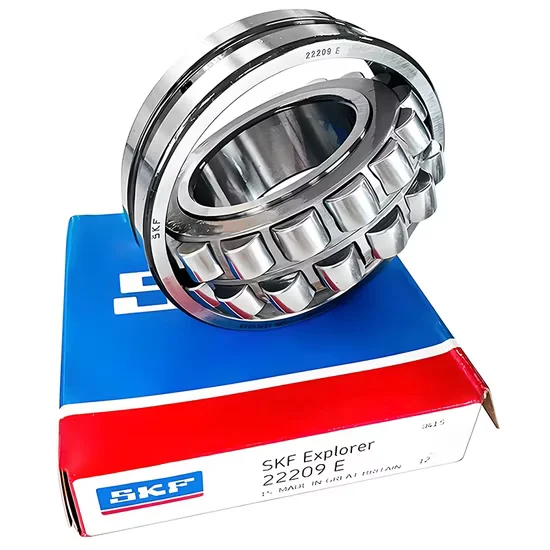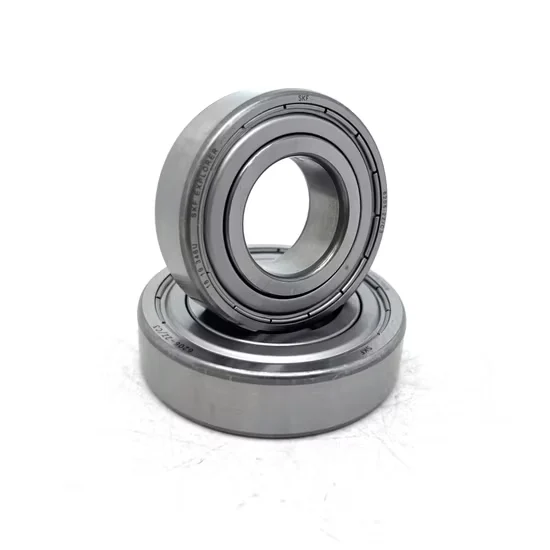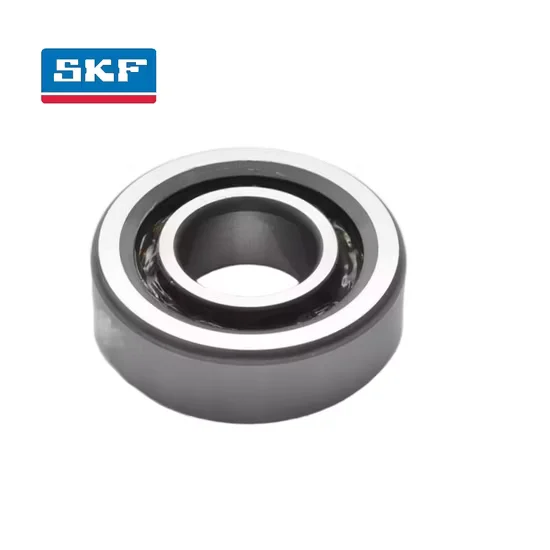


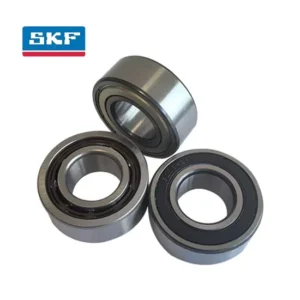
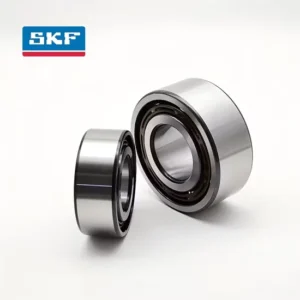

Product details
About SKF 3211-a P4 Double Row Angular Contact Ball Bearing
Official App Verification — Every SKF 3211-a double row angular contact ball bearing we ship includes a scannable QR code for instant origin validation.
Technical Specifications
| Parameter | Value |
|---|---|
| Designation | SKF 3211-a |
| Product Type | Double Row Angular Contact Ball Bearing |
| Contact Angle | 30° |
| Aligning | Non-Aligning Bearing |
| Separated | Separated |
| Rows Number | Double |
| Load Direction | Radial Bearing |
| Material | Bearing Steel |
| Precision Rating | P4 |
| Cage Options | Steel Cage / Copper Cage / Nylon Cage |
| Lubrication | Oil / Grease |
| Origin | Jiangsu China |
Application Suitability
| Industry | Typical Applications |
|---|---|
| Machine Tool Manufacturing | High-speed spindle assemblies requiring P4 precision |
| Industrial Automation | Robotic joint actuators with combined radial and axial loads |
| Fluid Machinery | High-speed pump impeller shafts |
| Precision Equipment | Optical measuring device rotary tables |
Why Spindle Vibration Ruins Tolerances in SKF 3211-a double row angular contact ball bearing Setups
Mismatched precision classes and incorrect internal clearances silently destroy machining accuracy long before physical fatigue occurs.
I learned this the hard way early in my procurement career when a basic model substitution caused severe spindle vibration and scrapped an entire batch of precision parts. When sourcing super-precision components, overlooking the exact suffix configuration leads to catastrophic runout.. Many maintenance teams focus solely on the base dimensions, ignoring that a P4 rating demands strict thermal and mounting protocols to maintain its tight tolerances. The slightest deviation in the internal geometry or cage alignment will amplify harmonic frequencies at high rotational speeds. This resonance not only degrades the surface finish of the machined workpiece but also accelerates wear on the spindle housing. Procurement engineers must recognize that true precision extends far beyond the basic envelope dimensions printed on the box.
Matching the 30-Degree Contact Angle to Your Spindle Load Profile
The SKF 3211-a double row angular contact ball bearing utilizes a 30-degree contact angle to balance radial rigidity with axial thrust capacity. This specific geometry is critical for machine tool spindles where cutting forces generate complex combined loads. By selecting the appropriate cage material and lubrication method, engineers can optimize the bearing for either high-speed oil-air systems or grease-lubricated robotic joints. The double row configuration provides exceptional moment stiffness, preventing the spindle nose from deflecting under heavy radial cutting forces. This inherent rigidity ensures that the tool tip maintains its precise positional accuracy throughout the entire machining cycle, directly impacting the final part quality.
Thermal Expansion and Lubrication Challenges in Precision Assemblies
At elevated rotational speeds, friction heat alters the internal clearance of non-aligning bearings, directly impacting the P4 precision rating. Selecting between oil and grease lubrication dictates the thermal dissipation rate and relubrication intervals.. Furthermore, the choice between steel, copper, or nylon cages influences the operating temperature threshold and vibration damping characteristics. Ignoring these thermal dynamics often results in premature seizure or degraded surface finish on machined components. When the internal temperature rises excessively, the thermal expansion of the rings can eliminate the designed internal clearance, leading to increased friction and a runaway thermal failure. Proper lubrication selection is therefore not just a maintenance task, but a critical design parameter that safeguards the dimensional stability of the entire spindle assembly.
Decoding the P4 Precision and Cage Material Options
Achieving P4 precision requires stringent manufacturing controls to ensure dimensional and running accuracy suitable for high-speed spindles. The available cage options—steel, copper, and nylon—each serve distinct operational environments. Steel cages offer high structural strength for heavy radial loads, while copper cages provide superior thermal conductivity and vibration resistance in demanding machining centers. Nylon cages reduce weight and friction, making them ideal for ultra-high-speed applications where minimizing centrifugal forces is paramount. The separated design allows for precise mounting and clearance adjustment during assembly. Understanding these material options ensures the selected configuration aligns perfectly with the specific speed and load profile of the equipment. The non-aligning characteristic of this design means that the housing and shaft must be machined to exact concentricity standards, as the bearing cannot compensate for structural misalignments.
The Hidden Financial Impact of Precision Mismatches
Installing a standard precision bearing in a P4-rated application inevitably leads to unplanned downtime and scrapped workpieces. According to ISO 281 frameworks, improper load distribution caused by dimensional deviations drastically reduces the calculated fatigue life.. The resulting catastrophic damage to the spindle housing often voids equipment warranties and forces expensive emergency replacements. Avoiding these hidden costs requires strict adherence to the specified precision class and internal geometry. When a lower precision component is forced into a high-speed spindle, the uneven load sharing among the rolling elements creates localized stress concentrations. These microscopic stress peaks initiate subsurface fatigue cracks much earlier than predicted, ultimately leading to sudden spalling and complete mechanical failure during critical production runs.
Securing Authentic Super-Precision Components for Critical Machinery
Sourcing genuine super-precision components requires more than just matching the base model number. We verify every SKF 3211-a double row angular contact ball bearing through official manufacturer channels to guarantee the P4 tolerance is authentic. Our technical team cross-references the exact suffix configuration to prevent the costly precision mismatches I encountered early in my career. We provide flexible consolidation for mixed-model orders, ensuring your urgent maintenance needs are met without compromising on traceability. Each shipment includes complete customs documentation and batch-level origin verification to protect your production schedule. By maintaining deep visibility into the global supply chain, we can rapidly locate specific precision variants that might otherwise suffer from typical multi-week lead times, keeping your manufacturing operations running smoothly without unnecessary inventory bloat.
Documentation & Authenticity
- Certificate of Conformity confirming P4 dimensional tolerances for this specific batch.
- Scannable QR codes linking directly to the manufacturer's official authenticity database.
- Material inspection reports verifying the metallurgical grade of the bearing steel rings.
- Running accuracy test certificates documenting the precise radial and axial runout values.
- Complete customs and import documentation ensuring full traceability from the origin facility.
Storage, Handling & Mounting
- Store the P4 precision components in original packaging to prevent microscopic dust contamination.
- Maintain strict climate control to avoid thermal shock that could alter the tight P4 tolerances.
- Use clean, lint-free gloves when handling the separated inner and outer rings to prevent corrosion.
- Apply induction heating for the inner ring mounting to preserve the precise 30-degree contact angle geometry.
- Follow strict lubrication protocols based on the selected cage material to prevent high-speed thermal degradation.
Preparing Your Technical Data for Accurate Selection
To ensure the selected configuration perfectly matches your spindle or robotic application, please provide detailed operational parameters. Sharing the exact radial and axial loads, maximum rotational speed, and operating temperature range allows our engineering team to verify the L10 life calculation. Additionally, providing the OEM equipment model number helps us cross-reference the required internal clearance and cage specifications. This technical review guarantees the delivered components will perform reliably under your specific machining conditions.
Frequently Asked Questions
Q: How can I verify the authenticity of the P4 precision rating before installation?
A: You can scan the QR code on the packaging using the manufacturer's official mobile application to instantly verify the origin and batch details. We also provide a dedicated running accuracy inspection report that documents the exact dimensional tolerances, ensuring the component meets the strict P4 specifications required for your high-speed spindle application.
Q: What does the unverified "-a" suffix indicate for this specific model?
A: The "-a" suffix typically denotes a specific internal design or contact angle variation that requires confirmation against the latest manufacturer catalog. We strongly recommend cross-referencing this exact designation with our technical team to ensure the internal geometry perfectly matches your equipment's original engineering requirements before proceeding with the procurement.
Q: How do I choose between steel, copper, and nylon cages for my application?
A: Steel cages are ideal for heavy radial loads, while copper cages offer excellent thermal conductivity and vibration damping for demanding machining centers. Nylon cages minimize weight and friction, making them optimal for ultra-high-speed spindles. Please share your specific operating temperature and speed parameters so we can recommend the most suitable cage material.
Q: What lubrication method is recommended for maintaining P4 precision at high speeds?
A: Oil-air or oil-jet lubrication is generally preferred for high-speed spindle applications to ensure adequate cooling and minimize friction heat. Grease lubrication is suitable for moderate speeds where maintenance intervals need to be extended. The optimal choice depends on your specific rotational speed and thermal dissipation requirements, which our team can help calculate.
Q: Are cross-reference equivalents available from other premium brands if this model is unavailable?
A: Yes, we can provide cross-reference equivalents from other premium global brands such as FAG or NSK that match the dimensional and P4 precision requirements. Our engineering team will verify the contact angle and internal clearance to ensure the alternative model delivers identical performance in your specific machine tool application.