Cheap refurbished bearings do not save money; they destroy production schedules.
Germany’s 2026 industrial output adjustments directly extend official channel lead times for genuine bearings, making flexible third-party consolidation and 100% traceable spot inventory the only viable strategy to prevent unplanned downtime. Relying solely on brand-direct procurement during periods of volatile macroeconomic output exposes MRO operators to critical supply bottlenecks that can halt entire production lines for days.
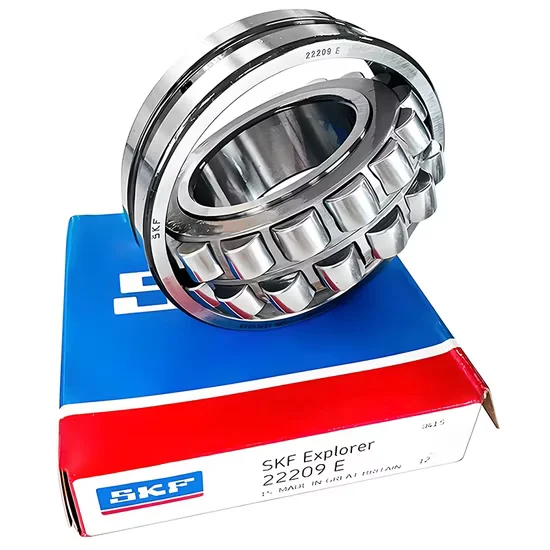
I still remember the silence in a Chilean copper mine processing plant. It was not the peaceful quiet of a well-oiled machine, but the heavy, expensive silence of a halted conveyor. The site manager held a spherical roller bearing that had failed just weeks after installation. The previous supplier had offered a significant discount, claiming it was "as good as new." But when we stripped it down, the raceway showed signs of improper refurbishment, and crucially, there was no original factory documentation to verify its history. The lack of traceability meant we could not prove its origin to the insurance adjusters, and the mine lost two full days of production while waiting for an authentic replacement. That experience cemented my understanding: in MRO, the price on the invoice is irrelevant if the part cannot keep the line running.
This reality is becoming even more pronounced as we look at the broader European landscape. When German industrial production shifts, the ripple effects are felt globally. For those sourcing critical components, understanding these dynamics is not just about economics; it is about operational survival.
How Do Germany’s 2026 Production Shifts Impact MRO Lead Times?
Output fluctuations in Germany’s core industrial sectors directly extend official channel lead times for premium bearing brands.
Germany remains the engineering heart of Europe, hosting the primary manufacturing facilities for major bearing brands like SKF, FAG, and INA. When national industrial production data indicates a contraction or a strategic shift in resource allocation, these manufacturers often prioritize large OEM contracts over smaller MRO spare part orders. This creates a vacuum in the aftermarket supply chain.
For a German Industrial Production 2026 MRO Bearing Wholesale Supplier, this means that the traditional route of ordering directly from the brand’s regional office becomes unpredictable. Lead times that were once stable at four to six weeks can suddenly stretch into months. I have seen distributors in Latin America place urgent orders for deep-groove ball bearings only to be told that the production slot was pushed back due to raw material prioritization for automotive clients.
The impact is not uniform across all bearing types. Precision special-application bearings and large-scale spherical roller bearings used in heavy industry are often the first to face delays because their production requires specialized machinery and longer setup times. In contrast, standard cylindrical roller bearings might remain available, but only at a premium price from secondary markets.
To mitigate this, smart procurement strategies involve diversifying sources. Instead of relying on a single brand-direct channel, operators must engage with wholesalers who maintain massive spot inventories. These suppliers absorb the shock of production shifts by holding stock that was purchased during periods of stability. By working with a German Industrial Production 2026 MRO Bearing Wholesale Supplier who understands these macro trends, buyers can secure genuine parts before the official channels tighten further. The key is to view inventory not as a cost center, but as an insurance policy against macroeconomic volatility.
Why Do Untraceable Refurbished Bearings Destroy MRO Budgets?
Hidden costs of untraceable refurbished parts far exceed the initial savings of genuine procurement premiums.
The temptation to cut costs by purchasing refurbished or unbranded bearings is strong, especially when budgets are tight. However, the true cost of a bearing is not its purchase price, but its total cost of ownership, which includes installation, maintenance, and the risk of failure. A bearing without full traceability documentation is a liability.
In the mining sector, I witnessed a failure analysis where a tapered roller bearing seized up within months. The part looked pristine on the outside, but internal microscopy revealed micro-cracks consistent with poor heat treatment during a previous refurbishment process. Because the supplier could not provide the original mill certificate or proof of proper reconditioning, the plant had to bear the full cost of the collateral damage to the shaft and housing. This mid-six-figure loss dwarfed the few hundred dollars saved on the bearing itself.
| Risk Factor | Genuine Traceable Bearing | Untraceable/Refurbished Bearing |
|---|---|---|
| Documentation | Full batch-level traceability | Self-reported or None |
| Quality Consistency | Controlled manufacturing standards | Uncontrolled variable quality |
| Failure Risk | Predictable service life | Vulnerable to premature failure |
| Compliance | Meets international customs requirements | High risk of seizure or rejection |
A German Industrial Production 2026 MRO Bearing Wholesale Supplier must provide more than just the physical part. They must provide the paper trail. This includes original packaging, batch numbers, and certificates of conformity that link the bearing back to the manufacturer’s production facilities. Without these documents, customs authorities in many regions may seize the shipment, viewing it as counterfeit or non-compliant.
Furthermore, genuine bearings from brands like NSK, NTN, and TIMKEN are engineered to specific tolerances, such as P0 or P6 precision classes. Refurbished parts rarely meet these original specifications consistently. Using them in high-speed or heavy-load applications invites disaster. The lesson is clear: never compromise on traceability. The peace of mind that comes from knowing a bearing is genuine and documented is worth every cent of the premium.
How Can Mixed-Container Consolidation Solve Urgent Downtime?
Flexible mixed-container consolidation bypasses traditional supply bottlenecks by combining spot inventory from multiple brands.
When a breakdown occurs, time is the most critical resource. Waiting for a single brand to ship a full container of one type of bearing is often impractical for emergency overhauls. This is where the model of a German Industrial Production 2026 MRO Bearing Wholesale Supplier proves its value. By offering mixed-brand, mixed-size bearing packages, these suppliers allow operators to consolidate urgent needs into a single shipment.
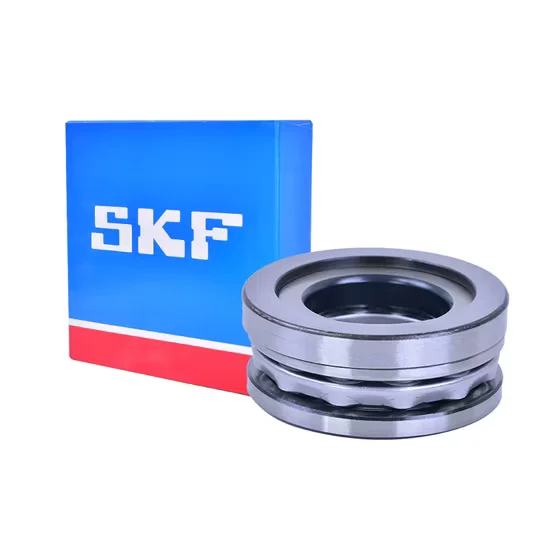
I recall assisting a steel plant in Southeast Asia that needed a variety of bearings for a scheduled shutdown. They required insert bearings for their conveyors, angular contact ball bearings for their motors, and thrust bearings for their rollers. Ordering each from separate brand distributors would have resulted in multiple shipments arriving at different times, delaying the restart. Instead, we consolidated these items from our spot inventory, which included genuine products from SKF, FAG, and local Chinese lines like ZWZ and HRB.
This approach offers several advantages. First, it reduces logistics complexity. One bill of lading, one customs clearance process, and one delivery window. Second, it allows for flexible MOQs. Operators can order exactly what they need, from single-unit emergency spares to bulk project orders, without being forced to buy excess stock to meet minimum order quantities.
Third, it provides access to cross-brand equivalents. If a specific FAG model is out of stock, a knowledgeable supplier can recommend a technically equivalent NSK or NTN bearing that meets the same dimensional and load requirements. This flexibility is crucial when dealing with the unpredictable lead times caused by German industrial production shifts. By leveraging a German Industrial Production 2026 MRO Bearing Wholesale Supplier with a broad portfolio, buyers can ensure that their maintenance schedules are not held hostage by the inventory status of a single manufacturer.
What Traceability Documents Are Non-Negotiable for Customs?
Strict origin certificates and full traceability documentation prevent port seizures and compliance fines.
Global trade in industrial components is subject to increasingly stringent customs regulations. For MRO operators importing bearings, missing or incorrect documentation can lead to shipments being held at port for weeks, incurring demurrage charges and causing critical delays.
The essential documents include the Certificate of Origin, which verifies where the bearing was manufactured, and the Commercial Invoice, which must accurately describe the goods including brand, model, and quantity. Additionally, for genuine bearings, the Certificate of Conformity or Quality Assurance document from the manufacturer is vital. This document confirms that the bearing meets the specified ISO standards and was produced in an authorized facility.
I have seen shipments of genuine TIMKEN and KOYO bearings delayed because the supplier failed to include the correct origin certificates. The customs authorities suspected the parts were counterfeit due to the lack of proper paperwork. It took days of back-and-forth communication to resolve, during which the client’s machinery remained idle.
A professional German Industrial Production 2026 MRO Bearing Wholesale Supplier understands these requirements intimately. They ensure that every shipment, whether it is a small parcel or a full container, is accompanied by the complete set of necessary documents. This includes not just the basic shipping papers, but also technical datasheets and material certifications if required by the end-user.
Moreover, traceability extends beyond customs. In the event of a failure, having the original documentation allows for warranty claims and root cause analysis. Without it, the buyer is left with no recourse. Therefore, when selecting a supplier, verify their ability to provide 100% traceable documentation for every part number. This is not just a bureaucratic formality; it is a fundamental component of risk management in global MRO procurement.
Conclusion
Traceability and flexibility are the twin pillars of resilient MRO procurement in 2026.
As German industrial production continues to adjust, the supply chain for genuine bearings will remain volatile. Relying on rigid, brand-direct channels exposes operators to unacceptable lead time risks. Instead, partnering with a German Industrial Production 2026 MRO Bearing Wholesale Supplier who offers mixed-container consolidation, massive spot inventory, and uncompromising traceability ensures that maintenance schedules are met and downtime is minimized. The cost of genuine, documented parts is always lower than the cost of unplanned stoppages.
What to state on your inquiry
A complete inquiry keeps the full model suffix and the specified execution, so the quote matches your parts list.
- Full SKF designationCopy every model suffix exactly as specified.
- Specified executionName any insulated, hybrid ceramic or clearance requirement.
- Motor and bearing positionGive the motor model and the position of each bearing.
- Quantity and deliveryList quantities, destination country, postcode and required date.