Product details
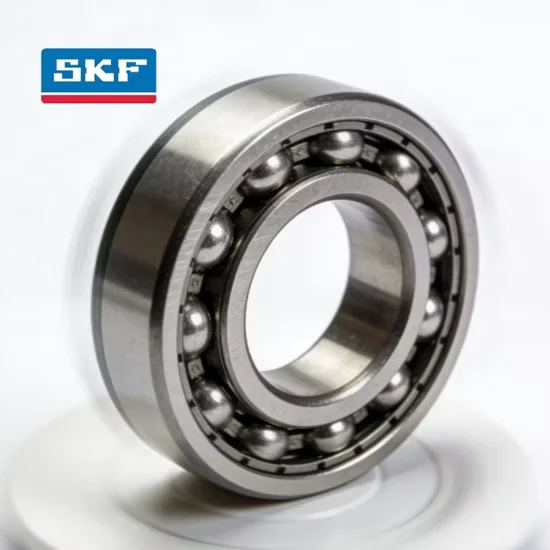
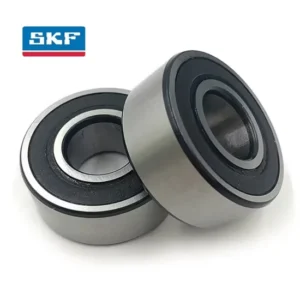
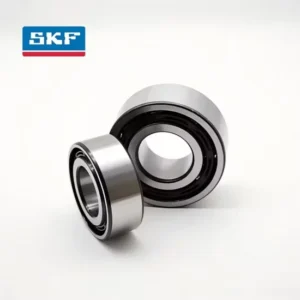
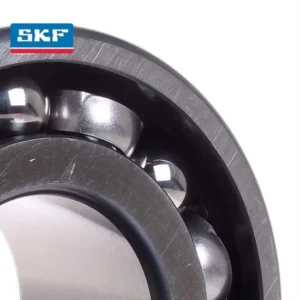
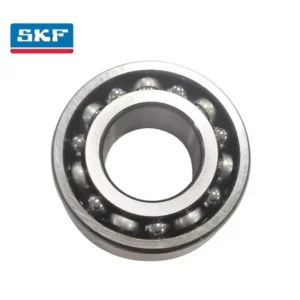
About SKF 3204-a Double Row Angular Contact Ball Bearing for Automotive Transmission
Genuine QR Verification — Every SKF 3204-a double row angular contact ball bearing we dispatch includes original packaging with scannable anti-counterfeit QR codes for immediate field validation.
Technical Specifications
| Parameter | Value |
|---|---|
| Designation | 3204-a |
| Bearing Type | Double Row Angular Contact Ball Bearing |
| Contact Angle | 30° |
| Number of Rows | Double |
| Load Direction | Radial Bearing |
| Material | Bearing Steel / Chrome Steel |
| Precision Class | P0 / P2 / P4 / P5 / P6 |
| Cage Material | Steel Cage / Copper Cage / Nylon Cage |
| Lubrication | Oil Grease |
The suffix "a" is an unverified designation requiring manufacturer catalog confirmation for exact internal design variants.
Application Suitability
| Industry | Typical Applications |
|---|---|
| Automotive | Manual and automatic transmission shafts, differential assemblies |
| Industrial Machinery | Heavy-duty gearboxes, pump drive mechanisms |
| Machine Tools | Spindle orientation drives, indexing tables |
Why Flame Heating Destroys the SKF 3204-a double row angular contact ball bearing Before It Even Spins
Direct flame application during press-fitting permanently alters the chrome steel metallurgical structure, causing premature spalling and catastrophic seizure.
I learned this the hard way while supervising a complex gearbox rebuild in Nigeria. A mechanic rushed the assembly process by heating the inner ring with an open acetylene torch to force it onto the shaft. This reckless shortcut destroyed the carefully engineered martensitic matrix of the chrome steel. The bearing seized within a few thousand kilometers, tearing up the adjacent gears. Proper induction heating is absolutely non-negotiable to preserve the structural integrity and hardness of any SKF 3204-a double row angular contact ball bearing installed in high-load automotive drivetrains. Thermal damage is irreversible and bypasses all standard warranty protections.
When you subject high-carbon chrome steel to uncontrolled localized heat, the tempering process reverses. The material softens dramatically, losing its ability to withstand the intense Hertzian contact stresses generated during gear shifts. I have seen entire transmission housings scrapped because a single overheated bearing disintegrated and sent metallic shrapnel through the lubrication channels. Technicians must always use calibrated induction heaters with automatic temperature cutoffs to ensure the inner ring expands uniformly without compromising the raceway hardness.
Matching Dual-Row Geometry to Drivetrain Torque Pulses
Automotive transmissions subject internal components to severe combined radial and axial loads, especially during aggressive gear shifts and deceleration phases. The 30° contact angle engineered into this specific configuration provides the necessary axial rigidity to handle bidirectional thrust loads while maintaining exceptional radial stability. Unlike single-row alternatives, this dual-row design eliminates the need for complex pre-load adjustments during assembly. Our extensive sourcing network ensures you receive the exact cage material and precision class required to dampen these specific torsional vibrations, keeping the transmission shifting smoothly under extreme operational demands.
Navigating Thermal Expansion and Contamination in Gearboxes
Transmission environments generate significant friction heat, which directly impacts internal clearance and lubricant viscosity over prolonged operational cycles. Selecting the appropriate clearance class prevents the bearing from running too tight when the aluminum or cast-iron housing expands at a different rate than the steel rings. Furthermore, continuous gear meshing produces microscopic metallic debris that can easily penetrate unprotected raceways. Choosing the right seal or shield type, or relying on the gearbox's internal high-pressure filtration system, is critical to prevent abrasive wear and extend the overall service interval.
Decoding Cage Materials and Precision Tolerances
The choice between steel, copper, and nylon cages fundamentally dictates the operational speed limits and vibration characteristics of the assembly. Nylon cages offer remarkably quieter operation and lower friction coefficients, making them ideal for high-speed passenger vehicle shafts where noise and vibration are primary concerns. Conversely, machined copper or pressed steel cages provide superior structural durability under heavy shock loads and elevated temperatures typical in commercial truck transmissions. Precision classes ranging from P0 to P2 determine the exact running accuracy; specifying higher precision minimizes rotational noise and ensures precise gear engagement in complex, multi-speed transmission architectures.
The Cascading Failures of Incorrect Internal Clearance
Installing a standard clearance bearing in a high-temperature gearbox housing often leads to a destructive phenomenon known as thermal choking. As the transmission housing expands faster than the inner and outer steel rings during heavy towing or continuous highway driving, the internal clearance completely vanishes. This generates excessive friction, rapid heat buildup, and eventual cage failure. The resulting catastrophic seizure not only destroys the bearing but also causes secondary damage to the expensive transmission shafts and housings, leading to extensive unplanned downtime and complete drivetrain replacement costs.
Securing Traceable Drivetrain Components Without the Markup
Sourcing genuine transmission bearings often involves navigating complex, multi-tiered distributor networks that inflate costs and delay shipments. We consolidate mixed-brand and mixed-size orders directly from authorized global channels, providing full traceability documentation for every single unit we dispatch. When replacing legacy or discontinued transmission models, our engineering team actively cross-references obsolete part numbers to current SKF 3204-a double row angular contact ball bearing equivalents. This ensures exact dimensional and load-rating alignment for your specific application without forcing you to purchase full pallets or endure typical multi-week lead times from direct official channels.
Documentation & Authenticity
- Certificate of Conformity verifying the specific production batch and metallurgical origin.
- Dimensional and running accuracy inspection reports confirming the selected P-class tolerances.
- Anti-counterfeit QR codes on original packaging for immediate on-site authenticity checks.
- Material test certificates detailing the chrome steel hardness and heat-treatment compliance.
Storage, Handling & Mounting
- Store in original moisture-barrier packaging until the exact moment of transmission assembly.
- Use certified induction heaters for inner ring mounting; never apply open flames to the chrome steel.
- Handle nylon-caged variants with clean gloves to prevent skin oils from degrading the polymer.
- Verify the 30° contact angle orientation marks before pressing the outer ring into the gearbox housing.
Preparing Your Technical Data for Selection Review
To ensure optimal drivetrain performance and prevent premature field failures, please share your specific radial and axial load profiles, operating temperatures, and continuous shaft speeds. Providing the original equipment manufacturer part number or the exact transmission model allows our technical team to verify cross-references and confirm the correct clearance, cage combination, and precision class for your exact architecture. This collaborative review process guarantees that the selected components will withstand your unique operational environment without unnecessary over-engineering.
Frequently Asked Questions
Q: How do I verify the authenticity of the bearing upon delivery?
A: Every unit ships in original packaging featuring scannable anti-counterfeit QR codes. You can verify the batch directly through the manufacturer's official application. We also provide a Certificate of Conformity and dimensional inspection reports to guarantee the product's traceability and precision class before it enters your assembly line.
Q: What does the "a" suffix indicate for this specific model?
A: This suffix denotes a specific internal design variation that requires confirmation against the latest manufacturer catalog. When you provide your exact equipment parameters and OEM part numbers, our engineering team will cross-check the current designation system to ensure you receive the precise geometric variant required for your transmission.
Q: How should I choose between steel, copper, and nylon cages for automotive gearboxes?
A: Nylon cages reduce friction and noise, making them ideal for high-speed passenger vehicle transmissions. Copper and steel cages offer higher structural rigidity for heavy-duty commercial drivetrains subjected to severe shock loads. Share your specific torque and speed data so we can recommend the optimal cage material for your application.
Q: What is the practical difference between P4 and P5 precision classes for this bearing type?
A: P4 precision offers tighter dimensional and running accuracy tolerances compared to P5, which is critical for high-speed spindle drives. For standard automotive gearboxes, P5 or P0 is typically sufficient. We help you balance the required running accuracy against your project budget to avoid over-specifying unnecessary precision classes.
Q: Why did my previous bearing fail prematurely after installation in a transmission?
A: Premature failure often stems from improper mounting techniques, such as using open flames for heating, which destroys the chrome steel's metallurgical structure. Other causes include incorrect internal clearance selection or contamination during assembly. Providing your operating conditions allows us to specify the correct clearance and advise on proper protocols.