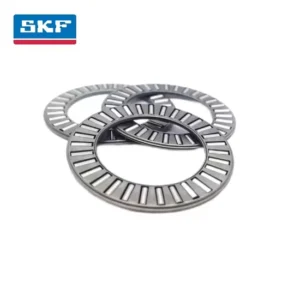
Product details
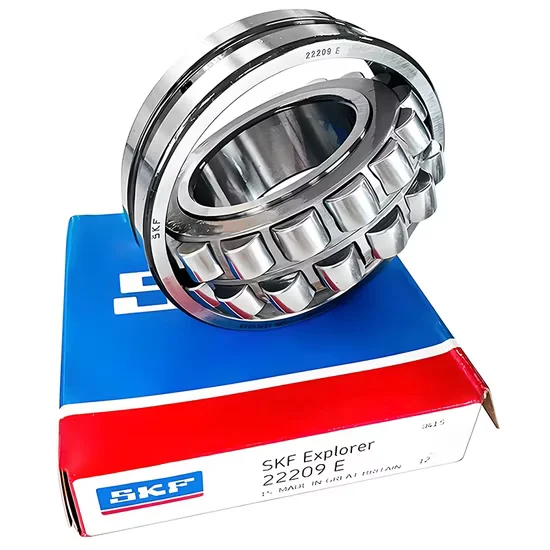
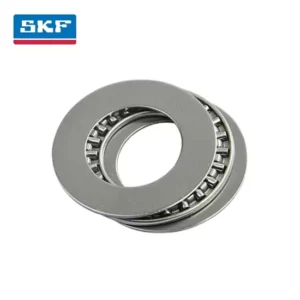
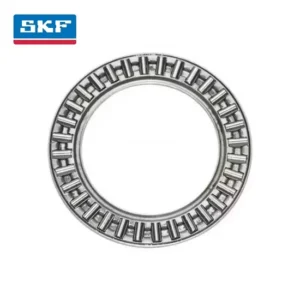
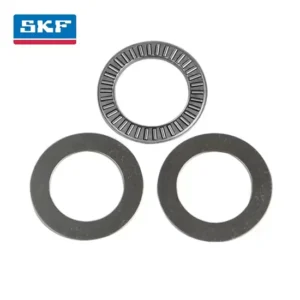
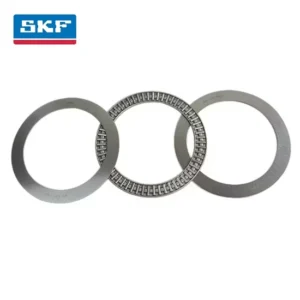
About Genuine SKF 29360 E Thrust Roller Bearing for Heavy Duty Industrial Use
Cross-Reference Alignment Verified — We match the SKF 29360 E against 29434 E and 29436 E equivalents to ensure dimensional and load compatibility across mixed-brand fleets.
Technical Specifications
| Parameter | Value |
|---|---|
| Designation | SKF 29360 E |
| Bearing Type | Thrust Roller Bearing |
| Internal Design | E (Optimized for increased load capacity) |
| Origin | Jiangsu China |
Application Suitability
| Industry | Typical Applications |
|---|---|
| Heavy Machinery | Crane hooks and slewing mechanisms |
| Marine Engineering | Marine drives and propulsion shafts |
| Industrial Processing | Extruders and heavy-duty gearboxes |
Why Ignoring the "E" Suffix Destroys Heavy Gearboxes
The internal geometry dictates survival under extreme axial loads.
During my early procurement days for a steel rolling mill in Qingdao, specifying a standard thrust bearing without verifying the "E" suffix led to catastrophic cage failure under heavy axial stress. That single oversight caused unplanned downtime that cost far more than the component itself, halting the entire production line for days. Misinterpreting internal design codes remains a primary driver of premature failures in critical drivetrains across heavy industry. Securing a genuine SKF 29360 E thrust roller bearing eliminates this guesswork and ensures the drivetrain can handle the immense forces generated by modern industrial equipment. When maintenance teams overlook these critical suffix distinctions, they inadvertently install components that are structurally incapable of surviving the operational environment, leading to rapid fatigue and secondary mechanical damage.
Matching Axial Capacity to Extruder and Crane Demands
Industrial extruders and large crane hooks generate immense, continuous axial forces that quickly overwhelm standard cage designs and raceway profiles. The optimized roller and cage geometry in this specific model distributes these massive loads evenly across the contact surfaces, preventing localized stress concentrations that typically initiate spalling. By sourcing the SKF 29360 E thrust roller bearing through our consolidated global supply chain, facility managers secure exact OEM specifications without the logistical nightmare of juggling multiple regional distributors. This direct alignment between component capability and application demand is what separates a reliable maintenance strategy from a cycle of constant, reactive repairs.
Managing Misalignment and Thermal Expansion in Marine Drives
Marine propulsion shafts and heavy processing gearboxes frequently experience significant shaft deflection and thermal expansion during continuous, high-load operation. These spherical roller thrust bearings are specifically engineered to accommodate moderate radial loads alongside primary axial forces, while their self-aligning washers compensate for minor housing misalignments that occur under stress. Proper lubrication selection is absolutely critical in these environments, as elevated operating temperatures can rapidly degrade standard greases and accelerate wear on the optimized roller profiles. Ensuring the housing design supports adequate oil flow or precise grease replenishment intervals protects the internal components from thermal seizure and ensures the self-aligning mechanism functions as intended throughout the equipment lifecycle.
Decoding the "E" Designation for Enhanced Load Ratings
The "E" suffix indicates an optimized internal design featuring a maximum number of large, symmetrical rollers and a reinforced window-type cage structure. This specific configuration significantly increases the dynamic load rating compared to non-E variants, directly extending the calculated L10 life under identical operating conditions and load profiles. Unlike standard designs that might compromise roller size for cage mass, the E-design maximizes the contact area between the rollers and the raceways, distributing stress more effectively. This engineering choice is vital for applications like crane hooks where sudden shock loads are common and unforgiving. When cross-referencing with equivalents like the 29434 E or 29436 E, verifying this exact suffix ensures the replacement maintains the required load-carrying capacity without introducing weak points into the assembly.
The Financial Impact of Underspecified Thrust Components
Substituting an E-design bearing with a standard variant inevitably leads to premature fatigue and cage fragmentation under peak axial loads, regardless of how perfectly the outer dimensions match. Such failures rarely occur in isolation; they often trigger severe secondary damage to adjacent shafts, precision gears, and expensive housing seals. The resulting unplanned downtime and complex teardown procedures drastically inflate maintenance budgets far beyond the initial savings of purchasing a cheaper, non-specified part. Industry frameworks consistently highlight that ignoring internal design suffixes is a leading root cause of catastrophic drivetrain breakdowns in heavy machinery. Procurement decisions must prioritize exact internal specifications over superficial dimensional matches to protect the broader mechanical system.
Securing Traceability for Critical Drivetrain Components
Procuring large-bore thrust bearings requires strict verification protocols to avoid counterfeit or re-branded stock that lacks the true "E" internal geometry. We provide complete batch traceability documentation for every SKF 29360 E thrust roller bearing, allowing your maintenance team to verify the exact manufacturing origin and production date. Our technical team actively cross-checks dimensional equivalents like the 29434 E to prevent incorrect substitutions during urgent MRO replacements, ensuring the internal load capacity remains uncompromised. Furthermore, our flexible consolidation services allow you to mix these heavy-duty units with smaller deep-groove or needle bearings in a single shipment, optimizing international freight costs without sacrificing authenticity. This comprehensive approach ensures that every component entering your facility meets the rigorous demands of heavy-duty industrial operations.
Documentation & Authenticity
- Certificate of Conformity verifying the specific "E" internal design code for this batch.
- Original manufacturer batch traceability documents linking the serial number to the forging facility.
- Official app QR code validation confirming genuine origin and anti-counterfeiting packaging integrity.
- Dimensional inspection reports confirming washer tolerances and roller profile accuracy before dispatch.
Storage, Handling & Mounting
- Store the heavy washers flat on wooden pallets to prevent raceway deformation prior to installation.
- Use induction heaters for the shaft washer, monitoring temperature to preserve the optimized cage material properties.
- Apply clean lint-free gloves when handling the exposed rollers to prevent moisture-induced corrosion on the raceways.
- Ensure the self-aligning seat washer is correctly oriented to accommodate expected shaft deflections during operation.
Providing Operational Data for Technical Verification
To ensure optimal selection and accurate L10 life calculation, please share your specific axial and radial load profiles, operating speeds, and expected thermal conditions. If you are replacing an existing unit, providing the exact OEM equipment serial number allows our engineering team to perform a precise cross-reference check against the original bill of materials. Detailing the environmental exposure, such as marine salt spray or extruder particulate contamination, helps us recommend the most suitable sealing arrangements and lubrication strategies. Supplying this operational context enables us to validate that the optimized internal geometry is perfectly matched to your unique mechanical challenges.
Frequently Asked Questions
Q: How do I verify the authenticity of the SKF 29360 E thrust roller bearing upon delivery?
A: You can authenticate the unit by scanning the QR code on the packaging using the official manufacturer application. Additionally, we supply original batch traceability documents and a Certificate of Conformity that explicitly confirm the "E" suffix and manufacturing origin, ensuring the internal geometry matches your heavy-duty requirements.
Q: What exactly does the "E" suffix indicate for this specific thrust roller design?
A: The "E" designation signifies an optimized internal geometry featuring larger, symmetrical rollers and a reinforced cage structure. This specific engineering choice maximizes the dynamic load rating and extends service life under extreme axial stresses, making it fundamentally different from standard non-E variants in terms of load-carrying capacity.
Q: Can I substitute this model with a 29434 E or 29436 E in an emergency?
A: While these models share the same optimized "E" internal design philosophy, their physical dimensions and load ratings differ significantly. Substituting them without verifying the exact bore, outside diameter, and housing clearances will lead to improper fitment and immediate failure. Always consult our technical team for precise cross-reference validation.
Q: What are the recommended lubrication practices for heavy-duty thrust applications?
A: Continuous heavy axial loads generate substantial friction heat, requiring lubricants with high thermal stability and extreme pressure additives. For gearboxes and extruders, forced oil circulation is often preferred to dissipate heat, while grease-lubricated crane hooks require strict replenishment intervals to prevent contaminant ingress and cage wear.
Q: How should I handle the self-aligning capability during installation?
A: The self-aligning seat washer must be installed against a properly machined housing shoulder that allows it to pivot freely. If the housing surface is obstructed or improperly machined, the self-aligning function is negated, transferring harmful edge stresses to the rollers and drastically reducing the operational lifespan of the assembly.