Premium bearings fail when site conditions are ignored.
Upgrading motor bearings requires a holistic analysis of sealing integrity and environmental contaminants rather than simply selecting higher-specification components. In harsh industrial environments, standard seals allow abrasive particles to bypass protection, causing rapid lubricant degradation and raceway damage regardless of the bearing brand or initial quality rating.
The assumption that original equipment manufacturer specifications guarantee longevity is a common misconception in maintenance planning. When I first encountered this issue at a cement project in Nigeria, the repeated failure of a heavy-duty exhaust fan motor seemed inexplicable. The unit had seized three times within a short operational cycle. Each time, the maintenance team replaced the units with genuine premium parts, expecting the problem to resolve. It did not. The root cause was not the bearing quality but the inability of the standard sealing configuration to withstand the severe dust ingress present in the plant environment. This experience highlighted a critical gap in typical procurement strategies: focusing on component specs while neglecting the operating context.
What Triggered the Repeated Motor Failures at the Swiss Plant?
Unseen dust ingress and thermal degradation caused rapid seizures.
A European industrial facility recently reported a similar pattern of premature failures in their main ventilation system. The motor bearings were failing months before their calculated service life. Initial reports blamed manufacturing defects or improper installation. However, a deeper investigation revealed that the operating environment was far more aggressive than the standard design parameters accounted for.
The plant handled materials that generated fine, abrasive particulate matter. This dust was not visible as large clouds but existed as a persistent ambient haze. Standard labyrinth seals, which are often sufficient for clean factory floors, offered little resistance to these micro-particles. Over time, the dust penetrated the seal interface, mixing with the lubricating grease. The mixture formed an abrasive paste that accelerated wear on the rolling elements and raceways.
Furthermore, the high operational temperature of the exhaust fan exacerbated the issue. The heat reduced the viscosity of the contaminated grease, allowing it to escape more easily while drawing in more contaminants. This created a vicious cycle of lubricant starvation and increased friction. The result was not a gradual wear-out but sudden, catastrophic seizure.
For distributors and MRO managers, this case underscores the importance of looking beyond the part number. A wholesale supplier for Swiss plant operations must understand that the environment dictates the solution. Simply providing a replacement bearing without addressing the sealing failure ensures the same outcome. The cost of downtime and repeated replacements far exceeds the investment in a properly engineered upgrade.
Why Did Premium Bearings Fail Despite High Specs?
Standard seals could not withstand harsh particulate environments.
The belief that a premium brand automatically solves reliability issues is dangerous. High-quality steel and precise grinding cannot compensate for a failed barrier against contamination. In the Swiss case, the bearings used were from top-tier global manufacturers. They met all dimensional and material standards. Yet, they failed because the sealing system was designed for a cleaner environment.
Standard rubber seals rely on contact pressure to keep contaminants out. In high-vibration and high-temperature applications, this contact can degrade. Once a microscopic gap forms, abrasive particles enter. These particles are harder than the steel surfaces they contact. As the bearing rotates, the particles act like cutting tools, scoring the raceways. This damage creates roughness that further accelerates wear and generates heat.
| Feature | Standard Configuration | Upgraded Configuration | Performance Impact |
|---|---|---|---|
| Seal Type | Single lip rubber | Multi-lip labyrinth | Robust protection against dust |
| Grease Type | General purpose | High-temperature synthetic | Resistant to thermal breakdown |
| Contamination Resistance | Vulnerable | Resistant | Extended service life |
| Maintenance Interval | Frequent | Noticeably extended | Reduced downtime |
This table illustrates the qualitative difference between a standard setup and one engineered for harsh conditions. The upgraded configuration does not just use a better bearing; it uses a better system. For a wholesale supplier for Swiss plant clients, offering this systemic view adds significant value. It shifts the conversation from price per unit to total cost of ownership.
Many buyers do not realize that seal performance is as critical as bearing load capacity. When sourcing replacements, it is essential to verify the seal type matches the actual site conditions. A wholesale supplier for Swiss plant projects should always inquire about the presence of dust, moisture, or extreme temperatures before recommending a specific part.
How Was the Root Cause Diagnosed on Site?
Physical teardown revealed raceway scratches and baked grease.
Diagnosing bearing failure requires more than listening to vibration. While vibration analysis can indicate a problem, it rarely identifies the root cause. In the Swiss case, the definitive evidence came from a physical teardown of the failed units. Upon opening the housings, the maintenance team found black, hardened grease caked around the rolling elements. The grease had lost its lubricating properties entirely, turning into a solid mass.
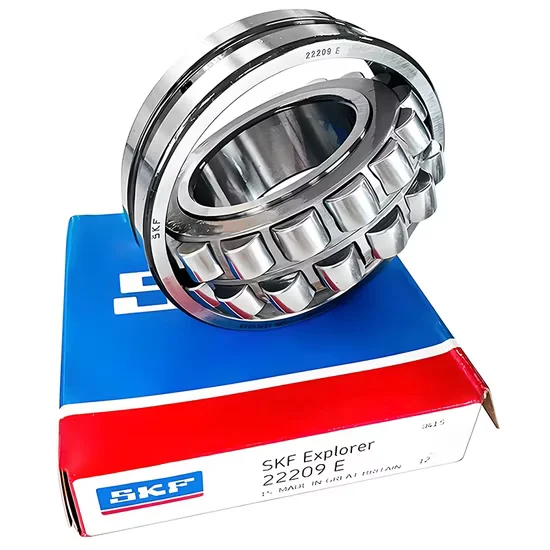
More telling were the marks on the bearing rings. The raceways of the spherical roller bearings showed deep, parallel scratches. These were not fatigue spalls, which appear as pits or flakes. They were abrasion marks caused by hard particles moving through the contact zone. This visual evidence confirmed that contamination was the primary driver of failure.
The diagnosis process involved several steps:
- Visual Inspection: Checking for discoloration, grease condition, and surface damage.
- Seal Examination: Inspecting the seal lips for wear, hardening, or gaps.
- Contaminant Analysis: Identifying the type of particles found in the grease.
- Operational Review: Correlating failure timing with environmental conditions.
This methodical approach prevented the team from making another incorrect replacement. Instead of ordering the same part, they sought a solution that addressed the contamination issue. For a wholesale supplier for Swiss plant operators, providing guidance on this diagnostic process can help customers avoid repeat failures. It positions the supplier as a technical partner rather than just a vendor.
Understanding the failure mode is crucial for selecting the right upgrade. If the damage had been fatigue-related, a higher load capacity bearing might have been the answer. But since it was contamination, the focus had to shift to sealing and lubrication. A wholesale supplier for Swiss plant facilities must be prepared to discuss these technical details to ensure the right product is supplied.
What Was the Comprehensive Upgrade Strategy?
Combining upgraded spherical roller bearings with advanced sealing and high-temp grease.
The solution implemented in the Swiss plant involved a three-part upgrade. First, the standard seals were replaced with multi-lip labyrinth configurations. These seals create a longer, more tortuous path for contaminants, significantly reducing the likelihood of ingress. Second, the lubricant was switched to a high-temperature synthetic grease. This grease maintained its viscosity and protective film even under elevated thermal stress. Third, the bearings themselves were upgraded to premium spherical roller bearings with enhanced internal clearance to accommodate thermal expansion.
This holistic approach addressed all identified failure mechanisms. The new seals kept the dust out. The new grease stayed fluid and protective. The bearings operated within their designed parameters. The result was a significant extension in service life. The motor ran substantially longer without intervention, reducing maintenance costs and unplanned downtime.
For distributors serving similar industries, this case offers a clear template. When facing repeated failures, look at the entire system. Do not just replace the bearing. Evaluate the seal, the lubricant, and the environment. A wholesale supplier for Swiss plant clients can differentiate themselves by offering this comprehensive consulting service. It builds trust and leads to more stable, long-term business relationships.
Sourcing these specialized components requires a supplier with broad access to genuine products. Our portfolio includes genuine bearings from SKF, FAG, INA, NSK, NTN, TIMKEN, KOYO, NACHI, IKO, and reliable domestic Chinese lines like ZWZ, HRB, and LYC. We provide complete traceability documentation and ISO-compliant quality assurance. Whether you need a single emergency spare or a full container consolidation, we offer flexible solutions tailored to your project needs. As a wholesale supplier for Swiss plant and global industrial clients, we support mixed-brand orders and provide technical consultation for failure analysis and custom sealing requirements.
Conclusion
Site conditions dictate bearing performance, not just brand reputation.
Upgrading motor bearings in harsh environments requires a systematic approach that integrates sealing, lubrication, and component selection. Ignoring environmental factors leads to repeated failures and increased costs. By focusing on holistic solutions, maintenance teams can achieve reliable, long-term operation. Partnering with a knowledgeable wholesale supplier for Swiss plant and global industrial sectors ensures access to the right products and technical expertise for these complex challenges.
What to state on your inquiry
A complete inquiry keeps the full model suffix and the specified execution, so the quote matches your parts list.
- Full SKF designationCopy every model suffix exactly as specified.
- Specified executionName any insulated, hybrid ceramic or clearance requirement.
- Motor and bearing positionGive the motor model and the position of each bearing.
- Quantity and deliveryList quantities, destination country, postcode and required date.