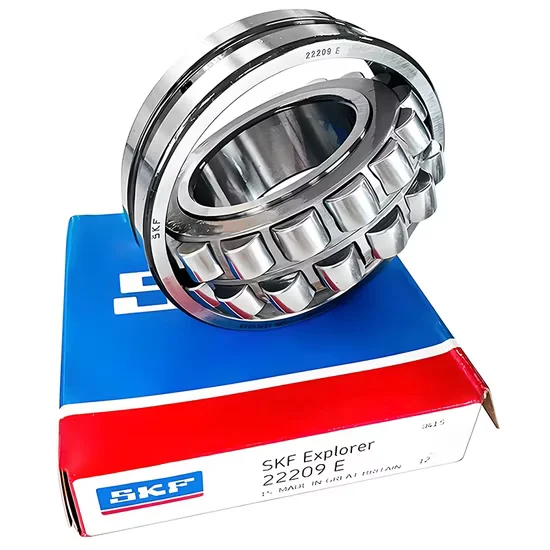
Strict per-SKU minimums are often the fastest way to lose a German procurement contract.
For German customers, minimum order values should focus on total order value and mixed-batch consolidation rather than strict per-SKU MOQs, ensuring one-stop MRO and project sourcing. This approach aligns with the logistical reality of Less than Container Load (LCL) shipping and the operational needs of maintenance, repair, and operations (MRO) departments that require hundreds of different SKUs in small quantities.
When I first started handling exports from Qingdao, I nearly killed a promising deal with a maintenance supplier in Hamburg. They needed a mix of SKF and FAG bearings for a routine plant overhaul—hundreds of part numbers, but only two or three units of each. My initial response was to quote standard carton MOQs for every single item. The math didn’t work for them. They weren’t looking to stockpile; they were looking to keep a production line running. It was only after watching containers being stuffed at the Qianwan Port that I realized the disconnect. The freight forwarder wasn’t counting boxes per brand; he was calculating volume and weight against the total invoice value. For German buyers, the barrier isn’t how many of one specific bearing you buy, but whether the total shipment justifies the logistics cost. Understanding this shift is critical for any Minimum Order Values for German Customers strategy.
What is the real MOQ for German bearing buyers?
The real constraint is not the quantity per SKU, but the total commercial value required to cover fixed export and freight costs.
German procurement managers operate under strict efficiency mandates. They are less concerned with whether a supplier can sell them one deep-groove ball bearing and more concerned with whether that single bearing can be shipped economically alongside fifty other items. In traditional trading, suppliers often set high per-SKU MOQs to simplify packing and invoicing. However, this model fails in the German market where precision and flexibility are prized over bulk simplicity.
The key metric is the total order value. If a buyer needs ten different tapered roller bearings for a gearbox repair, insisting on a full box for each creates excess inventory they do not want. Instead, the focus shifts to consolidating these items into a single shipment that meets a minimum financial threshold. This threshold usually covers the fixed costs of documentation, customs clearance, and the base rate for LCL freight. By shifting the conversation from "how many boxes" to "what is the total invoice value," suppliers can accommodate the diverse needs of German industrial clients.
This approach requires a robust inventory system capable of picking individual units from various brands like NSK, NTN, or TIMKEN without triggering bulk-packaging rules. It also demands transparency in pricing so that the buyer can see how mixing high-turnover items with slow-moving spares affects the overall cost. When discussing Minimum Order Values for German Customers, it is essential to clarify that the floor is set by logistics economics, not arbitrary sales targets.
How to handle mixed-batch MRO orders with hundreds of SKUs?
One-stop consolidation solutions turn chaotic small-quantity requests into manageable, high-value shipments.
MRO maintenance orders are notoriously difficult for traditional suppliers. A typical request might include spherical roller bearings, cylindrical roller bearings, and needle bearings from multiple brands, all needed within a tight timeframe. The challenge is not sourcing the parts, which are often available in spot inventory, but organizing them into a coherent shipment.
In my experience, the most effective method is to treat the order as a single project rather than a collection of individual line items. This involves creating a consolidated packing list that groups items by type or fragility rather than by brand. For example, heavy-duty mining bearings might be palletized separately from precision machine-tool bearings to prevent damage during transit. This level of care is expected by German clients who prioritize asset protection.
A regional distributor in Europe once faced a crisis when a major client needed urgent replacements for a wind farm turbine. The order included rare angular contact ball bearings and standard insert bearings. By leveraging a massive spot inventory and ignoring strict per-brand MOQs, we were able to pull the exact quantities needed. The result was a mixed container that balanced high-turnover stock with critical emergency spares. This flexibility is a core component of successful Minimum Order Values for German Customers negotiations, as it demonstrates an understanding of the client’s operational urgency.
The process involves verifying the authenticity of each brand, ensuring complete traceability documentation, and then physically consolidating the goods in a secure warehouse. This service adds value beyond the product itself, reducing the administrative burden on the buyer’s procurement team. Instead of managing dozens of small shipments from different sources, they receive one verified, documented consignment.
Why do strict per-SKU MOQs fail in German procurement?
Flexibility wins long-term contracts by aligning with the lean inventory strategies prevalent in German industry.
Strict per-SKU MOQs create friction in the supply chain. They force buyers to either overstock, tying up capital in unused inventory, or seek alternative suppliers who offer more flexible terms. In the German market, where Just-in-Time (JIT) and lean manufacturing principles are deeply embedded, overstocking is seen as inefficiency.
When a supplier insists on selling a full carton of a specific bearing when only five units are needed, it signals a lack of adaptability. German procurement managers view this as a risk to their own operational agility. They prefer partners who can act as an extension of their warehouse, providing exactly what is needed, when it is needed. This is why flexible Minimum Order Values for German Customers policies are competitive advantages.
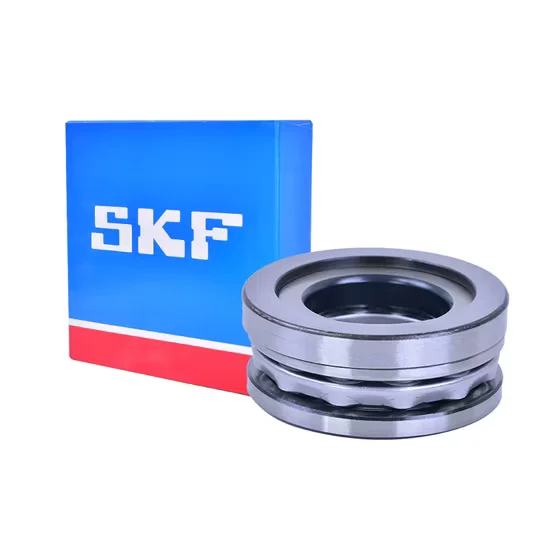
Consider the case of an OEM manufacturer in Stuttgart. They required a specific thrust bearing for a prototype machine. The volume was low, but the precision requirement was high. A traditional supplier refused the order due to low volume. By offering a single-unit sale backed by genuine product guarantees and technical support, we secured not just that order, but the entire subsequent production run. The initial flexibility built trust that rigid MOQs could never achieve.
This failure of strict MOQs is also evident in the aftermarket sector. Repair workshops need access to a wide range of parts but cannot afford to hold large stocks of each. Suppliers who offer mixed-batch ordering become preferred partners because they reduce the workshop’s inventory risk. The ability to order small quantities of premium brands like INA or KOYO alongside domestic lines allows these businesses to maintain service levels without excessive capital expenditure.
How to calculate the minimum order value for LCL shipments?
Balancing freight and product costs requires a clear understanding of volumetric weight and fixed export fees.
Calculating the viable minimum order value involves more than just adding up the price of the bearings. It requires a holistic view of the landed cost. For LCL shipments, freight forwarders charge based on either weight or volume, whichever is greater. This means that a pallet of lightweight needle bearings might cost more to ship than a smaller pallet of heavy spherical roller bearings.
To determine the right threshold, one must account for fixed export costs such as customs declaration, inspection fees, and documentation. These costs are largely independent of the order size. Therefore, spreading them over a larger total order value reduces the per-unit impact. For German customers, transparency in this calculation is crucial. They appreciate knowing how much of their payment goes toward the product versus the logistics.
A practical approach is to set a baseline total value that covers these fixed costs and provides a reasonable margin. For example, if the fixed export costs are equivalent to a certain amount, the order value should significantly exceed this to ensure economic viability for both parties. This calculation should be shared with the buyer to help them optimize their orders. They might choose to add a few extra SKUs to reach a more efficient freight bracket, a practice known as order consolidation.
This method also encourages buyers to think strategically about their procurement cycles. Instead of placing frequent, small orders that incur high relative logistics costs, they can plan quarterly or semi-annual mixed batches. This aligns with the concept of Minimum Order Values for German Customers by focusing on the total economic efficiency of the transaction rather than arbitrary quantity limits.
Conclusion
Flexible consolidation beats rigid quantity rules in the German market.
Success in supplying bearings to Germany relies on understanding that value is derived from solution completeness, not just unit volume. By prioritizing total order value and mixed-batch efficiency, suppliers can build lasting partnerships with discerning European buyers.
What to state on your inquiry
A complete inquiry keeps the full model suffix and the specified execution, so the quote matches your parts list.
- Full SKF designationCopy every model suffix exactly as specified.
- Specified executionName any insulated, hybrid ceramic or clearance requirement.
- Motor and bearing positionGive the motor model and the position of each bearing.
- Quantity and deliveryList quantities, destination country, postcode and required date.