An ISO 14001 certificate is not enough for German automotive or industrial buyers.
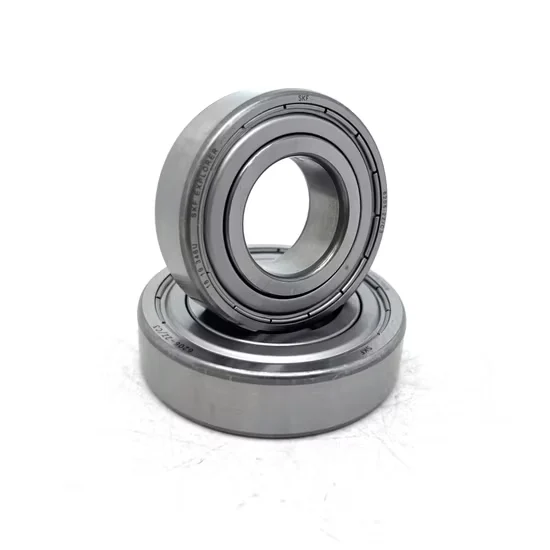
German OEMs require product-specific Life Cycle Assessment (LCA) data with traceable upstream steel emission factors, not generic facility-level environmental declarations. Submitting broad corporate sustainability reports instead of batch-linked carbon footprints for deep groove ball bearings will result in immediate compliance rejection and potential removal from approved supplier lists.
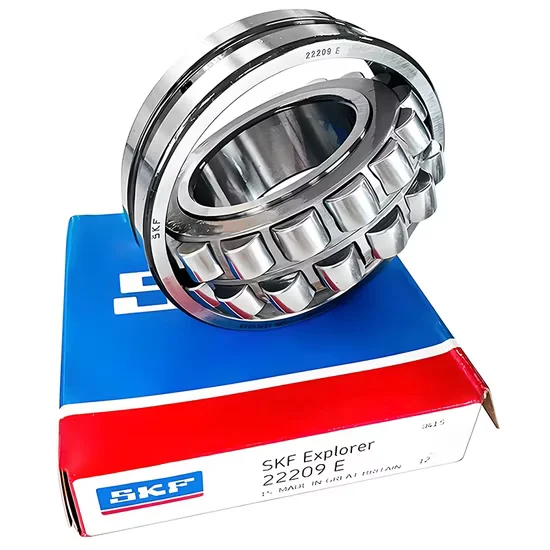
When I first started handling export documentation in Ningbo, I assumed that a clean factory audit and a general energy-saving statement would satisfy European procurement teams. I sent over our standard environmental management system certificates for a major German machinery client. The response was swift and cold: the compliance department rejected the submission entirely. They were not interested in our factory’s overall electricity usage. They needed the specific carbon footprint of the steel used in a particular batch of spherical roller bearings, traced back to the smelting process. This was not a request for better marketing materials; it was a regulatory necessity driven by supply chain transparency laws. Understanding this distinction is critical for any bearing supplier aiming to maintain framework agreements with German industry leaders.
The shift from voluntary sustainability reporting to mandatory carbon accounting has changed how procurement works. It is no longer about proving you are a green company. It is about proving that every single component in your assembly has a verifiable carbon cost attached to it. For those dealing with Carbon Data Requests from German OEMs, the focus must move from general certifications to granular, product-level data.
Why Do German OEMs Reject Generic Environmental Certificates?
Facility-level certificates do not provide the product-specific traceability required for modern supply chain audits.
Many suppliers mistakenly believe that holding an ISO 14001 certification demonstrates sufficient environmental responsibility. While this standard validates that a management system exists, it does not quantify the carbon intensity of individual products. German OEMs operate under strict internal guidelines and emerging EU regulations that demand cradle-to-gate emissions data for each part number.
A common scenario involves a supplier submitting a corporate sustainability report alongside a shipment of angular contact ball bearings. The report might highlight a ten percent reduction in the factory’s total energy consumption over the last year. However, the OEM’s compliance software requires an emission factor in kilograms of CO2 equivalent per kilogram of bearing steel. Without this specific metric, the parts cannot be logged into their carbon accounting system. This mismatch leads to administrative delays and, in severe cases, the suspension of orders until proper documentation is provided.
The rejection is not personal; it is procedural. Automotive and heavy equipment manufacturers in Germany are increasingly held accountable for Scope 3 emissions, which include all indirect emissions in their value chain. They cannot calculate their own footprint if their suppliers only provide vague, aggregate data. Therefore, they reject generic certificates because these documents lack the granularity needed for accurate lifecycle modeling. For a Carbon Data Requests from German OEMs process to succeed, the documentation must link specific material batches to their corresponding environmental impact values.
Suppliers must recognize that the buyer’s request is driven by legal and reporting obligations, not just corporate social responsibility trends. The data must be auditable and linked to the physical goods delivered. This means that a single certificate covering an entire factory’s output is insufficient when the OEM needs to distinguish between bearings made from primary steel versus those made from recycled scrap.
What Specific Carbon Data Do German OEMs Require for Bearings?
Buyers need exact LCA boundaries, Scope 3 steel emission factors, and batch-level traceability documentation.
When German procurement teams issue Carbon Data Requests from German OEMs, they are looking for three specific elements: the system boundary of the assessment, the source of the emission factors, and the chain of custody for the materials. A typical request will specify that the Life Cycle Assessment must follow a cradle-to-gate approach. This means calculating emissions from raw material extraction through to the finished bearing leaving the factory gate, excluding use-phase and end-of-life impacts.
The most critical component is the emission factor for the steel. Since steel production accounts for the majority of a bearing’s carbon footprint, OEMs require data on whether the steel was produced via blast furnace-basic oxygen furnace routes or electric arc furnace routes using scrap. They often ask for primary data from the steel mill rather than secondary database averages. If a supplier uses generic industry averages without disclosing the source, the data is often flagged as unverifiable.
Traceability is the third pillar. For mixed-brand shipments or large container orders, the supplier must prove which batch of steel went into which batch of bearings. A Middle East distributor once faced a compliance hold because their documentation grouped several different bearing brands into one generic carbon statement. The German end-user required separate data streams for each brand to ensure accuracy. This level of detail ensures that the carbon data matches the physical inventory.
| Data Requirement | Acceptable Format | Unacceptable Format |
|---|---|---|
| System Boundary | Cradle-to-Gate (ISO 14067) | Cradle-to-Grave (if incomplete) or Gate-to-Gate only |
| Steel Emission Factor | Primary data from steel mill or verified secondary database | Generic industry average without source citation |
| Traceability | Batch-specific linkage to material certificates | Factory-wide average applied to all products |
| Verification | Third-party verified LCA report | Self-declared internal estimate |
Meeting these requirements transforms a simple transaction into a compliant supply chain partnership. Suppliers who can provide this level of detail demonstrate a mature understanding of Carbon Data Requests from German OEMs and reduce the administrative burden on their clients.
How to Calculate and Verify the Carbon Footprint of Deep-Groove Ball Bearings?
Focus on upstream steel smelting data and strict cradle-to-gate boundaries to ensure accuracy.
Calculating the carbon footprint of deep groove ball bearings requires a methodical approach centered on material inputs. The manufacturing process itself, including forging, grinding, and heat treatment, contributes to the total footprint, but the raw material phase dominates. Therefore, the accuracy of the calculation hinges on the quality of the steel data.
The first step is defining the functional unit, usually one kilogram of finished bearing. Next, gather primary energy data from the manufacturing facilities. This includes electricity consumption, natural gas used for heat treatment, and any other direct fuel sources. However, the most significant variable remains the steel. Suppliers must obtain environmental product declarations from their steel providers. These documents should specify the carbon intensity of the specific grade of bearing steel used.
Verification adds credibility. An internal calculation may be sufficient for initial discussions, but German OEMs often prefer third-party verified reports. Engaging with certified bodies to validate the LCA methodology ensures that the data withstands scrutiny. This is particularly important when dealing with premium brands where consistency is key. A European wind farm operator recently required verified LCA data for all main shaft bearings to meet their own sustainability reporting goals. The supplier who provided independently verified data secured the contract over competitors who offered only self-reported figures.
It is also essential to distinguish between primary and secondary data. Primary data comes directly from the specific processes involved in producing the bearings. Secondary data comes from generic databases. While secondary data can fill gaps, relying on it too heavily reduces the accuracy of the final figure. For high-value contracts, investing in primary data collection is necessary. This rigorous approach to calculation is what separates compliant suppliers from those who struggle with Carbon Data Requests from German OEMs.
How to Prepare Compliant Carbon Documentation for Mixed-Brand Shipments?
Ensure one hundred percent traceability and standardized reporting for multi-brand container orders.
Sourcing genuine bearings from multiple global brands creates a documentation challenge. A single container might contain SKF, FAG, NSK, and TIMKEN products, each with different supply chains and material sources. Preparing compliant carbon documentation for such mixed shipments requires a robust tracking system. The key is to maintain separation of data streams even when the physical goods are consolidated.
Each brand’s components should have its own associated carbon data sheet. If the supplier acts as a consolidator, they must collect LCA reports from each original manufacturer or calculate them based on verified material certificates. Mixing data from different brands into a single average value is risky and often rejected by strict compliance officers. Instead, the documentation should list each part number with its corresponding carbon footprint value.
Traceability documents, such as mill certificates and heat treatment logs, must be linked to the specific batches shipped. This allows the OEM to trace any discrepancies back to the source. A professional global full-range bearing supplier can facilitate this by maintaining detailed records of origin for all stocked items. By offering complete traceability documentation alongside genuine original bearings, suppliers can meet the strict compliance needs of their clients. This service is particularly valuable for industrial machinery OEMs who source from multiple brands but need unified reporting.
Handling Carbon Data Requests from German OEMs for mixed shipments demonstrates operational excellence. It shows that the supplier has control over their inventory and understands the regulatory landscape. This level of preparation minimizes delays at customs and during internal audits, ensuring smooth transactions for all parties involved.
Conclusion
Compliance is no longer optional; it is a fundamental requirement for doing business with German industry.
Success in this market depends on providing precise, traceable, and verified carbon data rather than generic environmental claims. Suppliers must adapt their documentation processes to meet the specific demands of Carbon Data Requests from German OEMs. By focusing on product-level LCA, accurate steel emission factors, and rigorous traceability, businesses can secure their position in the European supply chain.
What to state on your inquiry
A complete inquiry keeps the full model suffix and the specified execution, so the quote matches your parts list.
- Full SKF designationCopy every model suffix exactly as specified.
- Specified executionName any insulated, hybrid ceramic or clearance requirement.
- Motor and bearing positionGive the motor model and the position of each bearing.
- Quantity and deliveryList quantities, destination country, postcode and required date.