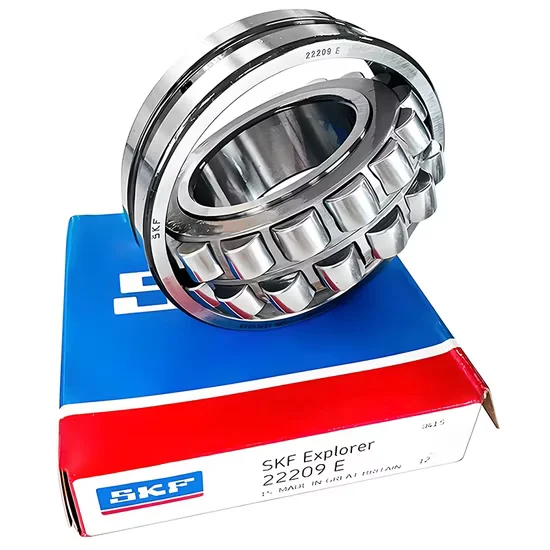
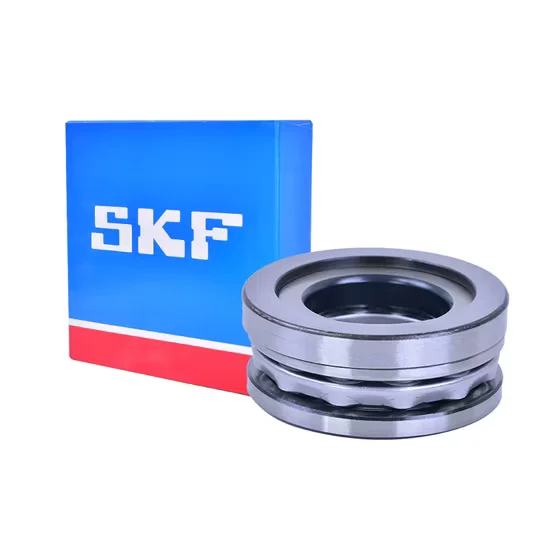
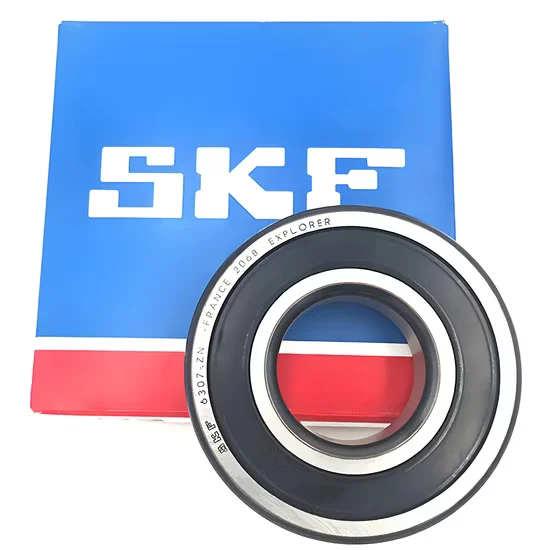
The lubrication chart is not a rigid law; it is a baseline that often fails under real-world stress.
Correctly interpreting Lubrication Charts for German Production Lines requires moving beyond the printed viscosity recommendations to account for site-specific thermal loads and mechanical stresses. While original equipment manufacturers provide standard grease intervals based on ideal laboratory conditions, actual industrial environments—such as high-ambient temperature forging shops or heavy-load stamping facilities—frequently demand upgraded synthetic formulations and adjusted re-lubrication frequencies. Ignoring this discrepancy leads to premature bearing failure, seal degradation, and unplanned downtime. The core task for maintenance engineers is to cross-reference the OEM chart with DIN 51825 grease classification standards and adjust for local operating realities.
I still remember the silence in a Monterrey automotive plant. It was not the peaceful quiet of a well-oiled machine, but the dead stop of a German stamping line. The main spindle had seized. The culprit was not a defective bearing, but a can of standard lithium grease applied by a worker who had glanced at the chart but ignored the context. The chart specified a general-purpose lubricant, but the local ambient heat and the high-frequency impact load required a synthetic base oil with higher thermal stability. That failure cost the plant two days of production. Since then, I have learned that Lubrication Charts for German Production Lines are starting points, not finish lines. They dictate baseline life, but site reality demands adaptation.
Why Do German Production Line Lubrication Charts Matter?
Charts provide the manufacturer’s ideal scenario, not your shop floor’s reality.
German engineering precision, particularly from brands like FAG and INA, relies on strict adherence to lubrication protocols. However, these protocols are often designed for controlled environments. In global industrial settings, variables such as dust, moisture, and extreme temperatures deviate significantly from the test bench. Understanding Lubrication Charts for German Production Lines is critical because they define the minimum viscosity required to maintain an elastohydrodynamic lubricating film between rolling elements.
When a maintenance team treats the chart as an absolute rule without considering the "severity factor" of their operation, they risk under-lubrication or, more commonly, over-lubrication. Over-greasing causes churning, which generates excessive heat and destroys seals faster than starvation. This counter-intuitive reality means that more grease is not better; the right grease at the right interval is key. For distributors and MRO managers, this knowledge transforms a simple parts order into a technical consultation. It ensures that the bearings supplied are paired with compatible lubricants, preventing early failures that could otherwise be blamed on product quality.
How to Read and Interpret FAG/INA Lubrication Charts?
Extracting the correct data requires understanding speed factors and temperature limits, not just part numbers.
Reading a FAG bearing lubrication schedule involves more than finding the part number. You must identify three critical parameters: the reference speed, the operating temperature range, and the load ratio. These charts often use a speed factor (n x dm) to determine the appropriate grease consistency. If the actual operating speed exceeds the reference value listed in the chart, the grease may soften excessively, leading to leakage and loss of protection.
Step-by-step interpretation involves:
- Identify the Bearing Type: Deep groove ball bearings have different lubrication needs compared to spherical roller bearings due to internal geometry and sliding friction components.
- Determine the Speed Factor: Calculate the product of rotational speed (rpm) and the pitch diameter (mm). Compare this against the chart’s limit.
- Check Temperature Bounds: Standard charts assume an operating temperature up to 70°C. If your environment runs hotter, the chart’s recommendation becomes invalid without adjustment.
- Select Grease Consistency: NLGI grades must match the sealing type. Open bearings may require stiffer grease, while sealed units often come pre-lubricated for life.
A common mistake is ignoring the compatibility matrix. Mixing incompatible greases can cause softening or hardening, rendering the lubricant ineffective. Always verify chemical compatibility before topping up. For buyers sourcing mixed-brand replacements, cross-referencing these charts ensures that the substitute bearing meets the same lubrication requirements as the original, maintaining system integrity.
What to Do When Site Conditions Exceed Chart Limits?
Upgrade the grease grade rather than reducing the maintenance interval.
In many heavy industries, such as steel mills or mining operations, ambient temperatures frequently exceed the 30°C above chart limit mentioned in standard documentation. In these cases, simply adding more frequent shots of standard grease does not solve the problem; it exacerbates heat generation. The solution is to upgrade the grease type.
For high-temperature applications, synthetic base oils with higher thermal stability are required. These greases maintain their viscosity index better under heat, ensuring the lubricating film remains intact. Similarly, in high-load scenarios like stamping presses, the standard lithium complex grease may not provide sufficient extreme pressure (EP) protection. Switching to a specialized synthetic grease with enhanced EP additives can extend bearing life significantly.
This approach requires a deep understanding of industrial bearing lubrication standards. It is not enough to know the brand; one must know the chemistry. For example, in a high-temperature forging line, replacing standard mineral-based grease with a polyalphaolefin (PAO) synthetic can prevent the grease from carbonizing and blocking relief paths. This upgrade protects the bearing from abrasive wear caused by degraded lubricant particles. Suppliers who offer technical selection support can help clients navigate these upgrades, ensuring that the chosen grease matches both the bearing specifications and the harsh site conditions.
How to Avoid Common Lubrication Mistakes on the Shop Floor?
Prevent cross-contamination and over-greasing through strict protocol enforcement.
Even with the correct Lubrication Charts for German Production Lines, human error remains a primary cause of failure. Two mistakes dominate: over-lubrication and cross-contamination. Over-lubrication creates internal pressure that forces grease past seals, allowing contaminants to enter and causing seal lip distortion. Cross-contamination occurs when different grease types are mixed, leading to chemical incompatibility and loss of structural integrity.
To mitigate these risks:
- Use Dedicated Tools: Assign specific grease guns to specific grease types. Color-code them to prevent accidental mixing.
- Calculate Precise Volumes: Do not guess. Use the bearing size and type to calculate the exact amount of grease needed for replenishment. Overfilling a bearing housing can lead to catastrophic overheating.
- Clean Fittings: Wipe grease nipples before attaching the gun to prevent dirt ingress.
- Monitor Temperature: Use infrared thermometers to check bearing housing temperatures after lubrication. A sudden spike indicates over-greasing or incompatibility.
In emergency MRO situations, where multiple brands might be sourced, it is crucial to verify grease compatibility across the entire inventory. A mixed-brand order should include a compatibility check sheet. This diligence prevents the "silent killer" of incompatible lubricants, which may not show immediate symptoms but will drastically reduce bearing life over time. By focusing on these practical steps, maintenance teams can ensure that their adherence to Lubrication Charts for German Production Lines translates into reliable, long-term equipment performance.
Conclusion
Precision in lubrication is as vital as precision in manufacturing.
Adhering to Lubrication Charts for German Production Lines is essential, but it must be done with an understanding of local operating conditions. Upgrading grease types for extreme environments and avoiding common application errors are key to maximizing bearing life. Proper interpretation of these charts prevents premature failures and ensures operational continuity.
What to state on your inquiry
A complete inquiry keeps the full model suffix and the specified execution, so the quote matches your parts list.
- Full SKF designationCopy every model suffix exactly as specified.
- Specified executionName any insulated, hybrid ceramic or clearance requirement.
- Motor and bearing positionGive the motor model and the position of each bearing.
- Quantity and deliveryList quantities, destination country, postcode and required date.