Premium bearings fail because of poor handling, not manufacturing defects.
The primary cause of premature bearing failure on industrial sites is mishandling during transport and installation, not inherent quality issues. Effective bearing handling training for apprentices must focus on preventing physical damage to internal geometry through proper lifting techniques, contamination control, and correct fitting methods. Without this foundational knowledge, even the highest precision components will suffer from micro-fractures, cage deformation, or early seizure, leading to costly downtime and warranty claims.
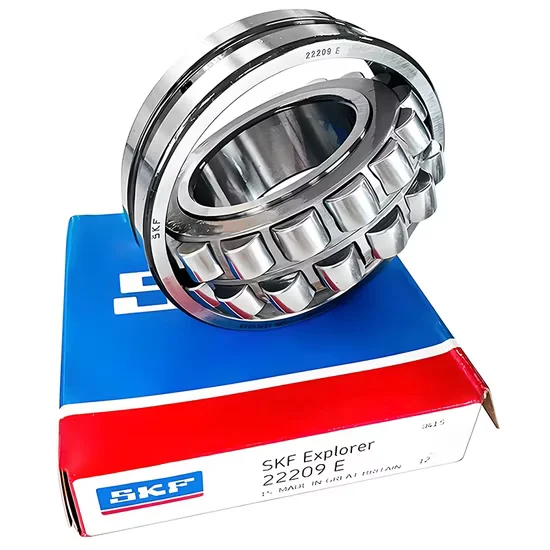
I still recall the humid air of a cement plant in Nigeria, where I watched local apprentices unload a pallet of spherical roller bearings. They dragged the heavy cardboard boxes across the rough concrete floor, the friction tearing through the packaging. Later, during fitting, they used a standard hammer to strike the inner ring directly, aiming to force it onto the shaft. The result was immediate and catastrophic: the cages deformed, and the bearings failed within a week. This scene underscores a brutal reality that many overlook. Mishandling ruins precision, no matter how premium the brand.
This guide breaks down the critical steps for bearing handling training, ensuring your team understands the engineering principles behind every movement. By addressing these common pitfalls, distributors and end-users can significantly reduce site failures and protect their operational efficiency.
Why Do Premium Bearings Fail Prematurely on Site?
Mishandling during transport and fitting destroys internal geometry before operation even begins.
Many site managers assume that if a bearing fails early, the manufacturer supplied a defective unit. However, industry failure analysis reports consistently show that a significant majority of premature failures stem from installation errors rather than material fatigue. When apprentices lack proper bearing handling training, they inadvertently introduce stresses that compromise the bearing’s structural integrity.
Consider the case of a mining site conveyor idler replacement. The maintenance team used dirty rags to clean the bearing seats and applied improper heating methods to expand the inner ring. This introduced particulate contamination and created uneven thermal gradients. The bearing seized shortly after startup, not because it was weak, but because it was contaminated and stressed during installation.
Another frequent issue occurs in pump repair workshops where bearings are stored in humid environments without protective packaging. Surface rust forms quickly, leading to rejected inspections or, worse, undetected pitting that accelerates wear once the machine is running. These scenarios highlight that the environment and method of handling are just as critical as the component itself.
As a global supplier, we provide complete technical datasheets and failure analysis support to help distributors and end-users train their teams. Understanding these root causes allows you to move beyond blame and focus on prevention, ensuring that the genuine products you source perform as intended.
What Are the Most Common Apprentice Handling Mistakes?
Dragging boxes, direct hammering, and ignoring contamination are the top three silent killers.
Apprentices often learn by watching senior technicians, but if those seniors have developed bad habits, the errors propagate. In bearing handling training, it is essential to identify and correct these specific behaviors before they become ingrained.
First, dragging bearing boxes is a widespread mistake. The weight of the package causes the bottom to tear, exposing the bearings to dust, moisture, and physical shock. Second, using hammers to drive bearings onto shafts is a critical error. Even with a drift, the impact can cause micro-fractures in the rings or damage the rolling elements. Third, neglecting cleanliness during installation introduces abrasive particles that act like grinding paste, rapidly wearing down the polished surfaces.
| Mistake | Consequence | Correct Practice |
|---|---|---|
| Dragging boxes on concrete | Packaging tear, contamination, shock load | Use trolleys or lifting gear, keep packages intact |
| Hammering inner rings directly | Cage deformation, micro-fractures, brinelling | Use induction heaters or hydraulic presses |
| Cleaning with dirty rags | Particulate contamination, early seizure | Use lint-free cloths and approved solvents |
| Storing in humid areas | Surface rust, corrosion pitting | Climate-controlled storage, original packaging |
A European wind farm operator once reported a series of gearbox failures that were traced back to apprentices using compressed air to clean bearings without proper filtration. The air stream drove moisture and debris into the sealed units, causing corrosion from the inside out. This example illustrates why bearing handling mistakes are often subtle but devastating.
By highlighting these specific errors, trainers can create a culture of precision. It is not enough to say "be careful"; you must demonstrate exactly what "careful" looks like in practice.
How Should Heavy Bearings Be Transported and Stored?
Use proper lifting gear, keep original packaging intact, and store in dry, climate-controlled areas.
Proper logistics are the first line of defense in bearing handling training. Heavy bearings, such as spherical roller bearings used in crushers or mills, require specific handling protocols to prevent damage before they even reach the workbench.
Lifting heavy bearings should never be done by hand if they exceed safe manual handling limits. Instead, use appropriate lifting gear such as slings or hoists, ensuring that the load is balanced and secure. The original packaging is designed to protect the bearing from environmental factors and physical shock. Removing it prematurely exposes the component to risk. Therefore, keep the packaging intact until the moment of installation.
Storage conditions are equally critical. Bearings should be kept in a dry, climate-controlled area to prevent condensation and rust. Horizontal storage is preferred for large bearings to prevent false brinelling caused by vibration. If vertical storage is necessary, ensure the bearing is supported correctly to avoid deformation.
In our experience supplying clients across multiple regions, we see that sites with dedicated storage protocols have significantly lower rejection rates. This is not just about organization; it is about preserving the metallurgical integrity of the product. For distributors, providing clear storage guidelines to their customers can reduce returns and build trust.
What Is the Correct Step-by-Step Installation Method?
Clean thoroughly, use induction heaters for controlled expansion, and apply even pressure without striking components directly.
The installation phase is where proper bearing installation techniques are most critical. A step-by-step approach ensures consistency and reduces the likelihood of human error.
- Preparation: Clean the shaft and housing thoroughly. Remove any burrs, rust, or old adhesive. Use lint-free cloths and approved solvents to ensure no contaminants remain.
- Heating: For interference fits, use an induction heater to expand the inner ring. This method provides controlled, uniform heating, avoiding the risks associated with open flames or oil baths. Monitor the temperature to stay within the manufacturer’s recommended limits.
- Mounting: Slide the heated bearing onto the shaft quickly and smoothly. Ensure it is seated against the shoulder properly. Do not force it if it sticks; check for alignment issues.
- Cooling: Allow the bearing to cool naturally. Do not quench it with water or compressed air, as rapid cooling can induce stress cracks.
- Inspection: Once installed, check the rotation for smoothness. Any roughness or noise indicates potential damage or misalignment.
A common counter-intuitive view is that heavier hammers ensure tighter fits. In reality, they cause micro-fractures in the rings, leading to premature failure. By using controlled heating and even pressure, you preserve the bearing’s precision. This method is essential for spherical roller bearing fitting, where the internal geometry is complex and sensitive to distortion.
For apprentices, practicing these steps under supervision builds muscle memory and confidence. It transforms installation from a chaotic struggle into a precise engineering task. As a supplier, we support this process by providing detailed technical manuals and access to expert advice, ensuring your team has the resources they need to succeed.
Conclusion
Precision is preserved through proper handling, not just manufacturing.
Effective bearing handling training is the key to preventing costly site failures. By focusing on proper transport, storage, and installation techniques, you ensure that every bearing performs to its full potential. Remember, mishandling ruins precision, no matter how premium the brand. Invest in your team’s skills, and you will see the difference in reliability and longevity.
What to state on your inquiry
A complete inquiry keeps the full model suffix and the specified execution, so the quote matches your parts list.
- Full SKF designationCopy every model suffix exactly as specified.
- Specified executionName any insulated, hybrid ceramic or clearance requirement.
- Motor and bearing positionGive the motor model and the position of each bearing.
- Quantity and deliveryList quantities, destination country, postcode and required date.