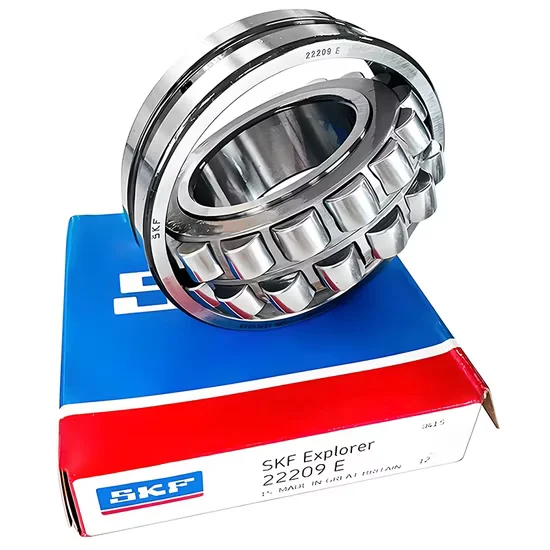
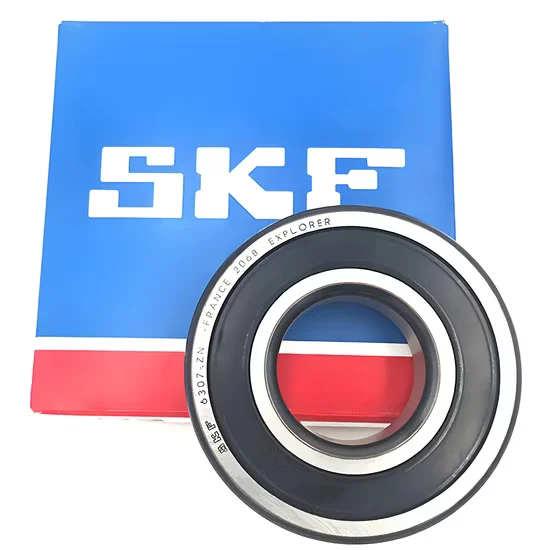
Standard clearance is a silent killer in high-temperature refrigerant systems.
Selecting the correct internal clearance for heat pump compressor bearings requires matching C3 or C4 specifications to specific thermal expansion rates of modern refrigerants, rather than relying on basic load ratings or standard C0 fits. This precise alignment prevents catastrophic seizure caused by thermal contraction of the fit during operation.
I still remember the biting cold of a winter morning in Dongguan, standing over a disassembled scroll compressor that had seized solid. The shaft was welded to the inner race, a blackened mess of metal and burnt oil. The procurement team had saved a few dollars per unit by switching to a generic alternative with standard clearance. They ignored the fact that the new high-temperature refrigerant expanded the housing more than the steel shaft, effectively crushing the bearing until it locked up. That single batch of incorrect parts cost the factory a mid-six-figure loss in warranty claims and ruined reputations. It was a harsh lesson in physics: in heat pump applications, the enemy is not just load, but thermal dynamics.
This experience reshaped how I view component sourcing. It is not about finding the cheapest option; it is about understanding the operating environment. For distributors and OEMs, the difference between a reliable system and a field failure often lies in the microns of internal clearance. As a global full-range bearing supplier, we see this pattern repeat across regions, from the humid tropics of Southeast Asia to the heating demands of Northern Europe. The right Heat Pump Compressor Bearings Wholesale Supplier does not just ship boxes; they verify that the clearance matches the thermodynamics of your specific application.
Why Do Heat Pump Compressor Bearings Fail?
Thermal expansion and refrigerant compatibility are the primary drivers of failure, not just mechanical load.
Most engineers assume that if a bearing can handle the radial and axial loads, it will survive. This is a dangerous oversimplification. In heat pump compressors, the operating environment involves significant temperature swings and exposure to aggressive refrigerants. When a compressor runs, the housing heats up and expands. If the refrigerant has a high operating temperature, this expansion is pronounced. Meanwhile, the inner race, mounted on the shaft, may not expand at the same rate, or may even contract relative to the housing depending on the heat transfer dynamics.
If you use a standard C0 clearance bearing, there is no room for this differential expansion. The internal play disappears, the rolling elements bind, and friction spikes. This generates more heat, which causes more expansion, leading to a thermal runaway that ends in a seized shaft. I have seen this happen with both R410A and newer A2L refrigerants. The chemical compatibility also plays a role. Some elastomers and lubricants degrade when exposed to certain refrigerants at high temperatures, losing their viscosity and protective film. Without proper lubrication, even a correctly cleared bearing will fail prematurely.
The solution is not to over-engineer the load capacity, but to engineer the clearance. You must select bearings that account for the thermal growth of the housing and the shaft. This is where the expertise of a knowledgeable Heat Pump Compressor Bearings Wholesale Supplier becomes critical. They understand that the "standard" part is often the wrong part for this specific industry. We analyze the refrigerant type, the expected operating temperature range, and the housing material before recommending a clearance class. This proactive approach prevents the costly field failures that plague inexperienced buyers.
How to Calculate the Right Internal Clearance?
Match C3 or C4 clearances to specific high-temperature operating conditions to maintain optimal performance.
Calculating the right internal clearance is not a guess; it is a function of temperature, material, and fit. ISO standards define specific clearance ranges for different classes, such as C2, C0, C3, and C4. For most industrial motors, C0 is sufficient. For heat pump compressors, especially those using high-temperature refrigerants, C3 or even C4 is often required.
The calculation starts with the operating temperature. You must estimate the temperature difference between the inner and outer rings. Then, apply the thermal expansion coefficient of the bearing steel and the housing material. If the housing is aluminum, it expands nearly twice as much as the steel bearing. This differential expansion reduces the internal clearance. If the initial clearance is too small, the operating clearance becomes negative, causing preload and failure.
| Clearance Class | Typical Application | Thermal Suitability | Refrigerant Compatibility |
|---|---|---|---|
| C2 | Precision instruments, low noise | Low temperature stability | Standard refrigerants |
| C0 (Normal) | General electric motors | Moderate temperature | Standard refrigerants |
| C3 | High temperature, tight fits | High thermal expansion | High-temp refrigerants |
| C4 | Extreme temperature, heavy vibration | Very high thermal expansion | Aggressive refrigerants |
This table illustrates the qualitative differences. Note that C3 and C4 are designed to accommodate the reduction in clearance due to thermal expansion. Using a C0 bearing in a C3 application is a common error. I once consulted for a European OEM who was experiencing efficiency drops in their new heat pump line. The issue was not the motor design, but the bearing clearance. They were using C0 bearings in a system that ran hot. Switching to C3 bearings restored the efficiency and eliminated the noise.
When sourcing from a Heat Pump Compressor Bearings Wholesale Supplier, ask for the specific clearance class documentation. Do not accept "standard" as an answer. Verify that the supplier can provide traceability documents that confirm the clearance class of each batch. This level of detail ensures that you are getting exactly what your engineering team specified, not a generic substitute.
What Are the Hidden Costs of Cheap Alternatives?
A single seized shaft causes exponentially higher replacement costs than the savings from cheaper bearings.
The temptation to cut costs on components like bearings is strong, especially in competitive markets. However, the price of the bearing is a tiny fraction of the total cost of ownership. When a bearing fails in a heat pump compressor, the consequences are severe. The seized shaft can damage the scroll or piston, ruin the motor windings, and contaminate the entire refrigerant circuit with metal particles. This requires a complete compressor replacement, not just a bearing swap.
I recall a case with a Middle East distributor who switched to a low-cost alternative to improve margins. The bearings looked identical and passed initial inspection. But within months, field returns started pouring in. The cost of shipping, labor, and replacement units wiped out years of profit. The lifecycle cost of the cheap bearings was three times higher than the genuine brands.
| Cost Factor | Genuine Brand Bearing | Cheap Alternative |
|---|---|---|
| Initial Purchase Price | Standard | Lower |
| Failure Rate | Low | High |
| Replacement Labor | Minimal | Significant |
| Downtime Cost | Low | High |
| Total Lifecycle Cost | Optimized | Excessive |
This comparison highlights the financial reality. The "savings" are illusory. A reliable Heat Pump Compressor Bearings Wholesale Supplier offers genuine products from brands like SKF, FAG, and NSK, which have undergone rigorous testing for refrigerant compatibility and thermal stability. These brands invest in material purity and manufacturing precision that cheap alternatives cannot match. The consistency of batch-to-batch quality ensures that every unit performs as expected, reducing the risk of unexpected failures.
Moreover, genuine bearings come with full traceability. You can track the material batch, the production date, and the quality control records. This is essential for warranty claims and liability protection. Cheap alternatives often lack this documentation, leaving you exposed if a failure leads to a larger system breakdown. Investing in quality is not an expense; it is insurance against catastrophic loss.
How to Verify Bearing Authenticity and Specs?
Check traceability documents and physical clearance measurements before installation to ensure compliance.
Counterfeit and substandard bearings are a growing problem in the global market. They often look authentic but lack the material integrity and precision of genuine products. Verifying authenticity is crucial for maintaining system reliability. Start by requesting the certificate of origin and the material test report from your supplier. These documents should match the batch number on the packaging.
Physical inspection is also important. Measure the internal clearance using feeler gauges or dial indicators. Compare the measured value with the ISO standard for the specified clearance class. If the measurement falls outside the range, the bearing is either defective or mislabeled. I always recommend keeping a set of reference bearings from a trusted source to compare against new shipments. This simple check can catch discrepancies before they reach the production line.
Another key indicator is the packaging. Genuine brands use high-quality packaging with clear printing, holograms, and security features. Counterfeit packages often have blurry text, poor quality paper, or missing security labels. However, packaging can be faked, so always rely on the documentation and physical measurements. A reputable Heat Pump Compressor Bearings Wholesale Supplier will welcome these checks and provide all necessary support. They understand that transparency builds trust and long-term partnerships.
We stock genuine products from major global brands and maintain strict quality control processes. Our inventory is regularly audited to ensure authenticity. When you source from us, you get more than just parts; you get peace of mind. Our technical team can assist with cross-brand equivalent consultations, helping you find the right specification without compromising on quality. This support is invaluable for MRO managers and OEM engineers who need to keep operations running smoothly.
Conclusion
Precision in clearance selection prevents disaster in heat pump applications.
Choosing the right bearings for heat pump compressors is a technical challenge that demands attention to thermal dynamics and material compatibility. Standard solutions often fail in these demanding environments, leading to costly repairs and downtime. By selecting the correct clearance class and verifying authenticity, you protect your investment and ensure reliable performance. Partner with a supplier who understands these nuances and provides genuine, traceable products. This approach minimizes risk and maximizes efficiency, keeping your systems running when it matters most.
What to state on your inquiry
A complete inquiry keeps the full model suffix and the specified execution, so the quote matches your parts list.
- Full SKF designationCopy every model suffix exactly as specified.
- Specified executionName any insulated, hybrid ceramic or clearance requirement.
- Motor and bearing positionGive the motor model and the position of each bearing.
- Quantity and deliveryList quantities, destination country, postcode and required date.