The cheapest bearing often costs the most.
Selecting genuine heavy-duty bearings for combine harvesters requires verifying traceability documentation and matching internal clearances (C3/C4) to specific shock load conditions, rather than relying solely on part numbers or upfront price.
I still remember the dust hanging in the air during that peak wheat harvest in Nigeria. A client’s combine harvester sat idle in the middle of a golden field, its main shaft seized tight. The culprit was not normal wear, but a counterfeit tapered roller bearing that had failed under extreme shock loads. The farm lost thousands of dollars in a single afternoon, a loss that could have been prevented with proper verification. That scene reshaped how I approach sourcing. Now, when I handle orders for agricultural harvester bearings, I do not just check the box; I cross-reference the internal clearances and demand full traceability docs from the manufacturer. This rigor ensures that every unit we supply can withstand the harsh reality of the field.
Understanding why standard bearings fail in these environments is the first step toward reliable sourcing. The following sections detail how to select, verify, and source the right components to prevent catastrophic downtime.
Why Do Harvester Bearings Fail Under Heavy Loads?
Extreme shock loads and pervasive dust ingress exceed the design limits of standard bearings unless proper internal clearance and sealing are specified.
Agricultural machinery operates in one of the most hostile environments for precision components. Unlike factory-floor applications, combine harvesters face irregular, high-magnitude shock loads from uneven terrain and dense crop resistance. These dynamic forces generate significant heat and stress within the bearing raceways. If the internal clearance is too tight, thermal expansion leads to premature seizure. If it is too loose, vibration accelerates fatigue failure.
Dust is the second silent killer. Fine particulate matter from soil and plant debris penetrates inadequate seals, acting as an abrasive paste between rolling elements. This contamination scores the raceways, leading to rapid degradation of the steel surface. Many operators blame "normal wear" for these failures, but the root cause is often a mismatch between the bearing’s design specifications and the actual operating conditions. Selecting agricultural harvester bearings with robust seal effectiveness against dust ingress and appropriate dynamic load ratings is critical for longevity.
How to Select the Right Bearing for Combine Harvesters?
Match tapered and spherical roller bearings to specific shaft loads and thermal conditions using verified internal clearance classes.
Selection is not merely about finding a part number that fits. It requires a technical assessment of the load profile. For main shafts and gearboxes subjected to combined radial and axial loads, tapered roller bearings are the industry standard. However, the key differentiator lies in the internal clearance. Standard C2 clearances are often insufficient for the thermal expansion generated by heavy agricultural work. Instead, C3 or C4 clearances are typically required to accommodate heat buildup without causing preload issues.
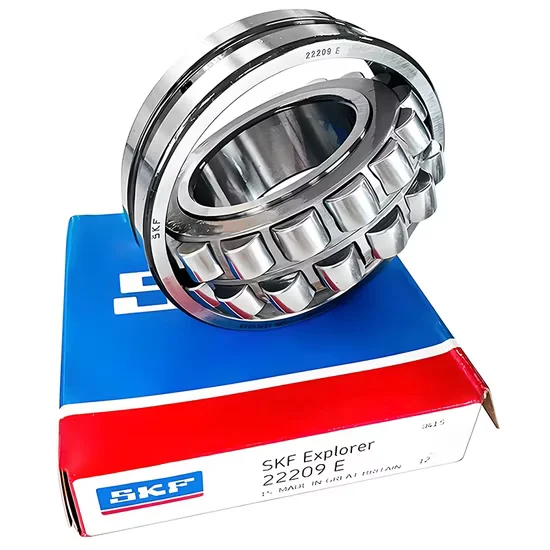
Spherical roller bearings are preferred for applications with potential misalignment, such as header drives, where shaft deflection occurs under load. Their self-aligning capability compensates for mounting errors and structural flex, reducing edge loading on the rollers. When evaluating options from a agricultural harvester bearings supplier, ensure that the dynamic load rating calculations account for shock factors, not just steady-state loads. This approach ensures the bearing can survive the peak stresses of harvest season.
| Bearing Type | Primary Application | Load Capacity | Misalignment Tolerance | Recommended Clearance |
|---|---|---|---|---|
| Tapered Roller | Main Shafts, Gearboxes | High Radial/Axial | Low | C3 or C4 |
| Spherical Roller | Header Drives, Idlers | High Radial | High | C3 |
| Deep Groove Ball | Auxiliary Fans, Light Loads | Moderate Radial | Low | C3 |
What Are the Hidden Risks of Counterfeit Agricultural Bearings?
Fake bearings cause sudden seizures due to substandard materials and incorrect geometry; verifying traceability and internal clearances is mandatory.
The market is flooded with counterfeit parts that look identical to genuine products but lack the metallurgical integrity required for heavy-duty use. These fakes often use inferior steel with higher inclusion densities, making them prone to early fatigue cracking. In my experience, the most dangerous aspect of counterfeit agricultural harvester bearings is their unpredictability. They may pass initial installation checks but fail catastrophically under full load, causing collateral damage to housings and shafts.
Verification is the only defense. Genuine manufacturers provide traceability documents that link each bearing to its production batch, material certification, and quality control records. Checking these docs is not bureaucratic overhead; it is a technical necessity. Additionally, measuring internal clearance upon receipt can reveal if the bearing meets the specified C3 or C4 class. A discrepancy here is a red flag for counterfeit goods. Relying on unverified sources risks not just the bearing, but the entire harvesting operation.
How to Source Genuine Harvester Bearings Efficiently?
Partner with global suppliers offering mixed-brand consolidation, flexible MOQ, and technical support to ensure authenticity and supply continuity.
Sourcing genuine components from multiple premium brands like SKF, FAG, and TIMKEN can be logistically complex for regional distributors and MRO operators. Managing separate accounts for each brand increases administrative burden and shipping costs. A specialized agricultural harvester bearings supplier can streamline this process by offering mixed-brand consolidation. This allows buyers to combine emergency spares with bulk container orders, optimizing inventory levels and reducing lead times.
Flexibility in minimum order quantities (MOQ) is another critical factor. While OEMs may require full pallets, MRO operators often need single units for urgent repairs. Suppliers who can accommodate both scenarios without compromising on authenticity provide significant value. Furthermore, technical support for model selection and failure analysis helps buyers make informed decisions, reducing the risk of incorrect purchases. By leveraging a supplier with a vast spot inventory and verified traceability, businesses can ensure they have the right parts available when the harvest season demands them.
Conclusion
Reliability in the field starts with rigorous sourcing practices.
Preventing harvester downtime requires more than just buying parts; it demands verifying traceability, selecting correct internal clearances, and partnering with suppliers who prioritize authenticity over low prices. By focusing on these technical and logistical details, operators and distributors can secure the genuine agricultural harvester bearings needed to keep machinery running through the toughest harvests.
What to state on your inquiry
A complete inquiry keeps the full model suffix and the specified execution, so the quote matches your parts list.
- Full SKF designationCopy every model suffix exactly as specified.
- Specified executionName any insulated, hybrid ceramic or clearance requirement.
- Motor and bearing positionGive the motor model and the position of each bearing.
- Quantity and deliveryList quantities, destination country, postcode and required date.