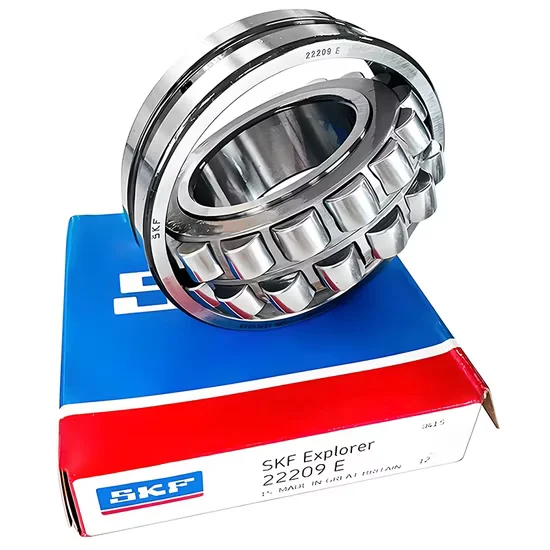
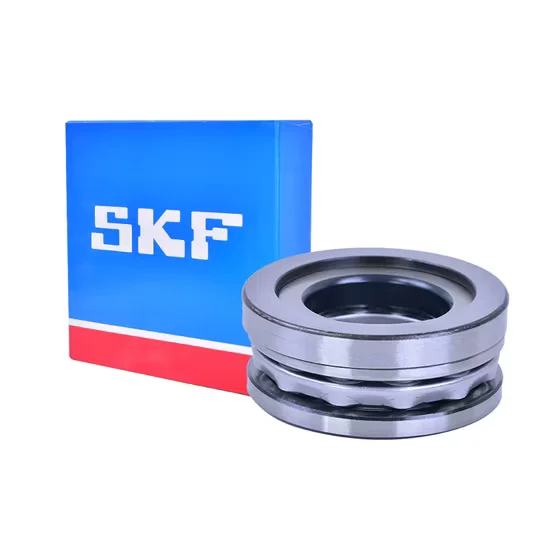
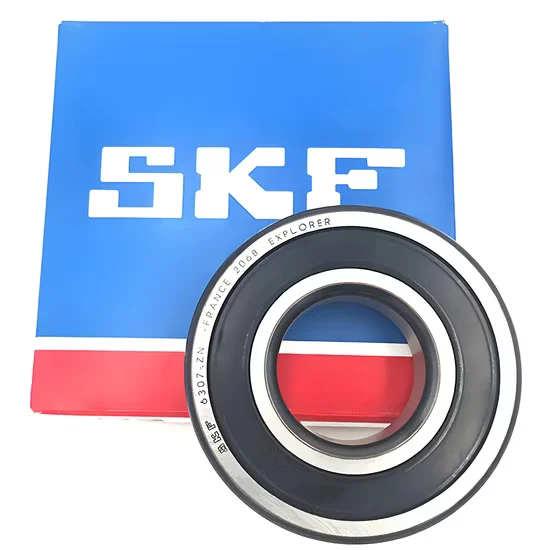
Buying cheaper bearings to save margin often destroys the entire machine asset.
German machine tool spindles require ultra-precision angular contact and cylindrical roller bearings with P4 or P2 precision classes, sourced exclusively through channels that provide full factory traceability documentation. Without original mill certificates and verified batch consistency, even visually identical components will fail under high-speed dmN limits, leading to thermal instability and catastrophic loss of machining accuracy. A German Machine Tool Spindle Bearings Wholesale Supplier must prioritize authenticated inventory over lowest-unit-price offers to ensure spindle rigidity and longevity.
I still remember the smell of burnt grease in a Hanover workshop during EMO. I had negotiated a aggressive discount on a batch of FAG spindle bearings from a non-official channel, convinced I was securing a smart deal for a client’s five-axis machining center. The unit price was significantly lower, but the installation revealed the hidden cost. Within hours of high-speed testing, the spindle temperature spiked uncontrollably. The vibration levels exceeded acceptable thresholds, and the geometric accuracy of the machined parts drifted beyond tolerance. The result was not just a replaced bearing; the entire spindle assembly was scrapped, and the machine frame suffered micro-fractures from the thermal shock. That mid-six-figure loss taught me that in precision engineering, the invoice price is irrelevant if the component lacks provenance.
Sourcing these critical components requires more than just finding a vendor with stock. It demands a partner who understands that a German Machine Tool Spindle Bearings Wholesale Supplier acts as a gatekeeper against industrial counterfeits. The market is flooded with repackaged generic bearings sold as premium brands. For OEMs and MRO operators, the risk is not merely operational downtime but the total destruction of capital equipment.
What Bearing Types Are Essential for German Machine Tool Spindles?
Spindle performance relies on the specific interaction between bearing geometry and precision class.
German machine tools, particularly those from builders like DMG Mori, Grob, or Hermle, utilize specific bearing configurations to achieve high rotational stiffness and thermal stability. The primary choices are angular contact ball bearings for axial and radial load capacity, and cylindrical roller bearings for pure radial rigidity in heavy-cutting applications.
The precision class is non-negotiable. Standard commercial grades (P0 or ABEC 1) are insufficient. Spindles operating at high dmN values require P4 (ABEC 7) or P2 (ABEC 9) precision. These classes define tighter tolerances for bore diameter, outside diameter, and width, as well as stricter limits on running accuracy.
| Bearing Type | Primary Function in Spindle | Precision Requirement | Material Consideration |
|---|---|---|---|
| Angular Contact Ball Bearings | Combined radial/axial loads, high speed | P4 or P2 | Steel or Ceramic hybrid |
| Cylindrical Roller Bearings | High radial rigidity, heavy cutting | P4 | High-purity steel |
| Thrust Ball Bearings | Pure axial load support (less common) | P4 | Standard bearing steel |
A European OEM once attempted to substitute specified P4 angular contact bearings with locally sourced "high precision" equivalents that lacked certified tolerance data. While the initial fit seemed correct, the lack of controlled internal clearance led to premature preload loss. The spindle lost its rigid positioning capability, resulting in poor surface finish on mold inserts. This failure highlights why a German Machine Tool Spindle Bearings Wholesale Supplier must provide technical datasheets that match the original equipment manufacturer’s specifications exactly.
Ceramic hybrid bearings, featuring silicon nitride balls, are increasingly requested for their lower density and reduced centrifugal force at extreme speeds. However, they require precise preload adjustment. Sourcing these from a reliable German Machine Tool Spindle Bearings Wholesale Supplier ensures that the ceramic grade and raceway compatibility meet the stringent requirements of high-speed motorized spindles.
Why Do Counterfeit Bearings Cause Catastrophic Spindle Failures?
Material purity determines whether a bearing runs cool or melts down.
The most dangerous aspect of counterfeit or non-genuine bearings is not immediate breakage, but subtle material deficiencies that manifest under stress. Genuine premium bearings use vacuum-degassed steel with controlled oxygen content to minimize non-metallic inclusions. These inclusions act as stress concentrators, initiating micro-cracks that propagate rapidly under high-cycle fatigue.
In contrast, counterfeit units often use lower-grade steel with higher inclusion density. Under the high Hertzian contact stresses of a machine tool spindle, these impurities cause subsurface cracking. The resulting friction generates excessive heat. In a sealed or lubricated spindle environment, this heat cannot dissipate quickly. The temperature rise causes the inner ring to expand, altering the preload and eventually leading to seizure.
A Middle East industrial group reported a series of failures in their CNC milling centers. The root cause was traced to a batch of bearings purchased from an unauthorized trader. The outer rings appeared identical to genuine products, including laser-etched codes. However, microscopic analysis revealed inconsistent hardness profiles and poor surface finish on the raceways. The cost of replacing the bearings was negligible compared to the cost of recalibrating the machines and compensating for delayed production orders.
This is why verification is critical. A reputable German Machine Tool Spindle Bearings Wholesale Supplier does not just sell boxes; they sell the assurance of material integrity. They understand that a 20% saving on unit price can lead to a 100% loss of the machine tool if the bearing fails catastrophically. The focus must shift from acquisition cost to total cost of ownership, where reliability is the primary metric.
How to Verify Bearing Authenticity and Traceability?
Documentation is the only proof of origin in a global supply chain.
Visual inspection is no longer sufficient. Modern counterfeiting techniques replicate packaging, holograms, and even laser markings with high fidelity. The only definitive method to verify authenticity is through traceable documentation that links the physical bearing to the manufacturer’s production batch.
When sourcing from a German Machine Tool Spindle Bearings Wholesale Supplier, buyers must demand original mill certificates. These documents specify the heat number, production date, and quality control test results for the specific batch. They serve as a legal and technical guarantee that the components were produced in the manufacturer’s authorized facilities under strict quality management systems.
| Verification Method | Reliability Level | Limitations |
|---|---|---|
| Visual Packaging Check | Low | Easily replicated by counterfeiters |
| Laser Code Scanning | Medium | Codes can be copied from genuine units |
| Original Mill Certificate | High | Requires trusted supplier issuance |
| Factory-Sealed Integrity | High | Must be unbroken upon receipt |
A US-based machinery rebuilder once received a container of mixed-brand bearings. While the SKF and NSK units had proper documentation, a subset of FAG bearings arrived in re-taped boxes without accompanying certificates. The supplier claimed they were "surplus stock." Upon testing, several units exhibited abnormal noise levels. The lack of traceability meant the entire batch had to be quarantined, delaying a critical project. This incident underscores the necessity of working with a German Machine Tool Spindle Bearings Wholesale Supplier who enforces strict document control for every item shipped.
Buyers should also inspect the physical condition of the packaging. Genuine high-precision bearings are typically shipped in individual protective wrappers and rigid boxes to prevent corrosion and damage. Any sign of tampering, such as broken seals or mismatched batch numbers on the box and the bearing, should trigger an immediate rejection. Trust is built on transparency, and a professional supplier will welcome these verification steps.
How to Optimize Global Sourcing for Spindle Bearings?
Consolidation reduces logistics complexity without compromising authenticity.
For OEMs and large MRO operations, managing multiple suppliers for different bearing brands creates logistical inefficiencies. Shipping small quantities of SKF, FAG, and NSK bearings separately increases freight costs and customs clearance times. A strategic approach involves partnering with a single German Machine Tool Spindle Bearings Wholesale Supplier capable of consolidating multi-brand orders into unified shipments.
This consolidation model offers several advantages. First, it simplifies inventory management by reducing the number of vendors to audit. Second, it allows for flexible minimum order quantities (MOQ), enabling buyers to purchase exact quantities needed for specific projects rather than being forced into large bulk buys from individual brand distributors. Third, it ensures consistent documentation standards across all brands, simplifying the verification process.
A Southeast Asian equipment manufacturer streamlined their procurement by switching to a consolidated sourcing model. Instead of dealing with three separate authorized dealers, they partnered with a full-range supplier. This change reduced their lead time from weeks to days for urgent spare parts and lowered their overall logistics overhead. The supplier’s ability to provide technical selection support for equivalent models further enhanced their operational efficiency.
Technical support is another critical factor. High-precision spindles often require specific preload settings and lubrication recommendations. A knowledgeable German Machine Tool Spindle Bearings Wholesale Supplier provides access to engineering expertise, helping buyers select the optimal bearing configuration for their application. This value-added service prevents specification errors that could lead to premature failure, ensuring that the sourced components deliver the expected performance in the field.
Conclusion
Authenticity and precision are non-negotiable for spindle integrity.
Sourcing bearings for German machine tool spindles requires a rigorous approach to verification and supplier selection. Prioritizing traceable documentation and P4/P2 precision classes protects against catastrophic failures caused by material defects. Partnering with a reliable German Machine Tool Spindle Bearings Wholesale Supplier ensures access to genuine multi-brand inventory, technical expertise, and efficient logistics, safeguarding both machine performance and operational profitability.
What to state on your inquiry
A complete inquiry keeps the full model suffix and the specified execution, so the quote matches your parts list.
- Full SKF designationCopy every model suffix exactly as specified.
- Specified executionName any insulated, hybrid ceramic or clearance requirement.
- Motor and bearing positionGive the motor model and the position of each bearing.
- Quantity and deliveryList quantities, destination country, postcode and required date.