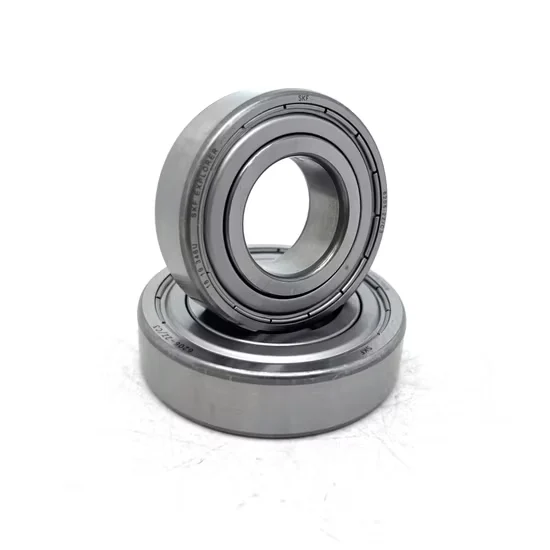
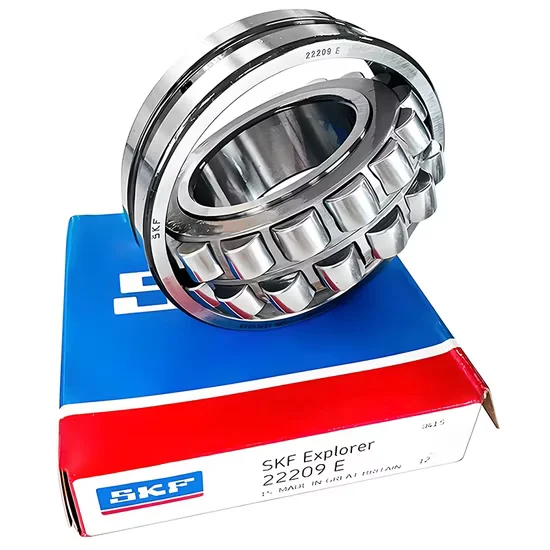
Most bearing failures in sawmill chippers are not caused by overload, but by dust ingress and poor sealing.
Selecting genuine spherical roller bearings with specialized high-protection seals and appropriate radial internal clearance is the only reliable method to prevent catastrophic spindle damage in high-dust, heavy-load wood processing environments. Counterfeit or refurbished parts often lack the necessary traceability and material integrity, leading to premature cage fragmentation and extended production downtime.
I still remember the humid air in Kalimantan, thick with the scent of wet timber and machine oil. The sound was what haunted me most—not the rhythmic thud of logs hitting the feed table, but the sudden, sickening crunch of metal shearing against metal. A major pulp mill’s chipper spindle had seized. The culprit was a batch of refurbished bearings that looked pristine on the outside but had microscopic fatigue cracks in the raceways. Within three months, the cage fragmented, scoring the spindle shaft so deeply it required complete replacement. The line sat idle for weeks. That incident shifted my focus from mere procurement to rigorous technical verification. In high-dust industries like wood processing, the environment is hostile, and the margin for error is non-existent.
The reality of operating in Southeast Asia’s timber hubs taught me that specifications on paper mean little if the physical component cannot withstand the abrasive reality of wood chips and bark dust. This guide details how to select, verify, and maintain these critical components, ensuring your operations avoid the costly pitfalls of inferior substitutes.
Why Do Standard Bearings Fail in Sawmill Chippers?
Standard industrial bearings fail in sawmill chippers primarily due to inadequate sealing against fine particulate matter and incorrect clearance for thermal expansion under heavy loads.
Sawmill chippers operate in one of the most aggressive environments for rotating equipment. The process generates a constant cloud of fine wood dust, which is hygroscopic and abrasive. When this dust mixes with moisture or lubricant, it forms a grinding paste that accelerates wear on bearing surfaces. Standard seals, often designed for cleaner manufacturing environments, cannot withstand this level of contamination.
The failure mechanism is rarely immediate. It begins with minor ingress, which compromises the lubricant film. As the lubricant degrades, friction increases, leading to heat buildup. In a chipper, the load is not just heavy; it is shock-intensive. Each log impact sends a vibration through the spindle. If the bearing clearance is too tight, there is no room for thermal expansion, causing the rollers to bind. If too loose, the impact loads cause micro-movements that lead to fretting corrosion.
I have seen countless cases where maintenance teams replaced a failed bearing with an identical model from a different, less reputable source, only to see it fail again in a fraction of the time. The issue was not the design, but the quality of the steel and the precision of the seal fitment. Genuine spherical roller bearings for wood chippers are engineered with specific materials that resist deformation under shock loads, but this advantage is nullified if the seal allows contaminants to enter.
The misconception that "heavier is better" often leads buyers to choose oversized bearings without considering the sealing technology. A larger bearing with poor seals will fail faster than a correctly sized one with robust protection. The key is not just load capacity, but environmental resilience.
How to Select the Right Spherical Roller Bearing?
Match the radial internal clearance and sealing type to the specific thermal and contaminant conditions of your sawmill operation.
Selecting the correct bearing involves more than matching the part number. It requires an understanding of two critical parameters: radial internal clearance and sealing effectiveness. For sawmill chippers, the standard clearance is often insufficient due to the heat generated by continuous heavy loading.
Radial internal clearance determines how much space exists between the rollers and the raceways when the bearing is not under load. In high-temperature environments, the inner ring expands more than the outer ring, reducing this clearance. If the initial clearance is too small, the bearing can seize. Therefore, C3 or C4 clearance classes are typically recommended for chipper spindles to accommodate thermal expansion.
Sealing is equally critical. Standard rubber seals may harden and crack in the presence of certain wood resins or over time due to heat. High-protection seals, often made from advanced polymers or featuring labyrinth designs, provide a better barrier against fine dust. These seals must be compatible with the lubricants used and capable of withstanding the rotational speeds of the chipper.
| Selection Factor | Standard Industrial Bearing | Heavy-Duty Chipper Bearing |
|---|---|---|
| Radial Clearance | Normal (C2/C0) | Expanded (C3/C4) |
| Seal Type | Basic Rubber Contact | Advanced Labyrinth/Polymer |
| Dust Protection | Low | High |
| Thermal Stability | Moderate | Robust |
| Shock Load Resistance | Standard | Enhanced |
When I consult with clients in regions like the Middle East or Latin America, where ambient temperatures can exacerbate thermal issues, I insist on verifying the clearance class before shipment. A bearing labeled simply as "spherical roller" without a clearance specification is a risk. Genuine bearings for chipper spindle applications will always specify the clearance class in their documentation.
The choice of lubricant also plays a role. Thick, tacky greases can help seal out dust but may increase operating temperature. The bearing selection must align with the lubrication strategy. A well-selected bearing with inappropriate lubrication will still fail.
How to Verify Bearing Authenticity and Traceability?
Demand original traceability documentation and verify physical markings to avoid counterfeit or refurbished bearings that lack material integrity.
The market for industrial bearings is flooded with counterfeits and refurbished units sold as new. These parts may look identical to genuine products but lack the metallurgical quality and precision manufacturing required for heavy-duty applications. In a sawmill, a fake bearing is a ticking time bomb.
Verification starts with documentation. Genuine suppliers provide full traceability, including material certificates and inspection reports that link the bearing to its production batch. This documentation is not just paperwork; it is proof that the bearing meets the manufacturer’s standards. Without it, you are guessing.
Physical inspection is the next step. Check the laser etching on the bearing rings. Counterfeit items often have poorly defined or easily rubbed-off markings. The packaging should also be inspected for signs of tampering. Refurbished bearings may have subtle signs of previous use, such as minor discoloration or wear patterns on the non-contact surfaces.
I once reviewed a shipment for a distributor in Central Asia. The boxes looked authentic, but the bearings inside had slight variations in the cage design compared to the official catalog. Upon further investigation, they were refurbished units repackaged as new. The cost savings were negligible compared to the potential risk of spindle damage.
Traceability is not just about avoiding fakes; it is about accountability. If a bearing fails prematurely, having the batch number allows for a root cause analysis. Was it a manufacturing defect, or was it misapplied? Without traceability, you have no way of knowing. This is why I prioritize suppliers who can provide complete documentation for every unit, regardless of order size.
What is the Real Cost of Unplanned Downtime?
The initial savings from cheap or refurbished bearings are dwarfed by the costs of spindle repair, replacement parts, and lost production time during unplanned downtime.
In the wood processing industry, downtime is expensive. A chipper is often the bottleneck in the production line. If it stops, the entire mill slows down or halts. The cost of a bearing is a tiny fraction of the total cost of a failure.
Consider the scenario of a cage fragmentation. When a cage breaks, the rollers scatter, causing severe damage to the spindle shaft, housing, and potentially the drive system. Repairing this damage requires skilled labor, specialized tools, and significant time. The spindle may need to be machined or replaced entirely.
Beyond direct repair costs, there is the loss of production. A week of downtime can mean thousands of tons of unprocessed wood. Contracts with buyers may have penalties for late delivery. The reputational damage can also be significant.
| Cost Component | Bearing Replacement Only | Spindle Damage & Downtime |
|---|---|---|
| Part Cost | Low | High (Spindle, Housing, Drive) |
| Labor | Minimal | Extensive (Disassembly, Machining) |
| Downtime | Hours | Weeks |
| Production Loss | Negligible | Substantial |
| Total Impact | Manageable | Catastrophic |
I have seen mills try to save money by buying the cheapest option available. The result was always the same: a mid-six-figure loss when the chipper failed. Investing in genuine spherical roller bearings for wood chippers is not an expense; it is insurance. It ensures that when the bearing reaches the end of its service life, it fails gracefully, allowing for scheduled maintenance rather than emergency repair.
The decision to buy genuine is a decision to prioritize operational continuity. It is about knowing that the component installed today will perform as expected tomorrow, next month, and next year.
Conclusion
Reliable sawmill operations depend on genuine spherical roller bearings with proper sealing and traceability.
Avoiding catastrophic failure requires selecting bearings with C3/C4 clearance and high-protection seals suited for high-dust environments. Verifying authenticity through complete documentation prevents the risks associated with counterfeit or refurbished parts. The true value of genuine components lies in their ability to minimize unplanned downtime and protect expensive machinery from irreversible damage.
What to state on your inquiry
A complete inquiry keeps the full model suffix and the specified execution, so the quote matches your parts list.
- Full SKF designationCopy every model suffix exactly as specified.
- Specified executionName any insulated, hybrid ceramic or clearance requirement.
- Motor and bearing positionGive the motor model and the position of each bearing.
- Quantity and deliveryList quantities, destination country, postcode and required date.