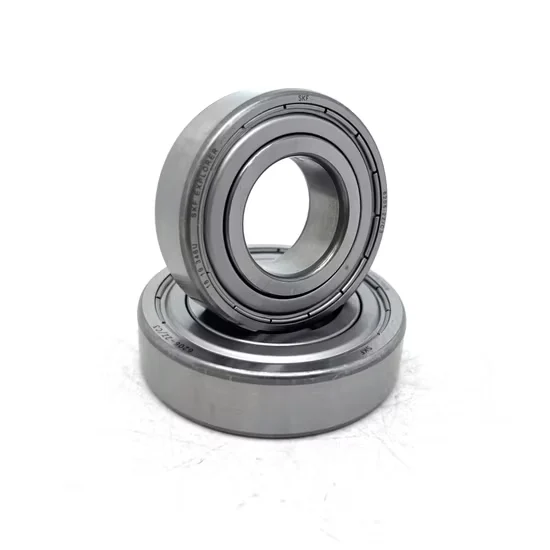
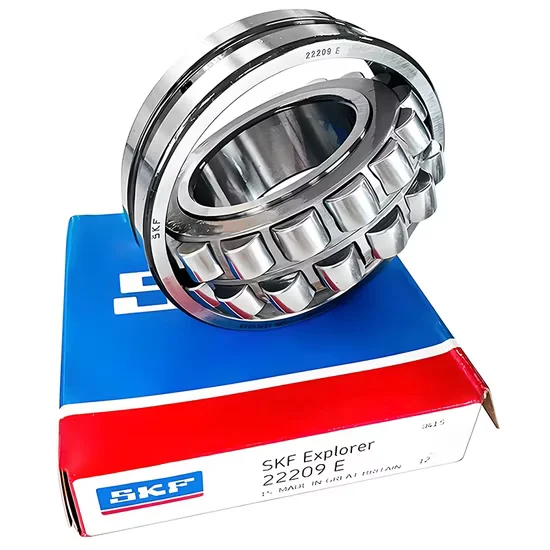
Standard industrial bearings are not enough for injection molding.
Selecting genuine bearings based on actual on-site temperature and vibration data is the only reliable method to prevent catastrophic failures in high-heat, high-load injection molding environments.
The smell of burnt grease is distinct. It hangs heavy in the air of a plastics factory when a machine goes down unexpectedly. I remember standing in a sweltering workshop in Monterrey, Mexico, watching a maintenance team struggle with a locked clamping unit. The deep-groove ball bearing had spalled within months of installation. When we cracked it open, the evidence was undeniable: counterfeit parts masquerading as premium brands. The customer was furious, not just because of the downtime, but because the failure was entirely preventable. This incident reinforced a hard truth that many buyers overlook. In the high-cyclic, high-temperature world of injection molding, traceability and authentic material quality are not optional extras. They are the baseline for operational stability.
To avoid such disasters, sourcing from a reputable Genuine Bearings for Plastics Injection Machines Wholesale Supplier is critical. But authenticity is only half the battle. The other half is understanding the specific mechanical stresses each component faces.
Why Do Bearings Fail Prematurely in Injection Molding?
High cyclic loads and thermal degradation destroy standard lubrication faster than most maintenance schedules anticipate.
Injection molding machines operate in a unique environment. They are not just rotating; they are stopping, starting, and locking under immense pressure repeatedly. This creates a cycle of stress that standard industrial bearings are rarely designed to withstand without modification. The primary enemy here is heat. As the mold platens cycle, localized thermal spikes occur. These spikes can exceed the thermal stability of standard greases, leading to oil separation and metal-to-metal contact.
I have seen operators assume that a higher load rating guarantees longevity. This is a dangerous misconception. If the internal clearance is not adjusted for thermal expansion, the bearing will seize as it heats up. The rolling elements expand, the raceways expand, and if there is no room for this growth, the bearing locks solid. This is not a material failure; it is a design mismatch.
Another common failure mode is contamination. Plastic processing environments often have fine particulate matter. If seals are inadequate or if the bearing housing is not properly purged during maintenance, these particles act as abrasives. They score the raceways, creating initiation points for fatigue cracks. The result is premature spalling, exactly like the case I witnessed in Monterrey. To combat this, engineers must look beyond basic load ratings. They need to consider the dynamic load calculation under continuous cyclic stress.
When you partner with a knowledgeable Genuine Bearings for Plastics Injection Machines Wholesale Supplier, the conversation shifts from simple part numbers to application-specific solutions. It is about matching the bearing’s thermal tolerance to the real-world data collected from the machine floor.
Which Bearings Are Critical in the Clamping Unit?
Deep-groove and spherical roller bearings endure massive locking forces and must be selected for fatigue resistance rather than just static load capacity.
The clamping unit is the heart of the injection molding machine. It holds the mold closed against the high pressure of the injected plastic. The forces here are enormous and repetitive. Every cycle, the toggle mechanism or direct hydraulic clamp applies tons of force. This is where deep-groove ball bearings and spherical roller bearings play their most critical role.
In many older designs, deep-groove ball bearings are used in the toggle links. They are efficient and handle radial loads well. However, they are sensitive to misalignment. If the tie bars are not perfectly parallel, or if the platen deflects under load, the bearing experiences axial stresses it was not designed for. This leads to edge loading and rapid fatigue. I have inspected countless failed toggle links where the root cause was slight misalignment exacerbated by inferior steel quality in counterfeit bearings.
Spherical roller bearings are often preferred in larger machines because they can accommodate angular misalignment. They are robust, but they require careful lubrication management. The large contact area generates significant heat if the lubricant film breaks down.
| Bearing Type | Primary Load Capacity | Misalignment Tolerance | Typical Failure Mode in Clamping |
|---|---|---|---|
| Deep-Groove Ball | Radial & Moderate Axial | Low | Edge Loading & Spalling |
| Spherical Roller | High Radial & Moderate Axial | High | Lubrication Breakdown & Overheating |
| Cylindrical Roller | Very High Radial | None (Strict Alignment) | Cage Fatigue & Roller Skewing |
A Genuine Bearings for Plastics Injection Machines Wholesale Supplier will insist on verifying the alignment conditions before recommending a bearing type. They understand that a spherical roller might solve a misalignment issue, but it introduces different maintenance requirements. The key is to match the bearing to the specific mechanical behavior of the clamping system.
How to Select Bearings for the Injection Screw Drive?
Cylindrical rollers must handle high axial thrust and continuous rotation while resisting thermal softening.
The injection screw drive is a different beast entirely. Here, the bearing is subjected to continuous rotation combined with high axial thrust during the injection phase. The screw pushes the molten plastic into the mold, creating a reactive force that tries to push the screw back. The bearing assembly must hold this force steady while rotating at varying speeds.
Cylindrical roller bearings are the standard choice here due to their high radial load capacity. However, the axial component is often handled by separate thrust bearings or angular contact arrangements. The challenge is heat generation. The screw barrel is heated to melt the plastic, and this heat conducts back toward the drive end. If the bearing is too close to the heat source, or if cooling is insufficient, the steel can soften.
I once consulted on a case where a screw drive bearing kept overheating. The maintenance team kept replacing it with the same specification, assuming it was a lubrication issue. It turned out the bearing was located too close to the heater bands, and the standard clearance was too tight for the thermal expansion occurring at that specific spot. By switching to a bearing with a higher thermal stability rating and adjusting the clearance, the overheating stopped.
This highlights the importance of thermal mapping. You cannot select the right bearing without knowing the actual temperature profile of the drive end. A generic recommendation from a catalog is often insufficient. You need a supplier who understands the thermal dynamics of injection molding.
When sourcing from a Genuine Bearings for Plastics Injection Machines Wholesale Supplier, ask for technical support on thermal management. They should be able to provide guidance on which materials and clearances are best suited for high-temperature environments near the screw barrel.
How Can You Verify Bearing Authenticity On-Site?
Traceability documents and physical inspection prevent counterfeit disasters that lead to unplanned downtime.
Counterfeit bearings are a pervasive issue in the global market. They look identical to the genuine article but lack the metallurgical quality and precision manufacturing. In a high-stress application like injection molding, they fail quickly and catastrophically. Verifying authenticity is not just a paperwork exercise; it is a critical safety and reliability check.
The first line of defense is documentation. Genuine bearings come with complete traceability. This includes batch numbers, material certificates, and proof of origin from the manufacturer. A reputable Genuine Bearings for Plastics Injection Machines Wholesale Supplier will provide these documents without hesitation. If a supplier cannot provide traceability, the risk of receiving counterfeit goods is high.
Physical inspection is also vital. Look for consistent branding, precise machining marks, and high-quality packaging. Counterfeit bearings often have rough edges, inconsistent font sizes on the labels, or poor-quality grease. I always recommend checking the rolling elements. In genuine bearings, they are perfectly smooth and uniform. In fakes, you might find slight variations or surface imperfections.
Vibration monitoring can also help detect early signs of failure, whether from counterfeit parts or improper installation. By establishing a baseline vibration spectrum, you can identify anomalies before they lead to a breakdown. This proactive approach saves time and money.
Our approach involves supplying genuine multi-brand options, including SKF, NSK, and FAG, with full traceability. We ensure that every bearing shipped has a verifiable history. This gives our clients peace of mind, knowing that their machines are protected by authentic components.
Conclusion
Authenticity and application-specific selection are non-negotiable for injection molding reliability.
Preventing bearing failure in injection molding machines requires more than just buying a part number. It demands a deep understanding of the thermal and mechanical stresses involved. From the clamping unit’s cyclic loads to the screw drive’s axial thrust, each application has unique requirements. Relying on standard industrial solutions often leads to premature failure. By prioritizing genuine components with full traceability and selecting bearings based on real-world operational data, operators can significantly reduce unplanned downtime. Partnering with a knowledgeable Genuine Bearings for Plastics Injection Machines Wholesale Supplier ensures access to authentic products and expert technical guidance, safeguarding your production continuity.
What to state on your inquiry
A complete inquiry keeps the full model suffix and the specified execution, so the quote matches your parts list.
- Full SKF designationCopy every model suffix exactly as specified.
- Specified executionName any insulated, hybrid ceramic or clearance requirement.
- Motor and bearing positionGive the motor model and the position of each bearing.
- Quantity and deliveryList quantities, destination country, postcode and required date.