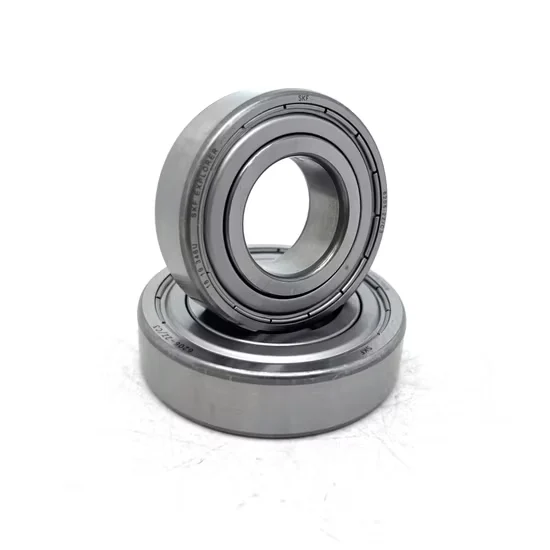
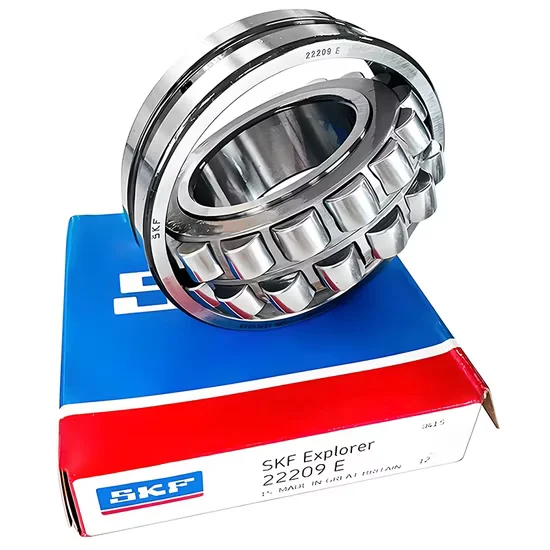
Low declared value does not exempt you from strict Austrian customs scrutiny.
Shipping to Austria VAT compliance requires a valid EORI number and clear VAT deferral documentation before the vessel departs. Without these, bearings face indefinite port滞留, accruing storage fees that erase margins, regardless of the shipment size or brand authenticity.
I still remember the silence on the phone when I called my client in Vienna. It was not the usual chatter about technical specs for FAG spherical roller bearings. It was the sound of a deal dying. A container of high-precision units sat in Antwerp, not moving, because the paperwork did not match the importer’s tax identity. The daily storage costs were climbing faster than the steel prices we had negotiated. That incident was not just a logistical error; it was a failure to understand that in the European Union, tax compliance is as critical as dimensional tolerance. Since then, every shipment plan starts with the tax code, not the packing list.
Understanding this regulatory landscape is the first step for any distributor looking to secure a reliable supply chain. When you ship bearings to Austria, you are not just moving metal; you are navigating a complex web of fiscal responsibilities.
What are the core VAT and EORI rules for importing bearings to Austria?
The Economic Operators Registration and Identification (EORI) number is mandatory for any entity importing goods into the EU, and it must match the VAT registration of the importer of record.
Many buyers assume that because they have a local business license, they can receive goods without further registration. This is a dangerous misconception. The EORI number is a unique identifier used by customs authorities across the European Union to track economic operators. For bearing distributors, this number links your company to every import declaration. If the EORI number on the commercial invoice does not match the entity paying the duties, the goods will be held.
The value-added tax (VAT) system in Austria operates on the destination principle. This means VAT is due in Austria, not in the country of origin. The standard rate applies to most industrial goods, including bearings. However, the mechanism of payment is where many importers stumble. You cannot simply pay VAT upon arrival if you wish to maintain cash flow efficiency. You must be registered for VAT in Austria or use a fiscal representative.
When you ship bearings to Austria, the customs declaration must include both the EORI number and the VAT number. These two identifiers are cross-checked by the automated customs system. A mismatch triggers a manual review, which can take days or weeks. During this time, your inventory is stuck. For MRO suppliers who promise rapid replacement parts, this delay is unacceptable.
Furthermore, the importer of record must be clearly defined. In many triangular trade scenarios, the buyer in Austria might not be the one paying the supplier directly. If the financial flow and the physical flow do not align with the declared importer, customs may suspect fraud. This is particularly sensitive for high-value items like precision spindle bearings. Ensuring that the commercial invoice, packing list, and bill of lading all reflect the same legal entity is non-negotiable.
How does VAT deferral work for bearing shipments entering Europe?
VAT deferral allows importers to account for import VAT on their periodic VAT return rather than paying it upfront at the border, significantly improving cash flow.
Paying VAT at the point of entry ties up capital that could be used for inventory expansion or operational costs. Austria offers a VAT deferral scheme, often referred to as Article 23 permit in broader EU contexts, which permits authorized traders to defer the payment of import VAT. Instead of paying the tax to customs immediately, the importer declares the VAT in their regular VAT return. The input VAT can then be deducted in the same period, resulting in a neutral cash flow effect.
To qualify for this deferral, you must meet specific criteria set by the Austrian tax authorities. These include having a clean tax history, providing a bank guarantee, or demonstrating sufficient financial stability. For a growing distributor, securing this status is a strategic move. It transforms VAT from a cash outflow into a mere accounting entry.
However, obtaining the permit is only half the battle. You must ensure that your logistics provider and customs broker are aware of your deferral status. The customs declaration must reference the deferral authorization. If this reference is missing, the system will default to immediate payment. I have seen shipments cleared smoothly because the broker knew to apply the deferral code, while others were held because the paperwork looked like a standard import.
When you ship bearings to Austria under a deferral scheme, the documentation must be impeccable. The commercial invoice should note the deferral status if required by local practice, and the customs entry must be filed correctly. Any error here reverts the process to standard payment, causing unexpected cash demands at the worst possible time.
What documents are mandatory to avoid customs delays at EU ports?
A complete set of traceability documents, including original certificates of conformity and detailed commercial invoices, is essential to prove the origin and authenticity of bearing shipments.
Customs authorities in the EU are increasingly vigilant about counterfeit goods and incorrect origin declarations. Bearings are a high-risk category because counterfeits can pose serious safety hazards in industrial applications. Therefore, proving that your goods are genuine is not just a quality issue; it is a customs compliance issue.
The commercial invoice must be detailed. It should list each bearing type, its part number, quantity, unit price, and total value. Vague descriptions like "machine parts" are rejected. You must specify "deep groove ball bearing," "spherical roller bearing," or "tapered roller bearing." Additionally, the invoice must state the country of origin for each item. If a shipment contains bearings from different manufacturing bases, each line item must reflect its specific origin.
Certificates of conformity or authenticity from the brand manufacturer are crucial. For brands like SKF, FAG, or NSK, these documents verify that the goods are genuine and not parallel imports or counterfeits. Customs officers may request these documents to verify the declared value and origin. Without them, the shipment may be subjected to a detailed inspection, which involves opening packages and checking individual units. This process is time-consuming and risks damage to the packaging.
Another critical document is the packing list. It must match the commercial invoice exactly in terms of quantities and descriptions. Discrepancies between the packing list and the invoice are a common cause of delays. Customs officials use the packing list to verify the physical contents against the declared data. If the numbers do not add up, the entire container may be held for reconciliation.
When you ship bearings to Austria, ensure that all documents are prepared in English or German. While English is widely accepted, having German translations for key terms can speed up the process with local brokers. The consistency across all documents—invoice, packing list, bill of lading, and certificates—is the key to smooth clearance.
How to calculate total landed costs including VAT for bearing orders?
Total landed cost includes the product price, freight, insurance, customs duties, and VAT, and must be calculated accurately to avoid margin erosion.
Many buyers focus only on the FOB price of the bearings, ignoring the additional costs incurred during import. This leads to unpleasant surprises when the final invoice arrives. To maintain profitability, you must calculate the total landed cost before placing an order.
The first component is the customs duty. The duty rate for bearings varies depending on the specific type and origin. Goods originating from countries with free trade agreements with the EU may enjoy reduced or zero duty rates. However, you must provide a valid certificate of origin to claim these preferences. Without it, the standard third-country duty rate applies.
Next is the import VAT. As mentioned earlier, this is calculated on the sum of the customs value, duty, and other charges. Even if you use VAT deferral, you must account for this liability in your financial planning. The VAT base includes the cost of the goods, freight, and insurance up to the point of entry into the EU.
Other costs include port handling fees, customs broker fees, and inland transportation. These costs can vary significantly depending on the port of entry and the service level required. For urgent shipments, air freight costs will dominate the landed cost, while sea freight offers economies of scale but adds time.
When you ship bearings to Austria, consider using a landed cost calculator that incorporates all these variables. This tool helps you compare different sourcing options and logistics routes. It also helps you set accurate resale prices for your customers. Ignoring these hidden costs can turn a profitable deal into a loss-making one.
Conclusion
Compliance is the foundation of profitable international trade in industrial components.
Navigating the complexities of Shipping to Austria VAT regulations requires attention to detail and proactive planning. By securing the correct EORI number, utilizing VAT deferral where possible, and maintaining rigorous documentation standards, you can ensure that your bearing shipments arrive on time and within budget. The goal is not just to move goods, but to build a resilient and compliant supply chain that supports your business growth.
What to state on your inquiry
A complete inquiry keeps the full model suffix and the specified execution, so the quote matches your parts list.
- Full SKF designationCopy every model suffix exactly as specified.
- Specified executionName any insulated, hybrid ceramic or clearance requirement.
- Motor and bearing positionGive the motor model and the position of each bearing.
- Quantity and deliveryList quantities, destination country, postcode and required date.