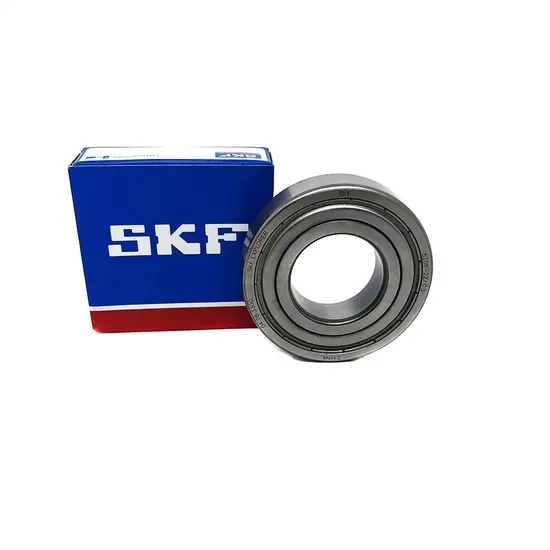
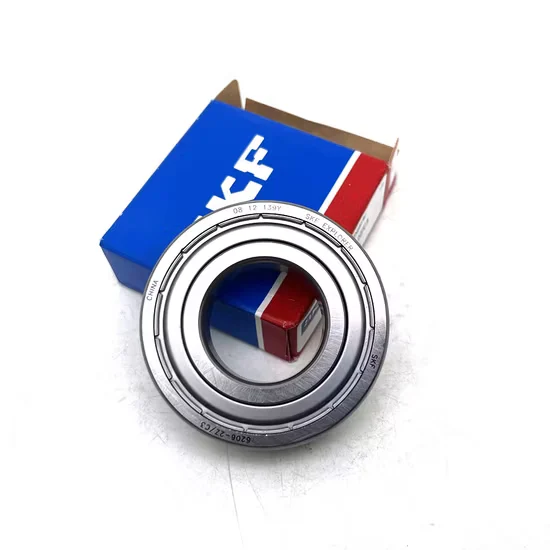
Origin does not dictate absolute quality; it dictates application fit.
European-made and Asian-made SKF bearings both adhere to identical global manufacturing standards, but they serve different operational needs. European production lines typically prioritize ultra-precision clearance control for high-speed applications, while Asian facilities optimize cost-performance for heavy-load and standard industrial uses. Smart procurement relies on verifying traceability documents and matching specific tolerance grades to your machinery requirements, rather than blindly preferring the "Europe" label. For buyers seeking a genuine wholesale supplier for bulk orders, understanding this distinction is critical to avoiding counterfeits and optimizing total cost of ownership.
I still remember the sting of a failed shipment destined for a mining operation in Linyi. Years ago, trying to cut costs, I sourced a batch of deep groove ball bearings labeled as "European Original." The packaging looked pristine, the stamps were crisp, and the price was tempting. Within two weeks, the keepers on the crusher’s main shaft shattered. The downtime cost far more than the savings from the cheap bearings. That failure forced me to stop looking at labels and start looking at metallurgy. Since then, I have dismantled hundreds of SKF units from various global factories, comparing microstructures and clearance data. The truth is not that one region is "better," but that the supply chain is complex, and consistency comes from documentation, not just geography.
The market is flooded with misconceptions. Many buyers assume that a bearing stamped with a European factory code is inherently superior to one from Asia. This belief ignores the reality of modern globalized manufacturing. SKF operates under a unified quality management system worldwide. The steel purity, heat treatment protocols, and dimensional tolerances are governed by the same internal specifications regardless of where the ring is forged. However, the production focus differs. European plants often handle the most demanding precision classes and specialized materials, while Asian plants excel in high-volume production of standard series with rigorous cost controls. When you engage with a genuine wholesale supplier for bulk orders, you are not just buying a part number; you are buying the assurance that the origin matches the application.
What Are the Real Manufacturing Differences Between European and Asian SKF?
The primary difference lies in clearance tolerance optimization and production volume focus, not fundamental material quality.
Both regions use high-carbon chromium steel that meets international standards for purity and hardness. The divergence appears in how the final grinding and assembly processes are tuned. European lines are frequently configured for tight clearance grades required by high-speed spindles and precision machine tools. Asian lines, benefiting from massive scale, are optimized for the robust C3 and C4 clearances common in heavy industry, mining, and general MRO replacements.
| Feature | European Production Focus | Asian Production Focus |
|---|---|---|
| Primary Application | High-speed precision, aerospace, specialized industrial | Heavy load, high impact, general MRO, automotive |
| Clearance Control | Ultra-tight tolerances (P4/P5 classes common) | Standard to loose tolerances (C3/C4 dominant) |
| Production Volume | Lower volume, high mix | High volume, standardized series |
| Cost Structure | Higher due to labor and precision overhead | Competitive due to scale and logistics efficiency |
| Traceability | Full batch-level documentation | Full batch-level documentation |
A buyer once told me he insisted on European SKFs for his conveyor belts because he thought they would last longer. After analyzing the load profiles, it was clear that the application involved heavy shock loads and moderate speeds. The European bearing’s tighter initial clearance actually led to premature heating and failure under those specific conditions. An Asian-made SKF with a C3 clearance would have accommodated the thermal expansion and load shifts far better. This is why working with a knowledgeable genuine wholesale supplier for bulk orders matters. They do not just ship what is in stock; they verify that the origin and specification align with your operational environment.
Metallurgical analysis shows that the microstructure of genuine bearings from both regions exhibits similar carbide distribution and grain size when produced correctly. The risk is not in the region of manufacture, but in the proliferation of counterfeits that mimic European markings because buyers perceive them as more valuable. Counterfeiters know that a "Made in Germany" stamp commands a higher price, so they fake it more often than they fake an Asian origin code. Therefore, the "European" label can sometimes be a liability if it attracts more fraud attention without adding technical value to your specific application.
How Does Origin Affect Performance in Heavy Industry vs General MRO?
Match European origins to high-speed precision needs and Asian origins to heavy-load impact scenarios.
In heavy industries like mining, cement, and steel production, equipment faces constant vibration, shock loads, and contamination. Here, the robustness of the bearing design and the appropriateness of the clearance are more critical than the micron-level precision associated with European machine tool bearings. Asian-manufactured SKFs are engineered to handle these harsh conditions efficiently. They provide the necessary durability at a price point that makes large-scale maintenance budgets sustainable.
Conversely, in general MRO for facilities with mixed equipment, a blended approach is often optimal. A textile mill might need European-origin bearings for its high-speed spinning frames to prevent vibration-induced fabric defects, while using Asian-origin bearings for its auxiliary pumps and fans. This strategic mixing allows facility managers to allocate budget where precision truly impacts output quality.
Consider a case from a Southeast Asian paper mill. They were experiencing frequent failures in their dryer section rolls. Initially, they switched entirely to expensive European-imported bearings, assuming higher prestige meant better performance. The failures persisted because the issue was not bearing quality but improper sealing against steam and moisture. When we audited their supply chain, we recommended switching to Asian-made SKFs with enhanced sealing options, which were more readily available and cost-effective for such high-turnover items. The result was a noticeable drop in unplanned downtime and a significant reduction in spare parts inventory costs. This shift was only possible because they partnered with a genuine wholesale supplier for bulk orders who could source the correct sealed variants from the appropriate production lines without compromising authenticity.
The key insight is that performance is contextual. A bearing that is "over-specified" for precision in a dirty, high-load environment may fail faster than one designed for ruggedness. Understanding the manufacturing focus of each region helps you make this distinction. It is not about choosing the "best" bearing in a vacuum, but the right bearing for the job.
How to Verify Genuine Origin and Avoid Counterfeits in Bulk Orders?
Rely on metallurgical checks, clearance tests, and 100% customs declaration matching, not just packaging labels.
Counterfeiters have become sophisticated. They replicate holograms, QR codes, and even box textures. The only reliable verification method is a multi-layered audit of the physical product and its documentation trail. Visual inspection of the packaging is merely the first step; it is easily fooled. The real proof lies in the consistency between the physical item, the batch certificate, and the customs import records.
- Check the Customs Declaration: Every genuine imported bearing must have a corresponding customs entry. Request the bill of lading and customs declaration form from your supplier. Cross-reference the batch numbers on the bearing boxes with the quantities and origins listed in these official documents. If the supplier cannot provide this, or if the dates do not align, walk away.
- Measure Clearance and Dimensions: Use precise micrometers and feeler gauges to check the internal clearance. Compare these measurements against the SKF technical datasheet for that specific part number. Counterfeits often have inconsistent grinding, leading to out-of-spec clearances. Genuine bearings, whether from Europe or Asia, will fall strictly within the defined tolerance bands.
- Metallurgical Spot Checks: For large bulk orders, send random samples for independent metallurgical analysis. Check for material purity and hardness. Genuine SKF steel has a specific signature in terms of inclusion density and carbide distribution. Counterfeits often use lower-grade steel that fails under stress.
A distributor in the Middle East once received a container of SKFs that looked perfect. The boxes were intact, and the seals were unbroken. However, when we randomly sampled ten bearings, three had incorrect cage materials that would melt under normal operating temperatures. The customs documents provided by the seller were forged. By insisting on verifying the original customs clearance through our own channels, we identified the fraud before the goods entered the local market. This level of diligence is standard practice when dealing with a reputable genuine wholesale supplier for bulk orders. They welcome such scrutiny because they have nothing to hide.
Avoid suppliers who refuse to share full documentation or who offer prices significantly below market average. Authenticity has a cost, and deep discounts usually signal compromised quality. Trust is built on transparency, not just promises.
How to Optimize Mixed-Origin Procurement for Maximum ROI?
Use a strategic ratio of European and Asian SKUs in mixed containers to balance precision needs with cost efficiency.
Procuring exclusively from one region is rarely the most efficient strategy for large industrial operations. A mixed-container consolidation approach allows buyers to secure high-precision European bearings for critical applications while filling the rest of the container with cost-effective Asian bearings for standard replacements. This optimizes shipping costs and ensures that every dollar spent delivers maximum value.
For many MRO clients, a 30/70 split works well. Thirty percent of the order consists of European-origin bearings for high-speed motors, precision gearboxes, and critical path machinery. The remaining seventy percent comprises Asian-origin bearings for pumps, fans, conveyors, and non-critical auxiliary equipment. This ratio can be adjusted based on the specific industry profile. A machine tool builder might shift to 80/20, while a mining operation might prefer 10/90.
The logistical advantage is significant. Instead of managing multiple small shipments from different sources, a single consolidated container reduces freight costs per unit and simplifies customs clearance. It also ensures that all bearings arrive simultaneously, preventing project delays caused by partial deliveries. Furthermore, working with a single genuine wholesale supplier for bulk orders who can manage this mixed-origin sourcing simplifies the vendor management process. You deal with one point of contact for quality assurance, documentation, and after-sales support.
This strategy also mitigates supply chain risk. If one production region faces temporary disruptions, the other can often compensate for standard items, ensuring continuity of supply. It creates a resilient procurement model that is both cost-effective and reliable. The key is having a supplier who understands the technical nuances of each origin and can curate the mix based on your actual usage data, not just availability.
Conclusion
Smart procurement is about matching specification to application, not chasing a geographic label.
European and Asian SKF bearings are both genuine products of a global brand, each excelling in different operational contexts. European origins offer superior precision for high-speed demands, while Asian origins provide robust cost-performance for heavy industrial loads. Verifying authenticity through rigorous documentation and technical checks is essential to avoid counterfeits. By adopting a mixed-origin procurement strategy, buyers can optimize their spending and ensure reliable performance across their entire fleet. Partnering with a trusted genuine wholesale supplier for bulk orders ensures that you receive the right bearing from the right source, backed by complete traceability and technical expertise.
What to state on your inquiry
A complete inquiry keeps the full model suffix and the specified execution, so the quote matches your parts list.
- Full SKF designationCopy every model suffix exactly as specified.
- Specified executionName any insulated, hybrid ceramic or clearance requirement.
- Motor and bearing positionGive the motor model and the position of each bearing.
- Quantity and deliveryList quantities, destination country, postcode and required date.