Cheaper "genuine" batches often hide repackaged fakes.
When sourcing linear motion components, the primary challenge is not choosing between brands but ensuring the authenticity of every unit in a mixed-brand order. SKF and Hepco serve distinct mechanical roles; conflating them or accepting unverified substitutes leads to premature failure. A reliable SKF vs Hepco Linear Systems strategy requires strict traceability documentation for each brand, verifying that SKF precision bearings and Hepco V-guide tracks are sourced from authorized channels rather than gray-market consolidators.
The distinction between these two giants is often misunderstood by procurement teams focused solely on price per unit. I have stood on the docks of Qingdao Port, watching containers labeled as "mixed industrial spare parts" being loaded for Europe. Inside one such container, a batch destined for a German automation firm contained Hepco-style guide wheels packed in boxes bearing SKF logos. The visual similarity in packaging fooled the initial inspection, but the internal geometry was wrong. When installed, the mismatched components caused immediate binding. This was not a manufacturing defect; it was a deliberate substitution by a middleman who knew the buyer ordered both brands and assumed they would not check each item against its specific datasheet. To avoid this, buyers must treat SKF vs Hepco Linear Systems not as interchangeable commodities but as specialized solutions requiring individual verification.
How Do SKF and Hepco Linear Systems Compare in Core Specs?
Load capacity and guidance method define the application boundary.
SKF typically dominates in high-precision, round-rail linear ball bearing applications where smooth, low-friction movement is critical. Hepco, conversely, specializes in V-guide technology, which uses hardened steel wheels running on matching V-shaped tracks. This fundamental difference dictates their suitability for various industrial environments. A direct comparison reveals why swapping one for the other without engineering validation is risky.
| Feature | SKF Linear Ball Systems | Hepco V-Guide Systems |
|---|---|---|
| Guidance Mechanism | Recirculating ball bearings on round rails | Hardened steel wheels on V-tracks |
| Load Handling | High radial load, moderate moment load | Exceptional moment load capacity |
| Contamination Resistance | Requires seals in dirty environments | Self-cleaning action, highly resistant |
| Precision Level | Micron-level positioning accuracy | Robust tolerance, less sensitive to misalignment |
| Maintenance | Periodic lubrication required | Minimal lubrication, dry running possible |
In a recent project for a packaging machinery OEM, the engineering team initially specified SKF linear bearings for a high-speed indexing unit. The goal was to reduce cycle time through rapid acceleration and deceleration. The smoothness of SKF’s recirculating ball technology allowed for the precise, jitter-free movement needed for delicate product handling. However, in the same facility, the heavy-load gantry system used Hepco tracks. The V-guide design handled the significant off-center loads generated by the moving arm without the binding issues that plague round-rail systems under similar moment stresses.
Buyers often ask if they can standardize on one brand to simplify purchasing. The answer lies in the operating environment. If your application involves dust, debris, or washdown conditions, Hepco’s V-guide offers inherent advantages due to its self-cleaning geometry. For clean-room or high-speed precision tasks, SKF’s engineered ball circuits provide superior repeatability. Understanding these nuances is essential when evaluating SKF vs Hepco Linear Systems for multi-line facilities.
Which Brand Fits Your Specific Application Best?
Match the guidance technology to the contamination and load profile.
Selecting the right component goes beyond catalog numbers. It requires analyzing the physical stresses and environmental factors present in the machine’s lifecycle. I recall a consultation with a Middle East steel mill operator who faced repeated failures in their conveyor adjustment mechanisms. They had been using standard linear ball bearings, which failed rapidly due to fine iron oxide dust infiltrating the seals. The solution was not a "better" sealed ball bearing but a switch to a Hepco V-guide system. The V-wheel design naturally sheds particulate matter, extending service life noticeably in such harsh conditions.
Conversely, a European wind farm maintenance contractor struggled with the precision alignment of blade pitch control mechanisms. The V-guide systems they tried introduced too much play for the sensitive feedback loops required. Switching to high-precision SKF linear modules resolved the issue, providing the rigid, predictable motion necessary for accurate aerodynamic adjustments.
These cases highlight that SKF vs Hepco Linear Systems is not a question of quality but of fit. SKF excels where precision and speed are paramount. Hepco thrives where robustness, misalignment tolerance, and contamination resistance are critical. Procurement teams must collaborate with engineering to map these requirements before issuing purchase orders. Mixing brands without understanding these functional differences leads to inventory bloat and operational inefficiencies.
How to Spot Counterfeit Linear Bearings in Mixed Orders?
Verify packaging integrity and batch codes against official records.
Counterfeiters have become sophisticated, often repackaging lower-grade domestic bearings into branded boxes. In mixed-brand shipments, this risk amplifies because inspectors may focus on one brand while neglecting the other. I once inspected a shipment where the SKF boxes looked perfect, but the Hepco components were loose in generic bags. The supplier claimed they were "bulk stock." In reality, they were non-conforming parts that failed basic hardness tests.
To protect your investment, implement a three-step verification process:
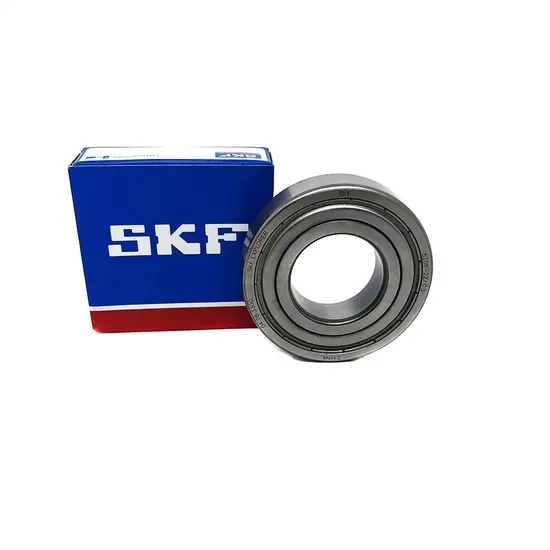
- Check Packaging Details: Genuine SKF and Hepco products have specific holographic labels, font weights, and box construction qualities. Counterfeit boxes often use slightly different shades of blue or green, and the print quality may appear blurred upon close inspection.
- Validate Batch Codes: Each genuine component carries a unique batch or serial number. Cross-reference these with the manufacturer’s database or request proof of origin from your supplier. A legitimate SKF vs Hepco Linear Systems supplier will provide traceability documents linking the batch code to the production facility.
- Inspect Physical Geometry: Use calipers to check critical dimensions. Counterfeit parts often deviate from standard tolerances. For Hepco wheels, check the hardness of the running surface. For SKF bearings, inspect the finish of the raceways. Any roughness or discoloration indicates substandard manufacturing.
A US buyer once received a container of mixed bearings where the Hepco tracks were actually rebranded generic steel. The visual appearance was similar, but the material lacked the required case hardening. Within weeks of operation, the tracks deformed, causing a production halt that cost several times the savings from the cheaper purchase. This underscores the importance of rigorous incoming quality control, especially when dealing with consolidated shipments.
Why Full Traceability Matters for Your Production Line?
Avoid downtime and liability with documented supply chains.
Traceability is not just paperwork; it is insurance. When a component fails, knowing its exact origin allows for root cause analysis and prevents recurrence. Without it, you are left guessing whether the failure was due to design error, installation mistake, or material defect. In regulated industries like food processing or pharmaceuticals, lack of traceability can lead to compliance violations.
I worked with an automotive supplier who faced a recall due to a faulty linear guide in their assembly robots. Because they purchased from a verified source with full traceability, they quickly identified that only one specific batch was affected. They replaced those units proactively, avoiding a wider shutdown. Had they bought from an unverified trader, they would have had to inspect every robot, incurring massive labor costs and extended downtime.
When sourcing SKF vs Hepco Linear Systems, insist on complete documentation. This includes certificates of conformity, material test reports, and shipping records that prove the chain of custody. A reputable supplier will provide these documents seamlessly, as they are part of the standard service for genuine goods. This level of transparency protects your production line from the hidden costs of counterfeit or substandard parts.
Conclusion
Authenticity and application fit drive long-term reliability.
Choosing between SKF and Hepco depends on your specific mechanical needs, but securing genuine parts is non-negotiable. By understanding the technical strengths of each brand and enforcing strict verification protocols, you can optimize performance and minimize risk. Trust only suppliers who provide full traceability for every item in your SKF vs Hepco Linear Systems order.
What to state on your inquiry
A complete inquiry keeps the full model suffix and the specified execution, so the quote matches your parts list.
- Full SKF designationCopy every model suffix exactly as specified.
- Specified executionName any insulated, hybrid ceramic or clearance requirement.
- Motor and bearing positionGive the motor model and the position of each bearing.
- Quantity and deliveryList quantities, destination country, postcode and required date.