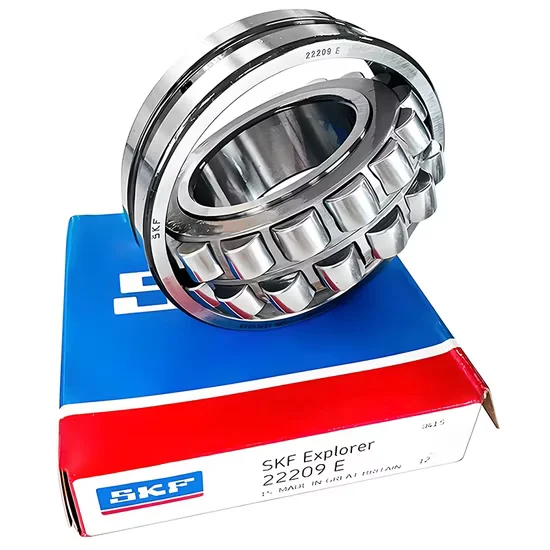
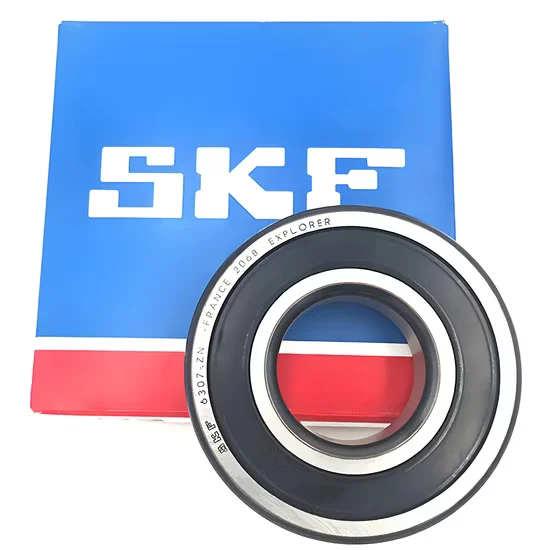
German buyers do not reject equivalent brands; they reject unverified data.
German industrial buyers accept equivalent bearing brands when rigorous technical documentation, traceability, and batch-consistent performance data replace blind brand loyalty. The decision hinges on verifiable clearance values, material certificates, and fatigue life calculations rather than the logo on the box.
I still remember the sweat on my palms standing next to a paper machine reducer in a humid workshop. The client was a German engineering firm, and their primary FAG spherical roller bearing had failed. The official channel quoted a three-month lead time. Production was bleeding money by the hour. I brought a domestic ZWZ alternative, fully aware that the word "equivalent" usually triggers an immediate shutdown of conversation in Germany. The lead engineer did not look at the packaging. He looked at me. He asked for the batch-specific dimensional report, the clearance data, and the material heat-treatment certificate. He did not care about the brand history; he cared about whether the inner ring diameter matched the shaft tolerance within ISO standards right now. We spent three days monitoring the installation and initial run. Zero downtime post-installation. That shift in perspective—from brand prejudice to data verification—is what defines modern sourcing.
This experience is not unique. It reflects a broader shift where cost-pressure meets engineering rigor. For distributors and OEMs, understanding this threshold is critical. It allows you to offer German buyers accept equivalent bearing brands as a viable strategy without compromising operational integrity.
Why German Buyers Hesitate to Switch Bearing Brands?
Risk aversion stems from a lack of traceability, not inherent brand prejudice.
The stereotype that German engineers only buy top-tier brands like SKF or FAG is outdated. The hesitation is procedural. In high-stakes environments like steel mills or wind farms, a bearing failure is not just a part replacement; it is a systemic risk. The fear is not that an equivalent brand is inherently bad, but that its quality control might be inconsistent between batches.
When a buyer rejects an alternative, they are often protecting themselves from liability. If a premium brand fails, it is a manufacturer defect. If an unknown equivalent fails, it is a procurement error. This distinction drives the demand for documentation. Without a clear paper trail linking the specific bearing to its production batch, testing results, and raw material source, the perceived risk outweighs the potential cost savings.
To overcome this, suppliers must present equivalents not as "cheaper options" but as "verified alternatives." This means providing the same level of data transparency that premium brands offer. When you can show that a ZWZ or HRB bearing meets the same ISO tolerances and has undergone similar fatigue life testing, the conversation shifts from trust to verification. This is where the concept that German buyers accept equivalent bearing brands becomes actionable. It requires moving beyond marketing claims to hard engineering evidence.
The Data-Driven Threshold for Accepting Equivalents
Acceptance requires matching clearance, material, and fatigue life data with precision.
German buyers operate on a framework of verified data. They do not rely on general assurances. To successfully introduce an equivalent brand, you must provide specific technical parameters that match or exceed the original specification. This includes internal clearance classes (such as C3 or C4), radial runout values, and material composition certificates.
A common mistake is offering a generic cross-reference without context. A bearing might fit dimensionally but fail under load if the internal geometry or cage design differs significantly. For example, in high-speed applications, the cage material and lubrication compatibility are critical. Providing data on these specific attributes demonstrates competence. It shows that you understand the application, not just the part number.
Consider a case involving a heavy equipment OEM. They needed bearings for excavator gearboxes. The premium brand was unavailable. We provided a domestic alternative, but instead of just sending the parts, we included batch-to-batch dimensional consistency reports. These reports showed that the variance in outer diameter and width was well within strict ISO tolerances. The engineering team reviewed the data, confirmed the fit, and approved the substitution. This approach transforms the buying process from a gamble into a calculated engineering decision.
This data-driven approach is essential. It aligns with the professional expectation that German buyers accept equivalent bearing brands only when the technical merit is proven. It removes the emotional bias against non-premium brands and replaces it with objective analysis. Suppliers who invest in gathering and presenting this data gain a significant competitive advantage.
Specification Comparison: Premium vs. Equivalent Brands
A matrix comparing key industrial parameters reveals where equivalents match premium performance.
To facilitate decision-making, a clear comparison of specifications is necessary. This is not about claiming superiority but demonstrating parity in critical areas. Below is a qualitative comparison of key parameters for standard industrial bearings.
| Parameter | Premium Brands (SKF/FAG) | Reliable Equivalents (ZWZ/HRB) | Verification Method |
|---|---|---|---|
| Dimensional Tolerances | P0 to P5 Precision | P0 to P5 Precision | ISO 19928 Measurement Report |
| Material Certification | Full Traceability | Full Traceability | Mill Test Certificate (MTC) |
| Clearance Consistency | Controlled Batch-Level | Controlled Batch-Level | Sample Inspection Data |
| Fatigue Life Calculation | Standardized L10 Rating | Verified L10 Rating | Third-Party Lab Report |
| Cage Design | Proprietary Optimized | Standard Industrial Grade | Visual & Dimensional Check |
| Noise Level | Low Noise Certified | Standard Industrial | Decibel Testing Data |
Note that the "Reliable Equivalents" column refers to established domestic Chinese lines that adhere to international standards. The key is not that they are identical in every proprietary feature, but that they meet the functional requirements for the majority of industrial applications. For instance, in a mining crusher application, the primary concern is load capacity and durability. If the equivalent bearing meets the dynamic load rating and has verified material hardness, it performs the job effectively.
A European wind farm operator once faced a shortage of main shaft bearings. Instead of waiting months for a premium brand, they evaluated an equivalent option using this type of parameter matrix. They focused on the material certificate and the fatigue life calculation. Once these were verified by their internal engineering team, they proceeded with the order. The result was minimal downtime and significant cost savings. This case illustrates that German buyers accept equivalent bearing brands when the technical specs are transparent and comparable.
This matrix serves as a tool for buyers to evaluate alternatives objectively. It shifts the focus from brand name to engineering capability. By demanding this level of detail, buyers can ensure that the equivalent bearing will perform reliably in their specific application.
How to Verify and Source Equivalent Bearings Safely
Demand batch test reports and one-stop mixed-brand consolidation for risk mitigation.
Sourcing equivalent bearings safely requires a structured verification process. It is not enough to trust a supplier’s word. You must implement checks at every stage. Start by requesting batch-specific test reports. These documents should include dimensional measurements, hardness tests, and material composition analysis.
Next, consider the supply chain structure. Working with a supplier who offers one-stop mixed-brand consolidation can reduce complexity. This allows you to source genuine premium brands for critical applications and reliable equivalents for less critical ones from a single source. This approach simplifies logistics and ensures consistent documentation standards across all products.
For example, an MRO manager at a cement plant needed urgent replacements for a conveyor system. The official channel for the premium brand had a long lead time. We provided a mix of genuine FAG bearings for the high-load sections and verified ZWZ equivalents for the support rollers. All parts came with complete traceability documentation. The manager could verify each item independently, ensuring that the critical components met the highest standards while the rest were cost-effective alternatives. This flexibility is crucial in emergency situations.
The key to success is transparency. Suppliers who provide easy access to documentation and offer flexible sourcing options build trust. This trust is the foundation for long-term partnerships. It allows buyers to confidently explore equivalent brands, knowing that they have the support and data needed to make informed decisions. As more buyers adopt this approach, the market for German buyers accept equivalent bearing brands continues to grow, driven by data and reliability rather than tradition.
Conclusion
Data replaces bias in modern industrial sourcing.
German buyers accept equivalent bearing brands when provided with rigorous technical data and traceability. The shift from brand loyalty to performance verification allows for cost-effective solutions without compromising quality. By focusing on clearance, material, and fatigue life data, distributors and OEMs can confidently integrate equivalents into their supply chains. This approach minimizes risk and maximizes value in a competitive industrial landscape.
What to state on your inquiry
A complete inquiry keeps the full model suffix and the specified execution, so the quote matches your parts list.
- Full SKF designationCopy every model suffix exactly as specified.
- Specified executionName any insulated, hybrid ceramic or clearance requirement.
- Motor and bearing positionGive the motor model and the position of each bearing.
- Quantity and deliveryList quantities, destination country, postcode and required date.