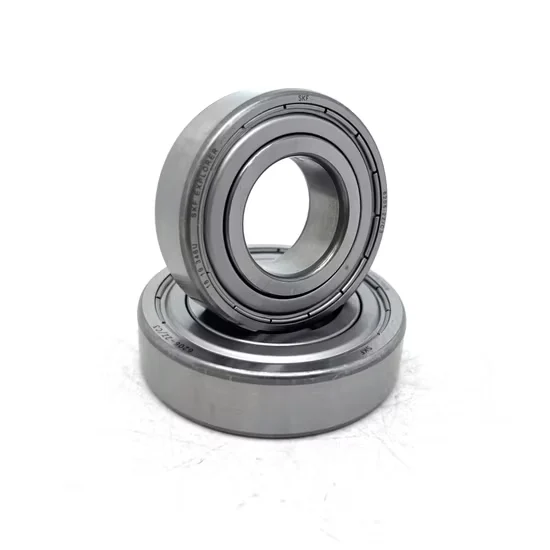
Buying direct from the manufacturer is not always the safest route for small and medium-sized enterprises.
Mittelstand manufacturers secure genuine SKF bearings most effectively by partnering with authorized global full-range suppliers who provide complete traceability documentation, flexible minimum order quantities, and mixed-brand consolidation capabilities, rather than relying on rigid direct channels or unverified local intermediaries.
The humidity in Binh Duong Province clings to everything, including the steel spindles of the CNC machines I was inspecting. A procurement manager from a German-owned machinery plant stood beside me, wiping grease from his hands with a rag that had seen better days. He pointed to a disassembled spindle housing where the bearing had seized catastrophically. The outer ring was cracked, and the rolling elements were fused together. He had sourced these components from a local trader who promised "original quality" at a fraction of the catalog price. The savings were immediate, but the cost of the subsequent two-week production halt was exponential. This scene is not unique to Southeast Asia; it is a recurring pattern in industrial hubs where the pressure to reduce unit costs overrides the necessity of verifying supply chain integrity. For Mittelstand manufacturers, the challenge is not just finding SKF bearings, but ensuring they are genuine while maintaining operational agility.
The assumption that lower unit prices equate to lower total costs is a dangerous fallacy in industrial procurement. When a fake bearing fails, it does not just break; it damages the shaft, ruins the housing, and stops the line. The true cost is measured in lost contracts and emergency repair fees, not just the price of the component.
Why Do Mittelstand Manufacturers Struggle with SKF Procurement?
The procurement landscape for German SMEs is often caught between two extremes: the inflexibility of official direct channels and the unpredictability of local middlemen. Direct purchasing from the brand owner typically requires high volume commitments and strict adherence to standardized packaging and shipping protocols. For a Mittelstand company needing a specific mix of deep-groove ball bearings and spherical roller bearings for a custom machine build, this rigidity creates bottlenecks. The lead times can stretch into months, and the minimum order quantities often exceed immediate project needs, tying up capital in inventory that sits idle.
On the other hand, local distributors offer speed and flexibility but often lack the technical depth and verification mechanisms to guarantee authenticity. The market is flooded with high-quality counterfeits that look identical to genuine products until they are subjected to load. These fakes often use inferior steel with higher inclusion densities, leading to premature fatigue failure.
A European wind farm operator once shared how their maintenance team struggled with inconsistent bearing performance across different turbine batches. They had sourced replacements through various regional suppliers to meet urgent deadlines. Some bearings lasted the expected service life, while others failed within months. The root cause was not design flaw but supply chain fragmentation. By switching to a consolidated sourcing model, they gained access to a single point of accountability. This approach allowed them to verify the origin of every batch, ensuring that all components met the same rigorous standards. The shift reduced administrative overhead and eliminated the risk of mixing genuine and counterfeit stock in their inventory.
The struggle is real because the supply chain is opaque. Without a partner who understands both the technical requirements of SKF products and the logistical needs of SMEs, manufacturers are forced to choose between cost and certainty. The solution lies in finding a supplier who bridges this gap, offering the authenticity of direct channels with the flexibility of local distribution.
How to Verify Genuine SKF Bearings?
Verification is not a single step but a multi-layered process involving documentation, physical inspection, and supplier auditing. Relying solely on visual checks is insufficient because modern counterfeiting techniques have become sophisticated. The first line of defense is the traceability document. Every genuine bearing should be accompanied by a certificate of conformity that links the product to its manufacturing batch. This document must include the part number, batch number, and date of manufacture.
Physical inspection involves checking the packaging for signs of tampering and verifying the quality of the printing. Genuine SKF packaging uses high-resolution printing with specific color codes and security features that are difficult to replicate. The bearing itself should have clear, laser-etched markings that are resistant to removal. If the markings can be scraped off with a fingernail or solvent, the product is likely fake. Additionally, the surface finish of the rolling elements should be smooth and uniform, without any visible pits or scratches.
Supplier audits are crucial for long-term partnerships. A reliable supplier will welcome questions about their sourcing channels and quality control processes. They should be able to provide evidence of their authorization status and demonstrate their ability to track products back to the manufacturer. In one instance, a Middle East steel mill requested a site visit to verify the storage conditions of their bearing supplier. The supplier maintained a climate-controlled warehouse with strict inventory management systems, ensuring that bearings were stored in a way that prevented corrosion and contamination. This level of transparency built trust and confirmed the supplier’s commitment to quality.
Verification is an ongoing responsibility. It requires vigilance and a willingness to invest time in due diligence. For Mittelstand manufacturers, this effort pays off in reduced risk and increased reliability. By establishing a robust verification protocol, companies can protect their operations from the hidden costs of counterfeit components.
Direct Channels vs. Global Full-Range Suppliers: Which Fits SMEs?
Choosing the right sourcing channel depends on the specific needs of the business. Direct channels offer brand assurance but lack flexibility. Global full-range suppliers provide a balance of authenticity, variety, and service. The following matrix compares key factors to help Mittelstand manufacturers make an informed decision.
| Factor | Direct Brand Channels | Global Full-Range Suppliers | Local Unverified Middlemen |
|---|---|---|---|
| Authenticity Guarantee | Certified | Verified with Traceability Docs | Self-reported / High Risk |
| Minimum Order Quantity | High / Rigid | Flexible / Single Unit Available | Low / Variable |
| Lead Time | Long / Standardized | Short / Spot Inventory Available | Unpredictable |
| Mixed-Batch Capability | None | Full Consolidation Service | Limited / None |
| Technical Support | General / Product-Specific | Cross-Brand Consultation Available | Minimal / None |
A German SME producing specialized packaging machinery faced a dilemma when a key customer requested a last-minute design change requiring a different bearing type. Ordering directly from the brand would have delayed the project by several weeks due to MOQ constraints. By working with a global full-range supplier, they were able to source the required bearings from existing spot inventory and consolidate them with their regular order. This flexibility allowed them to meet the deadline without compromising on quality. The supplier also provided technical advice on alternative brands that could serve as equivalents if needed, further enhancing their options.
The matrix highlights that global full-range suppliers offer a compelling value proposition for SMEs. They combine the authenticity of direct channels with the agility of local distributors. This hybrid model is particularly suited for Mittelstand manufacturers who need to balance cost efficiency with operational reliability. By leveraging the strengths of these suppliers, companies can optimize their procurement processes and reduce the risks associated with supply chain disruptions.
How to Optimize Sourcing Costs Without Compromising Quality?
Cost optimization is not about finding the cheapest price but about minimizing the total cost of ownership. This involves considering factors such as inventory holding costs, downtime risks, and maintenance expenses. One effective strategy is consolidated shipping. By combining orders for different bearing types and brands into a single shipment, companies can reduce freight costs and simplify customs clearance.
Another approach is to consider cross-brand equivalents for non-critical applications. While SKF bearings are preferred for high-load and high-precision scenarios, other premium brands like FAG, NSK, or TIMKEN may offer suitable alternatives for less demanding roles. A qualified supplier can provide parameter matching services to identify these equivalents, ensuring that performance standards are met while reducing costs. This requires a deep understanding of bearing specifications and application requirements.
Focusing on total cost of ownership also means investing in proper storage and handling practices. Bearings are precision components that can be easily damaged by improper handling. Ensuring that they are stored in a clean, dry environment and handled with care can extend their service life and reduce replacement frequency. Training maintenance staff on best practices for bearing installation and lubrication is also crucial. These small investments can yield significant returns in terms of reduced downtime and lower maintenance costs.
Optimizing costs requires a holistic view of the procurement process. It involves balancing immediate savings with long-term reliability. By adopting strategies such as consolidated shipping, cross-brand evaluation, and improved handling practices, Mittelstand manufacturers can achieve cost efficiency without sacrificing quality. This approach ensures that every euro spent on bearings contributes to the overall productivity and profitability of the operation.
Conclusion
Authenticity and flexibility are not mutually exclusive in bearing procurement.
Mittelstand manufacturers can achieve both by partnering with global full-range suppliers who prioritize traceability and service. This approach mitigates the risks of counterfeits while providing the agility needed to respond to market demands. By focusing on total cost of ownership and leveraging expert technical support, companies can secure their supply chains and enhance their operational resilience. The goal is not just to buy bearings, but to invest in reliability.
What to state on your inquiry
A complete inquiry keeps the full model suffix and the specified execution, so the quote matches your parts list.
- Full SKF designationCopy every model suffix exactly as specified.
- Specified executionName any insulated, hybrid ceramic or clearance requirement.
- Motor and bearing positionGive the motor model and the position of each bearing.
- Quantity and deliveryList quantities, destination country, postcode and required date.