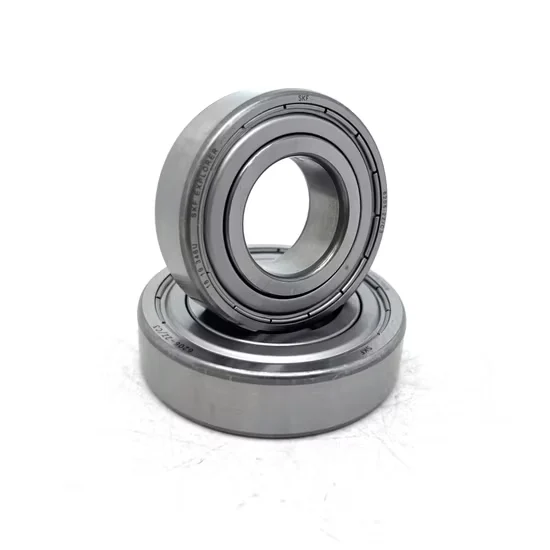
Visual inspection cannot identify refurbished bearings.
Sourcing genuine SKF bearings with full traceability is the only reliable method to prevent catastrophic wet-end failures in paper mills. Authentic units come with verifiable origin certificates, while refurbished parts lack the internal integrity required for high-humidity, high-temperature environments.
I still remember the silence in a German paper mill after a wet-end bearing seized. It was not the quiet of efficiency, but the heavy, expensive silence of stopped production. The procurement team had chosen a lower-cost option, assuming the external markings were enough proof of quality. They were wrong. The bearing looked new, but the internal raceways had been polished and repackaged. Within days, the heat generated by friction exceeded the design limits, causing the housing to distort. The resulting downtime lasted several days. The cost of the lost pulp amounted to multiple container loads of finished product, far exceeding the price difference between the counterfeit part and a genuine unit. That incident reshaped my approach to sourcing. I learned that in the paper industry, the cheapest bearing is often the most expensive mistake.
The market is flooded with products that mimic the appearance of premium brands. For MRO managers and procurement heads, the challenge is not just finding a supplier, but verifying the chain of custody. This guide details how to distinguish authentic components from refurbished risks and select the correct specifications for harsh paper machine environments.
Why German Paper Mills Demand Genuine SKF Bearings?
Paper machines operate in some of the most aggressive industrial environments. The wet end is characterized by constant exposure to water, steam, and chemical additives. Temperatures fluctuate rapidly, and humidity levels remain consistently high. In these conditions, bearing failure is rarely a gradual process; it is often sudden and destructive.
Genuine SKF bearings are engineered with specific steel purity and heat treatment processes that resist corrosion and fatigue under such stress. Refurbished bearings, even if they appear clean, have already undergone significant stress cycles. Their microstructure may contain hidden cracks or residual stresses that accelerate failure when reintroduced to high-load applications.
A European mill operator once reported that a batch of non-genuine bearings failed within weeks of installation. The external seals looked intact, but the lubricant inside had degraded due to previous overheating. The failure caused a shaft misalignment that damaged the adjacent rollers. The repair required not just bearing replacement, but realignment of the entire section. This cascade effect is common when authenticity is compromised.
The demand for genuine SKF bearings for German paper mills wholesale supplier solutions stems from this need for reliability. Mills cannot afford the risk of unverified parts. They require components that meet the original equipment manufacturer’s specifications exactly, ensuring that the thermal expansion and load ratings align with the machine’s design parameters.
How to Verify SKF Bearing Authenticity?
Trust but verify. This principle is critical when sourcing bearings. Visual inspection alone is insufficient because modern refurbishing techniques can replicate the external appearance of new bearings with high accuracy. The only definitive proof of authenticity lies in the documentation and traceability codes.
Every genuine SKF bearing comes with a unique identification code that can be traced back to the manufacturing facility and batch. This code is laser-etched on the bearing ring and printed on the packaging. Suppliers who cannot provide full origin certificates or who offer vague explanations about the source should be avoided.
I recall a case where a buyer received bearings with packaging that looked nearly identical to the official brand. However, the font on the box was slightly off, and the holographic seal lacked the expected depth. Upon checking the code with the manufacturer, it was found to be invalid. The supplier claimed it was a "parallel import," but there was no paper trail to prove it. Such gaps in documentation are red flags.
To ensure authenticity, buyers should request the following:
- Original certificate of conformity from the manufacturer.
- Batch-specific test reports if available.
- Verification of the laser-etched code on the bearing itself.
- Proof of authorized distribution channels.
Suppliers who specialize as a genuine SKF bearings for German paper mills wholesale supplier will have these documents readily available. They understand that transparency is not just a service feature, but a necessity for industrial safety.
Specification Matrix: Selecting the Right SKF Bearing for Paper Machines?
Choosing the right bearing involves more than matching the part number. It requires understanding the specific loads and environmental conditions of each section of the paper machine. The wet end and dry end have different requirements regarding sealing, lubrication, and thermal stability.
| Feature | Wet End Requirements | Dry End Requirements |
|---|---|---|
| Sealing | High-efficiency contact seals to prevent water ingress | Standard seals sufficient for lower humidity |
| Lubrication | Water-resistant grease with high adhesion | Standard lithium-based grease |
| Thermal Expansion | Accommodate significant temperature fluctuations | Stable operating temperature |
| Corrosion Resistance | Critical due to constant moisture exposure | Moderate requirement |
| Bearing Type | Spherical roller bearings for misalignment compensation | Cylindrical roller bearings for high radial load |
Spherical roller bearings are often preferred in the wet end because they can accommodate shaft misalignment caused by thermal expansion and deflection. They also handle heavy radial loads effectively. In contrast, cylindrical roller bearings are suitable for the dry end where alignment is more stable and speeds are higher.
A common mistake is using standard bearings in the wet end without enhanced sealing. This leads to rapid contamination of the lubricant and premature failure. Another error is ignoring the clearance specifications. In high-temperature zones, bearings need greater internal clearance to allow for thermal expansion. Using standard clearance bearings in these areas can cause them to lock up as they heat up.
When sourcing SKF spherical roller bearings paper machine components, it is essential to confirm the clearance class and seal type. Suppliers who offer technical consultation can help match the bearing specification to the specific operating conditions of the machine. This ensures that the bearing performs as intended throughout its service life.
What Are the Hidden Costs of Refurbished Bearings?
The initial savings from purchasing refurbished or non-genuine bearings are illusory. The true cost becomes apparent only when failure occurs. Downtime in a paper mill is measured in thousands of dollars per hour. Additionally, the loss of raw material in the form of pulp adds significantly to the expense.
Consider the cost structure:
- Direct Replacement Cost: The price of the bearing itself.
- Labor Cost: Hours spent by maintenance teams to remove and install the bearing.
- Downtime Cost: Lost production revenue during the stoppage.
- Material Loss: Pulp that must be discarded due to process interruption.
- Secondary Damage: Potential damage to shafts, housings, or other components.
In many cases, the downtime and material loss costs are multiples of the price difference between genuine and refurbished bearings. A mid-six-figure loss is not uncommon for a major wet-end failure.
Furthermore, refurbished bearings often have shorter service lives. This means more frequent replacements, which increases maintenance workload and inventory complexity. The reliability of the supply chain is also compromised when dealing with non-authentic parts, as availability is inconsistent.
Buyers should calculate the total cost of ownership, not just the purchase price. Investing in authentic SKF bearings reduces the risk of unexpected failures and ensures consistent performance. This approach aligns with the long-term operational goals of any efficient paper mill.
Conclusion
Authenticity is non-negotiable in high-risk industrial environments.
Sourcing genuine SKF bearings for German paper mills wholesale supplier partners requires diligence and verification. The risks associated with refurbished parts far outweigh the initial cost savings. By prioritizing traceability, selecting the correct specifications for wet and dry ends, and understanding the hidden costs of failure, mills can ensure reliable operation. Trust in documentation, not just appearance, to protect your production line.
What to state on your inquiry
A complete inquiry keeps the full model suffix and the specified execution, so the quote matches your parts list.
- Full SKF designationCopy every model suffix exactly as specified.
- Specified executionName any insulated, hybrid ceramic or clearance requirement.
- Motor and bearing positionGive the motor model and the position of each bearing.
- Quantity and deliveryList quantities, destination country, postcode and required date.