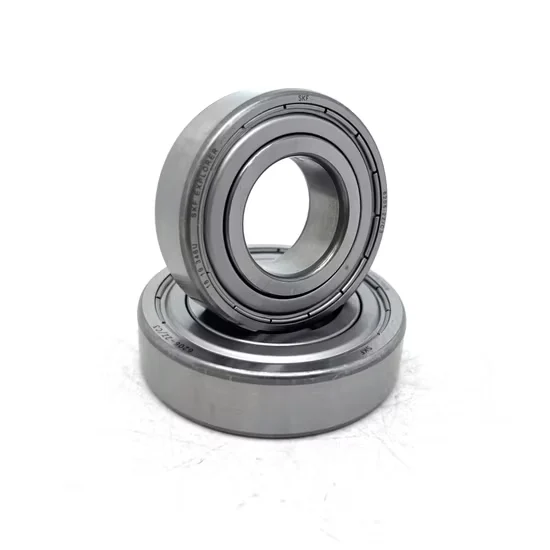
Counterfeit cages do not just wear out; they shatter.
German E-mobility startups secure genuine, traceable SKF bearings with flexible mixed-batch MOQs to prevent catastrophic high-speed motor failures caused by counterfeit parts.
The smell of burnt insulation is distinct. It hangs in the air long after the test bench stops screaming. I remember standing in a workshop in Monterrey, watching a technician pull apart a high-performance electric motor that had failed during a routine stress test. The rotor had scanned the stator. The cause was not a design flaw in the windings or a software error in the controller. It was a deep groove ball bearing that looked identical to the genuine article but lacked the metallurgical integrity to survive the RPM limits. The cage had fragmented, sending steel shards through the assembly. That single component, sourced from an unauthorized channel to save a few dollars, resulted in a mid-six-figure loss. This is the reality for many emerging manufacturers who underestimate the supply chain risks. Sourcing SKF bearings for German E-mobility startups requires more than just finding a part number; it demands a rigorous verification process and a supplier who understands the critical nature of traceability in high-speed applications.
For engineering teams under pressure to prototype quickly, the temptation to use available stock from general industrial suppliers is strong. However, the operational environment of an electric vehicle motor is vastly different from standard industrial machinery. The speeds are higher, the loads are dynamic, and the tolerance for failure is zero. Understanding how to navigate this landscape is essential for any startup aiming to bring a reliable product to market.
Why Do Counterfeit SKF Bearings Destroy EV Motors?
Fake bearings fail silently until they explode.
The primary difference between a genuine bearing and a counterfeit one often lies in the cage material and the heat treatment of the rolling elements. In high-speed EV motors, the centrifugal forces acting on the cage are immense. Genuine SKF components use specific polymer or steel cages designed to withstand these forces while maintaining lubrication distribution. Counterfeit parts often use inferior plastics or poorly machined steel that cannot handle the thermal expansion and mechanical stress.
When a cage fails, it does not simply stop rotating. It disintegrates. The fragments act as projectiles within the sealed motor housing, damaging the windings, the rotor surface, and the sensor arrays. This type of failure is catastrophic and usually requires the complete replacement of the motor unit, not just the bearing. For a startup, this means delayed timelines, wasted R&D budget, and potential reputational damage if such issues reach early adopters.
| Failure Characteristic | Genuine SKF Specification | Counterfeit/Non-Traceable Part |
|---|---|---|
| Cage Material Integrity | Certified polymer or hardened steel | Unverified plastic or soft steel |
| High-RPM Stability | Robust under extreme centrifugal force | Prone to fragmentation |
| Traceability | Full batch-level documentation | None or forged papers |
| Cost of Failure | Component replacement | Entire motor assembly scrap |
A European wind farm operator once shared how a batch of non-traceable bearings led to unplanned downtime across multiple units. While the scale was different, the principle remains the same for e-mobility. The cost of verifying authenticity is negligible compared to the cost of a failed prototype run. When sourcing SKF bearings for German E-mobility startups, the focus must be on the integrity of the supply chain, not just the price per unit.
How to Verify Genuine SKF Bearings for E-Mobility?
Trust the documentation, not just the packaging.
Visual inspection is the first step, but it is no longer sufficient. Counterfeiters have become adept at replicating logos, box colors, and even holographic stickers. The definitive proof of authenticity lies in the traceability documentation. Every genuine bearing comes with a unique identity that links it back to the manufacturer’s production facilities. This includes batch numbers, material certificates, and quality control records.
Startups should request a full traceability package before placing an order. This document should allow you to verify the origin of the steel, the date of manufacture, and the specific quality checks performed. If a supplier cannot provide this level of detail, or if the documents look generic and lack specific batch references, it is a major red flag. Genuine SKF bearing sourcing for e-mobility projects relies on this transparency to ensure compliance with automotive safety standards.
In addition to documentation, physical verification methods include checking the laser marking on the bearing itself. Genuine parts have precise, clean markings that are difficult to replicate without specialized equipment. The packaging should also show signs of professional handling, with no signs of tampering or poor print quality. However, these physical checks are secondary to the paper trail. A supplier who offers mixed-brand bearing supply Germany wide must be able to produce these documents for every single item, regardless of order size.
Which SKF Bearing Types Fit EV Motor Stages?
Match the bearing architecture to the load profile.
Not all bearings are created equal, and selecting the wrong type can lead to premature wear even if the part is genuine. Electric motors typically operate at much higher speeds than internal combustion engines, requiring bearings with lower friction and higher precision. Deep groove ball bearings are commonly used for their versatility and ability to handle both radial and axial loads. However, for higher speed applications, angular contact ball bearings may be more suitable due to their ability to manage higher axial loads and provide greater rigidity.
The choice depends on the specific stage of the motor and the expected load conditions. For example, the front end of the motor might experience different thermal and mechanical stresses compared to the rear. Using a standardized approach without considering these nuances can lead to inefficiencies. Startups should work with suppliers who understand these technical distinctions and can offer guidance on the most appropriate genuine SKF deep groove ball bearings for EV motors or alternative types based on the design specifications.
| Bearing Type | Primary Advantage | Typical EV Application |
|---|---|---|
| Deep Groove Ball | Versatile, handles combined loads | General purpose, lower speed stages |
| Angular Contact | High axial load capacity, rigidity | High-speed stages, direct drive systems |
| Cylindrical Roller | High radial load capacity | Heavy-duty traction motors |
Understanding these differences allows engineering teams to optimize performance and longevity. It also helps in negotiating with suppliers, as you can specify exactly what is needed rather than accepting whatever is in stock. This precision is key when dealing with SKF bearings for German E-mobility startups where every gram and every micron matters.
How to Source Mixed SKF Batches with Low MOQ?
Flexibility does not mean compromising on authenticity.
One of the biggest challenges for startups is the minimum order quantity (MOQ) imposed by official distribution channels. Large distributors often require bulk purchases that are impractical for prototype development or small-batch production. This gap in the market is where specialized suppliers play a crucial role. They offer the ability to purchase small quantities of genuine bearings, including mixed batches of different types and sizes, without sacrificing traceability.
This flexibility allows startups to maintain agility in their development process. They can order exactly what they need for each prototype iteration, reducing inventory costs and waste. However, finding a supplier who can provide this service while maintaining the strict authenticity standards required for automotive applications is difficult. Many small traders deal in gray market goods that lack proper documentation.
A reliable partner for SKF bearing sourcing for e-mobility will have a robust inventory management system that tracks every item from receipt to shipment. They should be able to consolidate orders from various brands, such as FAG, INA, or NSK, into a single shipment, simplifying logistics for the buyer. This approach not only saves time but also ensures that all components meet the same high standards of quality and traceability. For those navigating mixed-brand bearing supply Germany, this consolidated, verified approach is invaluable.
Conclusion
Authenticity is the foundation of reliability.
Sourcing bearings for electric mobility applications is not just a procurement task; it is a critical engineering decision. The risks associated with counterfeit parts are too high to ignore, and the need for traceability is non-negotiable. By focusing on verified suppliers who offer flexible MOQs and complete documentation, startups can protect their investments and ensure the success of their products. Choosing the right SKF bearings for German E-mobility startups sets the stage for innovation that is both ambitious and secure.
What to state on your inquiry
A complete inquiry keeps the full model suffix and the specified execution, so the quote matches your parts list.
- Full SKF designationCopy every model suffix exactly as specified.
- Specified executionName any insulated, hybrid ceramic or clearance requirement.
- Motor and bearing positionGive the motor model and the position of each bearing.
- Quantity and deliveryList quantities, destination country, postcode and required date.